
12 Activities for Afterschoolers to Build Agency and Real Skills
The final school bell rings, but the day's most important learning is just beginning. How do we fill those crucial after-school hours? For many families, the default is a mix of screens, sports, and passive, one-size-fits-all "learning"—edutainment apps that demand clicks but produce nothing tangible. This guide offers a different path.
These activities for afterschoolers are designed to help your child (ages 6–13) build real-world, future-ready skills. These aren't just ways to pass time; they are quests that turn a child’s curiosity into confidence, creativity, and a portfolio of work they are proud to share. Each idea focuses on building agency by having kids make, ship, and reflect on their work.
While general activity vouchers like the Mega Choice for Kids and Teens offer variety, our list focuses on projects you can start at home tonight. Let's explore how to make after-school hours a time for genuine discovery, moving beyond simple consumption to active creation.
1. AI-Powered Quest-Based Learning
AI-powered quests transform a child's natural curiosity into structured, hands-on projects. Instead of generic worksheets, this approach uses AI to generate step-by-step quests tailored to your child’s specific interests. These quests guide them through building real things, providing feedback that helps them solve problems and improve their work. This is one of the most effective activities for afterschoolers to build genuine agency.
This project-based model shifts the focus from passive consumption to active creation. Start from any spark—dinosaurs, video editing, chess tactics. Kubrio drafts right-sized quests (10, 20, or 45 minutes) and guides you on what feedback to give. Finished work saves to a portfolio so growth is simple to see and share.
How to Get Started Tonight
- Time: 20 min • Materials: Device with internet • Safety: Check privacy settings on new platforms • No-kit option: Plan a project on paper first.
- Pick the spark: "Because you like building in Minecraft, let's design a new creature for the game."
- Generate a quest: Use a simple prompt to get 3-5 action steps.
- Share and reflect: "Show me your first design. What will you change in version two?"
2. Coding and Computational Thinking
Coding activities introduce children to programming logic and problem-solving through visual, game-based platforms. Instead of abstract theories, kids learn foundational skills like sequencing and debugging in a hands-on way. These activities for afterschoolers transform them from tech consumers into creators with high agency.
Platforms like Scratch allow kids to build animations and simple games using visual blocks. This method makes abstract concepts tangible and immediately rewarding. As they advance, they can tackle interactive lessons on Codecademy, seeing how their code directly impacts the outcome. The cycle of building, testing, and fixing develops a powerful problem-solving mindset.
How to Get Started Tonight
- Time: 20 min • Materials: Computer/tablet with internet • Safety: Use kid-safe coding platforms • No-kit option: Try an "unplugged" coding game with cards or physical movements.
- Pick the spark: "Because you like playing games, let's make a character move across the screen."
- Use visual blocks: Start with a simple tutorial on Scratch or Code.org.
- Share and reflect: "Where did you get stuck, and how did you unstick it?"
3. Digital Storytelling and Creative Writing
Digital storytelling merges narrative with media creation, empowering kids to produce animated videos, podcasts, or interactive fiction. This approach transforms creative writing into an engaging production process. By combining storytelling with tools they love, these activities for afterschoolers build crucial communication skills and result in tangible media they can share.
This method moves kids from passive consumers to active producers. Using platforms like Canva for storyboards or simple stop-motion apps, children learn to structure a narrative with a beginning, middle, and end. The process of planning, drafting, and revising for a digital medium provides a practical framework for developing clear communication.
How to Get Started Tonight
- Time: 20 min • Materials: Device, paper, pencil • Safety: Supervise use of any new apps • No-kit option: Write and illustrate a three-panel comic on paper.
- Pick the spark: "Because you like adventure movies, let's create a storyboard for your own short story."
- Draft 3-5 steps: Sketch out a beginning, a middle, and an end.
- Share and reflect: "Which character was the most interesting to create, and why?"
4. Design Thinking and Product Creation
Design Thinking offers a framework for creative problem-solving, teaching children to build empathy, generate ideas, prototype solutions, and test their creations. Instead of just consuming products, they learn to identify real-world problems and design solutions. This hands-on process is one of the most practical activities for afterschoolers to develop creative confidence.
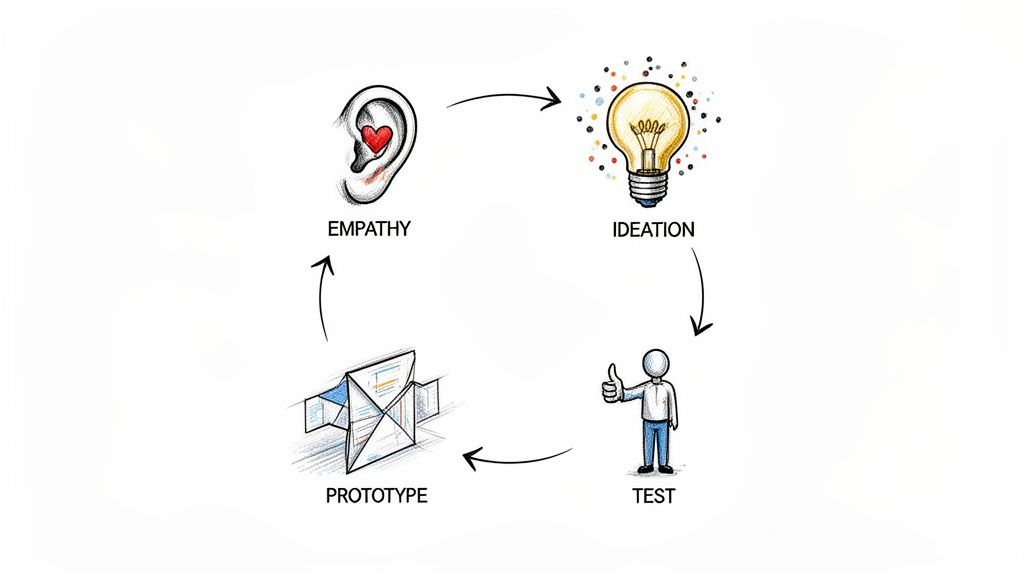
This method moves kids from passive learning to active creation. Following models from Stanford's d.school, children can interview a family member about a small problem (e.g., "organizing toys"), brainstorm solutions, and build a quick prototype. This iterative cycle normalizes failure as a key part of learning, teaching resilience and adaptability.
How to Get Started Tonight
- Time: 20 min • Materials: Paper, cardboard, tape, markers • Safety: Adult nearby for cutting • No-kit option: Sketch designs on paper instead of building.
- Pick the spark: "Because organizing your LEGOs is tricky, let's design a better storage system."
- Build a prototype: Create a simple version 1 (v1) out of cardboard.
- Share and reflect: "Show me v1. What will you change for v2 after testing it?"
5. STEM/STEAM Hands-On Experiments
Hands-on STEM/STEAM experiments move learning from abstract concepts to tangible results. This approach combines science, technology, engineering, art, and math into interactive projects where kids can build, test, and discover. By engaging with materials like LEGOs, Snap Circuits, or household items, children develop an intuitive understanding of engineering principles, making it one of the most effective activities for afterschoolers to build problem-solving skills.
This method shifts the dynamic from following instructions to asking "what if?" Whether using a kit to build a simple circuit or designing a catapult from craft sticks, the focus is on experimentation and iteration. The process teaches that failure is just a step toward a solution, capturing progress and building a portfolio of real-world accomplishments.
How to Get Started Tonight
- Time: 20 min • Materials: Paper, tape, craft sticks, rubber bands • Safety: Adult supervision for any moving parts • No-kit option: Design an experiment on paper and predict the outcome.
- Pick the spark: "Because you like building things, let's see who can build the tallest paper tower."
- Set a constraint: You have 10 minutes and one sheet of paper.
- Share and reflect: "What changed between your first and second design? What made it stronger?"
6. Digital Art and Graphic Design
Digital art and graphic design empower children to bring their ideas to life using technology. Instead of just consuming digital media, they learn to create it, using tools like Canva or Procreate to design posters or paint digitally. This process develops visual communication skills and technical proficiency. It’s one of the most practical activities for afterschoolers to build a portfolio of creative work.
This hands-on approach shifts focus from passive screen time to active creation. Children can use accessible, web-based tools like Pixlr for image editing or try Aseprite for pixel art. They can design for real-world purposes, like a family event invitation, making the skills feel relevant and impactful while building their creative agency.
How to Get Started Tonight
- Time: 10 min • Materials: Device with a free design app (like Canva) • Safety: Use apps with limited social features • No-kit option: Design a logo for a fictional company on paper.
- Pick the spark: "Because you like that video game, let's design a new logo for it."
- Use a template: Start with a pre-made layout to learn the basics.
- Share and reflect: "Show me your design. Which part are you most proud of?"
7. Entrepreneurship and Business Projects
Entrepreneurship challenges turn kids into creators and problem-solvers by guiding them through building a mini-business. Instead of just learning about money, they experience it firsthand by creating a product or service. This hands-on approach demystifies business fundamentals and is one of the most powerful activities for afterschoolers to build real-world skills and confidence.
This project-based model makes concepts like supply and demand tangible. Whether launching a simple lemonade stand, setting up an Etsy shop for handmade crafts, or offering a service like dog walking, children learn to think strategically. The focus shifts from abstract theory to practical application, teaching resilience and customer communication.
How to Get Started Tonight
- Time: 20 min • Materials: Paper and pencil • Safety: Adult supervision for any real transactions • No-kit option: The entire activity is low-kit.
- Pick the spark: "Because you are great at making friendship bracelets, let's create a one-page business plan for selling them."
- Draft the plan: Who is the customer? What is the price? How will people find out about it?
- Share and reflect: "What is the biggest challenge you see, and what's one idea to solve it?"
8. Citizen Science and Sustainability Projects
Citizen science projects turn your backyard or neighborhood into a living laboratory. Instead of just reading about ecosystems, children engage directly with them, collecting data and contributing to real scientific research. This hands-on approach builds a personal connection to the environment and makes abstract concepts tangible. These are fantastic activities for afterschoolers to develop scientific literacy and a sense of stewardship.
This method moves learning from passive consumption to active participation. Kids can use apps like iNaturalist to document local wildlife or join Project BudBurst to track seasonal plant changes. By contributing their findings, they see how their small observations fit into a larger scientific picture, empowering them as valuable members of the research community.
How to Get Started Tonight
- Time: 20 min • Materials: Notebook, pencil, optional smartphone with app • Safety: Be aware of surroundings outdoors • No-kit option: Observe and sketch plants or insects in the backyard.
- Pick the spark: "Because you are curious about insects, let's go on a 15-minute 'bug safari' and document what we find."
- Collect data: Count and sketch the different types of insects you see.
- Share and reflect: "Which area had the most bugs? What is your hypothesis for why?"
9. Podcast and Audio Production
Launching a podcast transforms a child from a passive listener into an active creator. This activity helps them develop storytelling, scripting, and technical audio skills using accessible tools. It's an excellent way to build communication confidence and understand how to structure a narrative, making it one of the most engaging activities for afterschoolers.
This hands-on process teaches valuable production skills, from editing to adding sound effects. By creating their own show, kids learn to organize their thoughts and engage with feedback. The final product is a shareable artifact that showcases their personality and research. To ensure clear audio, exploring budget USB microphones can be a great starting point.
How to Get Started Tonight
- Time: 20 min • Materials: Smartphone with voice recorder, paper, pencil • Safety: Keep podcasts private or share only with family • No-kit option: This activity requires only a phone.
- Pick the spark: "Because you love talking about video games, let's script and record a one-minute review of your favorite one."
- Outline the script: Write down an introduction, two main points, and a conclusion.
- Share and reflect: "What's one thing you would change in the next episode?"
10. Video Production and Filmmaking
Creating short films or tutorials moves kids from being passive viewers to active creators. With accessible tools on phones, filmmaking develops storytelling, technical editing skills, and visual communication. This is one of the most powerful activities for afterschoolers to build agency by producing real, shareable content based on their own ideas.
This hands-on process turns an abstract story idea into a tangible final product. Using simple apps like iMovie or CapCut, children learn to plan, shoot, and edit their vision into a polished video. They can create a tutorial about their favorite game or a short stop-motion film, building a portfolio that showcases their creative and technical growth.
How to Get Started Tonight
- Time: 20 min • Materials: Smartphone, small toys or objects, paper • Safety: Share videos privately with family first • No-kit option: Create a three-panel storyboard for a movie idea.
- Pick the spark: "Because you like funny videos, let's create a 10-second stop-motion animation with your toys."
- Plan the shots: Sketch a simple beginning, middle, and end.
- Share and reflect: "Which step took the most effort, and what would you try next time?"
11. Public Speaking and Presentation Skills
Developing communication skills moves children from passive consumers of information to confident persuaders. Engaging in public speaking teaches them how to organize thoughts, articulate ideas clearly, and connect with an audience. This builds essential confidence, making it one of the most empowering activities for afterschoolers.
This practice is about giving a child’s passion a platform. It doesn’t have to be formal. The goal is to build agency by equipping them with the tools to share their unique perspectives effectively. Even a two-minute presentation to the family can build the foundation for clear communication.
How to Get Started Tonight
- Time: 10 min • Materials: An object your child loves • Safety: Keep the audience small and supportive • No-kit option: This activity requires no special materials.
- Pick the spark: "Because you know so much about your favorite toy, can you give us a two-minute 'expert presentation' on it?"
- Set a time limit: Keep it short and fun to build confidence.
- Give specific feedback: "I love how you explained that feature. Your excitement made it really interesting."
12. Self-Discovery Portfolio Development
Portfolio development moves learning from a series of disconnected tasks to a documented journey of growth. Instead of grades, children curate a collection of their work, reflecting on their progress and challenges. This process of documentation helps them develop self-awareness and is one of the most powerful activities for afterschoolers to build genuine agency.
This method shifts focus from one-off successes to a continuous growth story. Digital tools can automatically build a portfolio as your child completes projects. The goal is to create a living record that includes not just finished products but also drafts and experiments, showing the real process of learning.
How to Get Started Tonight
- Time: 10 min • Materials: A finished project (drawing, story, etc.), a phone camera • Safety: Keep digital portfolios private or password-protected • No-kit option: Simply talk about a recent project.
- Pick an artifact: Choose one thing they made this week.
- Capture it: Take a photo.
- Ask a reflection question: "What was the hardest part of making this, and how did you solve it?" or "What changed between v1 and v2?"
12 Afterschool Activities Comparison
| Activity | Time/Night | Core Skill | Output (Artifact) |
|---|---|---|---|
| AI-Powered Quests | 20-45 min | Systems Thinking | Coded game, 3D model, story |
| Coding | 20-45 min | Problem-Solving | Animation, simple app |
| Digital Storytelling | 20-45 min | Communication | Podcast, comic, short video |
| Design Thinking | 20 min | Creativity, Empathy | Prototype, user feedback notes |
| STEM/STEAM Experiments | 20 min | Research, Grit | Catapult, circuit, data chart |
| Digital Art | 10-20 min | Creativity | Logo, poster, digital painting |
| Entrepreneurship | 20 min | Systems Thinking | Business plan, sales pitch |
| Citizen Science | 20 min | Research | Data log, species map |
| Podcasting | 20 min | Communication | 1-minute audio recording |
| Filmmaking | 20-45 min | Communication | Stop-motion clip, tutorial video |
| Public Speaking | 10 min | Communication | 2-minute presentation |
| Portfolio Building | 10 min | Reflection | Photo of work + one insight |
From After-School Activities to Lifelong Agency
The hours between school and dinner are a prime opportunity to nurture the skills that matter most. We've explored a range of activities for afterschoolers, from AI-guided quests and coding to hands-on experiments. The common thread is shifting kids from passive consumption to active creation.
This transition is the bedrock of agency. When a child builds a stop-motion video or codes a simple game, they create tangible proof of their ability to bring an idea to life. This isn't the same as getting a good score on a worksheet. It’s an artifact that says, “I made this. I figured it out.” This cycle of making, shipping, and reflecting builds deep, resilient confidence.
Key Takeaways for Fostering Agency
The core insight is that the process matters as much as the outcome. The goal is to move away from the legacy school model of one-size-fits-all learning and embrace a more personalized, interest-driven approach.
- Start with a Spark: Anchor learning in your child's genuine curiosity. That interest is the fuel for meaningful engagement.
- Emphasize Iteration: Normalize the idea of a first draft. Use feedback prompts like, “This is a great v1. What’s one change for v2?” This reframes mistakes as data.
- Focus on Tangible Outputs: Encourage projects that result in a shareable artifact. A finished podcast or a coded animation becomes a milestone in their learning journey.
Your Actionable Next Steps
Feeling inspired but not sure where to begin? Start small.
- Choose One Interest: Ask your child tonight what they’re most excited about right now.
- Frame it as a Quest: Turn that interest into a small, 20-minute challenge. "Because you like Minecraft, let's design a new tool for the game on paper."
- Capture and Reflect: Take a photo of the drawing. Ask: “What was the most fun part of creating that?”
If you like project-based learning but want it doable at home, Kubrio handles the planning and feedback so you can focus on building and reflecting together.
Ultimately, the best activities for afterschoolers empower them to see themselves as creators and authors of their own learning. By providing the right mix of freedom and structure, you’re not just filling their afternoons; you’re equipping them with the agency to thrive.