
Intrinsic Motivation vs Extrinsic Motivation: A Parent's Guide to Building Agency
What really makes your child want to learn? Answering that gets to the heart of intrinsic motivation vs extrinsic motivation. Intrinsic motivation is that internal spark—the joy of figuring something out just for the sake of it. Extrinsic motivation is driven by outside rewards, like stickers or screen time. Our goal is to nurture that inner fire, freeing our kids from the passive, one-size-fits-all learning that relies on a constant drip of external prizes.
Decoding Your Child’s Drive
Figuring out what fuels your child's efforts is the first step to helping them become truly independent learners. Many educational models lean heavily on external rewards, which can accidentally turn learning into a chore instead of an adventure.
This trains kids to ask, "What do I get for this?" instead of "What can I discover?"
Our goal is to flip that script. We want to nurture a child’s natural curiosity so they become self-directed, ready for a future that values creative problem-solving far more than just following directions. The real win isn't a perfect score on a worksheet; it's a child who dives into a challenge because they're genuinely fascinated. That internal fire—their agency—is the engine for lifelong learning.
Intrinsic vs Extrinsic Motivation: A Quick Comparison
To help you see the difference in your own home, let's put these two types of motivation side-by-side. The table below breaks down where the drive comes from, the focus, and the long-term impact on your child's agency.
| Attribute | Intrinsic Motivation | Extrinsic Motivation |
|---|---|---|
| Source of Drive | Internal curiosity, passion, and the inherent satisfaction of the activity itself. | External factors like rewards, praise, grades, or the avoidance of punishment. |
| Primary Focus | The process of learning, exploring, and mastering a skill. | The outcome or reward received for completing the task. |
| Reason for Acting | "I do this because I love the challenge and the feeling of accomplishment." | "I do this to get a prize, earn a good grade, or avoid getting in trouble." |
| Typical Activities | Building a complex LEGO city for fun, writing stories in a notebook, learning to code a game just to see it work. | Finishing homework to get screen time, cleaning a room for an allowance, studying only for the test. |
| Long-Term Effect | Builds agency, creativity, grit, and a lasting love for learning. | Can decrease interest in the task once the reward is removed; creates a "what's in it for me?" mindset. |
Recognizing these patterns is the key. When you focus on your child's genuine interests and celebrate their effort—not just the final result—you're laying the groundwork for powerful, self-driven learning.
The Real Impact of Rewards on Curiosity
Decades of research show a tricky truth about rewards. While they can get you short-term results, they often sabotage a child's natural drive in the long run. The moment we offer an expected reward for a task, we risk turning genuine play into a transaction.
This is called the "overjustification effect." It’s what happens when an external prize overshadows the simple joy of doing something. The child’s inner monologue shifts from, "I love building this," to, "What do I get for building this?" Once the reward is gone, the motivation often evaporates with it.
Why Stickers and Star Charts Can Backfire
A sticker chart might get a room cleaned today, but it’s teaching the child that the reason to help out is to get a prize, not because contributing to the family feels good. This transactional approach can poison the very curiosity we want to cultivate.
This isn’t just a hunch. A landmark meta-analysis reviewing 128 different studies found that expected, tangible rewards significantly crushed a person's intrinsic motivation. When kids know there’s a prize at the finish line, their actual interest in the task plummets. You can dig into the detailed findings on how rewards affect engagement for yourself.
This is a crucial point in the intrinsic motivation vs extrinsic motivation debate. The goal isn't to ban praise, but to get intentional about what we're celebrating.
Parent-to-Parent Tip: Try shifting your praise from the final product to the effort. Instead of, "That's a great drawing," you could say, "I love how you experimented with so many different colors." This small tweak puts the focus back on the joy of creating.
The Hidden Costs of External Rewards
A system built on external rewards can create unintended problems that chip away at a child's agency.
- Creativity Takes a Hit: When a prize is on the line, kids look for the quickest path to get it. This discourages the risk-taking at the heart of creative thinking.
- It Encourages a Short-Term Mindset: Rewards put the focus on getting the task done, not on mastering the skill. The learning becomes a means to an end.
- Persistence Gets Eroded: What happens when things get tough and there’s no reward? A child used to incentives is more likely to give up. They haven't built the internal grit to push through challenges.
The alternative is to build an environment where the work is the reward. By connecting learning to what a child is genuinely obsessed with, we protect and nurture that precious internal drive.
How to Spot What’s Really Driving Your Child
Figuring out what gets your child excited is the first step in helping them take charge of their own learning. For parents with kids between 6 and 13, spotting the difference between intrinsic and extrinsic motivation is easier than you think.
Think about a 7-year-old lost in building a LEGO city for an hour, just for the joy of it. That’s intrinsic motivation. Now, picture that same child cleaning their room only to earn screen time. That’s extrinsic. It's the difference between doing something because it’s fascinating and doing it because it’s a transaction.
Watch Them in Their Natural Habitat
To get a real sense of what’s fueling your child, pay close attention to how they act when there’s no reward on the line.
Here are a few moments to look for:
- During Playtime: Does your 10-year-old get lost for hours sketching comic book characters they invented? Do they bubble with excitement talking about the storyline? That’s their inner drive.
- With Schoolwork: A 12-year-old who researches extra facts for a history report just because they’re curious about ancient Egypt is running on intrinsic fuel. The kid who does just enough to get a good grade is powered by extrinsic motivation.
- Learning a New Skill: Notice the child who practices a new song on the piano over and over, not for a recital, but just to get it right for themselves. The reward is the feeling of mastery.
A Quick Field Guide to Your Child's Motivation
Use this simple checklist to tune into your child's behavior.
Signs of Intrinsic Motivation (The Inner Fire):
- They lose track of time: The activity is so absorbing that the world melts away.
- They talk about the process, not the prize: You'll hear more about "how I figured it out!" than "what do I get?"
- They push through challenges on their own: They see a tough spot as a puzzle to be solved.
- They start the activity without being asked: You don't have to nudge or bribe them.
- They share what they’ve made with pride: The joy comes from the act of creating and sharing.
Signs of Extrinsic Motivation (The External Nudge):
- They ask "What's in it for me?" before they start: Their focus is locked on the reward.
- Their effort vanishes when the reward does: If the incentive disappears, so does their interest.
- They look for the easiest or fastest way to finish: The goal isn’t to master a skill, but to get the prize.
- They need constant reminders or supervision: Their engagement is propped up by outside pressure.
- They compare their rewards to what others got: The value of their work is measured by the size of the prize.
Understanding these cues gives you the power to create a home that champions deep engagement. The goal isn't to get rid of extrinsic rewards completely, but to make sure they don’t drown out your child's natural curiosity.
What Kind of Learner Are We Building for the Long Haul?
How we motivate our kids today programs their approach to challenge for years. When we nurture intrinsic motivation, we're laying the foundation for grit, creativity, and resilience.
This is how a child develops true agency—the deep-seated belief that they are in control of their own learning.
Leaning too heavily on extrinsic motivation can install a "what's in it for me?" operating system. A child’s effort becomes conditional, only showing up when there's a reward. This approach teaches them that the work itself isn't valuable, only the prize at the end is.
The Lasting Power of an Internal Engine
Kids who are intrinsically motivated learn to wire effort directly to satisfaction. That connection is the bedrock of a growth mindset. They get comfortable with iteration—trying, failing, and trying again—because the real prize is mastery, not a sticker.
This internal engine powers incredible long-term benefits:
- Real Creativity: When a kid isn't looking for the fastest path to a reward, they have the freedom to experiment and connect ideas in new ways.
- Deep-Seated Persistence: When a project gets tough, an intrinsically motivated child digs into their own well of interest to push through. That's how grit is built.
- Stronger Problem-Solving: They learn to wrestle with problems for the sake of figuring them out, developing critical thinking skills essential for life.
Fostering this internal drive helps kids develop a whole suite of life skills that truly prepare them for the real world.
The Sneaky Downside of Relying on Rewards
A sticker chart seems harmless, but a long-term strategy built on external rewards can slowly chip away at a child's drive. When validation always comes from the outside, kids struggle to develop the internal compass needed to feel proud of their own efforts.
The constant hunt for external approval can make kids afraid to take risks. They might start picking easier tasks where a reward is guaranteed, instead of tackling tougher challenges.
This isn't just a hunch. Economic and psychological models show that performance-based rewards can actually decrease intrinsic motivation over time. Some research even shows that incentives can be weak motivators in the short run and become demotivators in the long run. If you want to see the math, you can explore the formal model of incentives and motivation here.
The debate over intrinsic motivation vs extrinsic motivation boils down to one question: what kind of adults are we trying to raise? Do we want people who complete tasks for a reward, or resilient thinkers who have the agency to chase their passions?
Practical Ways to Nurture Intrinsic Motivation
Moving from understanding motivation to shaping it can start tonight. It’s about small, consistent shifts in how we talk about effort and success. The goal is to move from a language of rewards to one of recognition, turning your child's interests into meaningful projects.
This shift helps children see their passions as the starting point for real creation. When a love for Minecraft becomes a quest to design a new world map, they learn that their ideas have value. This is the foundation of agency.
Connect Effort to Meaningful Outcomes
One of the best ways to nurture intrinsic motivation is to lean into play-based learning activities, which naturally prioritize curiosity over rigid instruction.
For example, if your child builds a LEGO car, try asking questions that connect it to a bigger purpose. "Who would this car be for? What problem does it solve?" This simple tweak frames the activity around empathy and purpose, which are powerful internal drivers.
Use an Activity Recipe to Build Agency
You don’t need a formal curriculum to build skills. A simple, repeatable recipe can turn any interest into a small project that builds confidence.
The Simple Quest Recipe:
- Start with the Spark: "Because you love drawing characters..."
- Name the Skill: "...let's practice storytelling by creating a one-page comic."
- Set the Constraints: "You have 20 minutes and these markers. Let's see what you come up with."
- Encourage Iteration: "This is a great first version! What's one thing you'd change to make the story clearer in version two?"
This structure provides just enough guidance to prevent overwhelm while giving them complete creative control. For more ideas, explore our guide on finding the right motivation for kids and how to sustain it.
Swap Praise for Specific Feedback
Generic praise like "good job" offers little value. Instead, provide feedback that honors the process and builds self-awareness.
Parent Script: "I noticed you got stuck when the tower kept falling. Tell me how you figured out a way to make the base stronger. That was clever problem-solving."
This type of feedback names the specific skill they used (problem-solving) and invites them to reflect on their own process. It makes them the expert on their work, a powerful way to build agency.
Kubrio is a family-driven learning platform that uses AI to turn your child’s interests into step-by-step quests with feedback and a living portfolio. The platform provides prompts that help you and your child focus on the process, making learning a collaborative, joyful experience rather than a transactional one.
Building a Portfolio to Showcase Growth
One of the best ways to fuel that inner fire is to make progress visible. When a child can see their skills evolve from a messy first draft into a finished creation, the feeling of accomplishment becomes its own reward. A portfolio creates a living record of effort, iteration, and discovery.
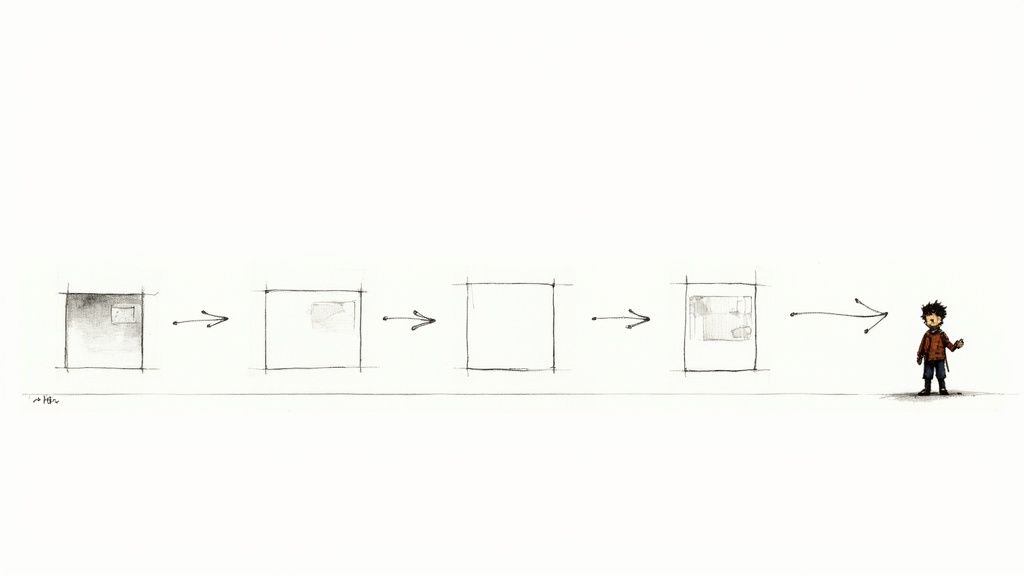
Seeing a timeline of their own work—a drawing, a coded animation, or a short story—builds a confidence that praise alone can't touch. It shifts the focus from external validation to internal pride and reinforces the connection between effort and mastery.
Capturing the Learning Journey
A portfolio isn’t a scrapbook of perfect products. Its power is in showing the process. It’s in that messy middle where a child builds resilience and learns that mistakes are stepping stones.
Here’s a simple way to frame it at home:
- Document Version One: Snap a photo of their first attempt—a sketch, a block tower, or a paragraph.
- Highlight the Iteration: When they create version two, put the photos side-by-side. The improvement is undeniable.
- Capture the Reflection: Jot down a one-sentence quote from them about what they changed.
This turns abstract effort into concrete evidence of growth.
From Validation to Self-Reflection
To make the portfolio a true engine for intrinsic motivation, the conversations around it must be about self-assessment, not just parental approval. The goal is to shift from, "I'm so proud of you," to, "Tell me what you're most proud of here."
Use questions that invite them to become the expert on their own work. This builds their reflective muscle and reinforces their sense of ownership.
Parent Scripts to Guide Reflection:
- "What changed between your first sketch and this final version?"
- "Show me the part that was the trickiest to figure out. How did you get unstuck?"
- "If you were to make a version three, what's one new thing you would try?"
These questions steer the conversation away from good/bad judgment and toward a richer discussion about process, strategy, and creative choice. They help your child articulate their thinking and recognize their problem-solving skills.
Start from any spark—dinosaurs, video editing, chess tactics. Kubrio drafts right-sized quests (10, 20, or 45 minutes) and guides you on what feedback to give. Finished work saves to a portfolio so growth is simple to see and share.
Frequently Asked Questions
Even when the difference between intrinsic and extrinsic motivation is clear, the real world gets messy. Here are some common questions from parents.
Are all external rewards bad for kids?
No. The problem isn’t the reward itself, but the expectation of one. An unexpected "thank you" for helping out or specific praise for conquering a tough problem can be very encouraging. The danger is when rewards become the only reason for doing something, creating a transactional "what's in it for me?" attitude.
How can I get my child to do chores without a reward chart?
Frame chores as a meaningful contribution to the family. It’s a shift from a task to an act of responsibility. For younger kids (6–9), make it a game. For older kids (10–13), connect chores to independence and trust. The focus should be on shared responsibility and the good feeling that comes from contributing.
What if my child is only motivated by video games?
See their passion as a bridge, not a barrier. Get curious. What about the game do they love? Is it the storytelling, strategy, world-building, or art? Use that passion as a launchpad for a related project. This validates their interest and shows them how to turn consumption into creation, building agency.
For example, challenge them to:
- Design a new character: Sketch a new hero with a backstory.
- Map a new level: Use paper to design a new world with challenges and goals.
- Learn to code: Introduce a project where they can build a simple game.