
My Child Hates School: Practical Steps to Help Them Thrive
When you hear those four gut-wrenching words, "I hate school," it's more than a passing complaint. It's a flare sent up from your child, signaling a deep disconnect between their natural curiosity and an environment that prizes passive compliance over active learning.
The solution isn't about forcing them to fit in. It’s about getting to the root of the problem and handing back their sense of agency—the control they need to own their learning journey.
Decoding Why Your Child Hates School
It’s easy to write off "I hate school" as typical kid drama, but it often masks deeper issues. Many kids feel disengaged because the one-size-fits-all legacy school model simply doesn’t mesh with how they are wired. When learning is reduced to worksheets and rote memorization, that natural spark of curiosity can be extinguished.
This isn't just a hunch. A startling report from the Brookings Institution revealed a massive "disengagement gap"—while a parent might believe their 10th grader is 65% engaged, the student themselves feels it's closer to 26%. To really grasp this disconnect, you can explore the full Brookings Institution report.
The Real Reasons Behind School Aversion
The reasons a kid dreads school are rarely simple. They usually fall into a few key categories that slowly chip away at their motivation and confidence.
- Curriculum Mismatch: The material might be too hard, leading to constant frustration, or painfully easy, resulting in profound boredom. If a child can't see how learning connects to their own life, engagement plummets.
- Lack of Agency: Kids are born creators. When their day is rigidly scheduled with no room for personal choice, school feels like something being done to them, not with them. They lose their drive to participate.
- Social and Emotional Hurdles: Navigating friendships, peer pressure, or feeling misunderstood can make the school environment draining. Understanding what is emotional development is a critical first step for any parent.
Parent quote: "I used to think my son was just being difficult. Then I realized he wasn't learning, he was just complying. That changed everything for us." — Jessica, Parent
Shifting your perspective is powerful. It changes the goal from "fixing your child" to finding better ways to support their unique learning journey. Recognizing this disconnect is the first step toward helping them rediscover the joy of learning on their own terms.
Opening the Conversation Without Starting a Fight
How you kick things off can be the difference between a real answer and a slammed door. The goal isn’t to solve everything in one talk; it’s to make it safe for them to be honest with you.
Think less confrontation, more curiosity. Don't ambush them during the morning rush. Wait for a low-pressure moment, like on a walk, during a drive, or while doodling at the kitchen table.
Shift from "Why" to "What"
Leading with "why" can feel like an interrogation. A simple shift to "what" or "how" changes the tone, turning you into a partner.
Here are a few gentle conversation starters:
- “If you could change one thing about your school day, what would it be?”
- “Tell me about the most boring part of your day today.”
- “What’s something that made you feel frustrated at school this week?”
- “If you were principal for a day, what new rule would you make?”
These questions invite stories, not just one-word answers. They anchor the conversation in concrete experiences, which are far easier for a child to talk about.
Handling the "I Don't Know"
The classic "I don't know" is rarely a brush-off. More often, it's code for "I don't have the words," "I'm overwhelmed," or "I'm afraid you'll get mad."
Resist the urge to push. Instead, validate their feeling and offer a different path.
Parent Script: “That’s okay. Sometimes it’s hard to find the right words. How about we try this: on a scale of 1 to 10, how much energy did you have after school today?”
This approach pivots from tricky emotions to a simple, tangible metric. If they say a low number, you can gently ask, “What do you think used up most of your energy?” This process is about patiently gathering clues and showing your child that you’re on their team.
Practical Steps You Can Take Tonight
You don't have to wait for the next parent-teacher conference to make a difference. There are small, meaningful things you can do right now to lower the temperature and rebuild a positive connection to learning.
These strategies are about creating pockets of calm and control for your child, reminding them that home is a safe base where their voice matters.
Create a Decompression Zone
The transition from school to home is often a minefield. Instead of jumping in with "How was your day?", create a buffer. A "decompression zone" is a dedicated 15-20 minute period where your child can shed the day's stress with zero expectations.
What this looks like:
- Quiet time: Listening to music or an audiobook.
- Physical release: A few minutes on a trampoline or a spontaneous dance party.
- Sensory input: Messing around with LEGOs or having a snack in comfortable silence.
Let them take the lead. This simple act of giving them space shows you respect their emotional state.
Reframe the Homework Battle
For a child who dislikes school, homework feels like a punishment. Get on their team. Shift the dynamic from a power struggle to a partnership. Frame it as "us against the homework," not "me making you do this."
If the work itself is the sticking point, tools like an AI homework helper can offer a different way to understand a concept without just giving them the answers.
Parent Script: "Okay, this worksheet looks tough. Let's set a timer for 15 minutes and see what we can knock out together. After that, we take a 5-minute break no matter what."
Launch a Low-Stakes Learning Quest
The most powerful way to counteract school negativity is to prove that learning can be fun and self-directed. Introduce a tiny, 10-minute "learning quest" driven entirely by their interests.
A quest isn't another assignment; it's a playful challenge. You can find tons of things for kids to do at home that are easy to frame this way.
Example 10-Minute Quest:
- The Spark: "Hey, I saw you watching that video about paper airplanes earlier."
- The Quest: "I challenge you to design a paper airplane that can fly across the living room. You've got 10 minutes!"
- The Twist: "After your first flight, what’s one tweak you could make to improve it?"
This simple activity hits all the right notes: creativity, iteration, and problem-solving—with no grade attached. It's a small but powerful reminder that they can control their own learning.
How to Partner with Your Child's School
When you realize “my child hates school,” your instinct might be to demand answers. But advocating for your child works best as a collaboration, not a confrontation. The goal is to build a team focused on helping your child thrive.
Framing the conversation as a partnership from the start shows respect for the teacher's expertise and invites them to become part of the solution.
Preparing for a Productive Meeting
Before you email the teacher, do your homework. Walk in with clear, specific observations, not just a vague feeling that something is wrong.
- Document specifics: Jot down patterns. "For the last two weeks, he's had a stomach ache every morning." or "She used to love reading but now avoids it." These details are your data.
- Gather intel from your child: Use open-ended questions to bring their perspective. "She mentioned she feels lost during math." or "He said the playground feels too loud."
- Know your goal: What does a successful outcome look like? A specific accommodation? More information about classroom dynamics?
This prep work transforms you from an anxious parent into a prepared, confident advocate.
Framing the Conversation for Collaboration
Your opening line sets the tone. Start with a spirit of teamwork to make it clear you see the teacher as a partner.
Parent Script: "Hi [Teacher's Name], I'm hoping we can partner up. Lately, [Child's Name]'s enthusiasm for school seems to have dipped, and I'd love to work with you to understand what might be going on and how we can support him together."
This approach is non-blaming and establishes a shared goal. Once in the meeting, lead with curiosity.
Questions to Ask:
- "Have you noticed any changes in his behavior or engagement in the classroom?"
- "What do his social interactions look like during group work or recess?"
- "Are there specific times of day or subjects where she seems to struggle or thrive?"
The answers will help you connect the dots between home and school. From there, you can co-create a support plan and build a stronger safety net for your child.
Restoring Your Child's Agency Outside of School
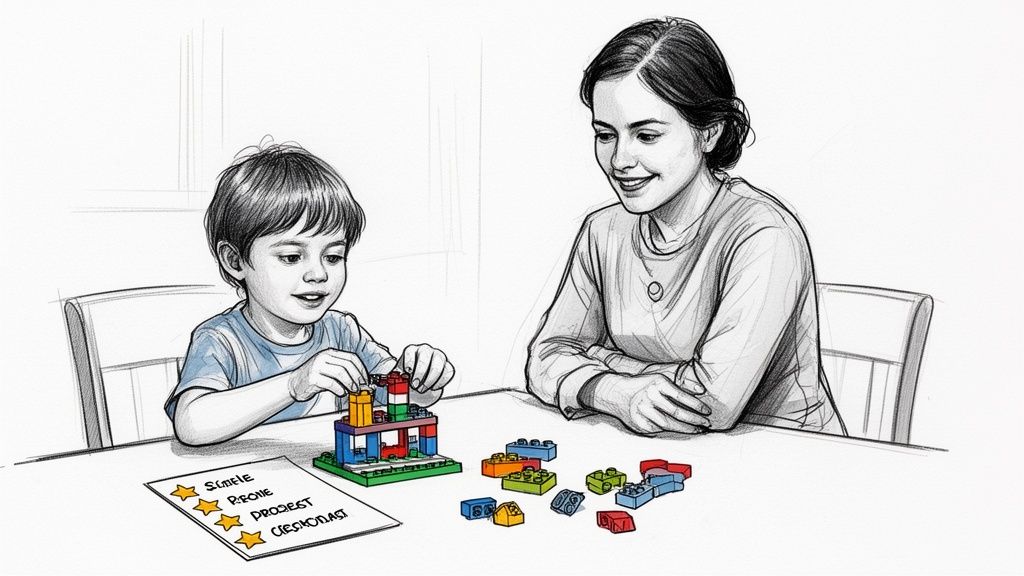
The most powerful antidote to school burnout is reconnecting your child with their own interests and sense of control. When the school day feels draining, home needs to become the place where they remember what it feels like to be curious, creative, and in charge.
The goal is to gently shift them from passive consumption to active creation. It starts with a simple spark of interest and just enough structure to turn their curiosity into a tangible project they feel proud of. This is the core of building agency.
From Spark to Skill: A Simple Recipe
You can turn any interest into a meaningful, skill-building activity. This recipe provides structure without killing the fun.
Here’s the breakdown:
- Find the Spark: Notice what they're already drawn to—Minecraft, drawing comics, LEGO cities? Start there.
- Name the Skill: Gently frame the activity around a real-world skill like creativity, problem-solving, or communication.
- Add a Constraint: Give them a clear time limit (like 15 or 20 minutes) and define the materials. This makes the task feel achievable.
- Give Actionable Steps: Break the project down into 3-5 simple, action-oriented steps.
- Guide Feedback & Reflection: Use open-ended questions to encourage them to think about what they made.
When a child ships a project, no matter how small, they get a dose of confidence that no letter grade can provide. They learn that their ideas are valuable.
A 20-Minute Agency Builder for Tonight
Let's make this real. Imagine your child loves drawing characters. Here’s how to turn that spark into a 20-minute project that builds creativity and communication skills.
| Phase | Action Step | Parent Script |
|---|---|---|
| 1. The Spark | Acknowledge their interest. | "I love the new character you drew. What if we created a world for them to live in?" |
| 2. The Quest | Set the creative challenge and constraints. | "You have 20 minutes to draw a one-page comic showing your character on their first adventure. Use any paper and markers you want." |
| 3. Feedback | Encourage a second version (v2). | "This is an awesome start! What's one thing you would change in the next panel to make the story even clearer?" |
| 4. Reflection | Prompt them to think about their process. | "Which part was the trickiest to draw, and how did you figure it out?" |
This exercise does more than fill time. It hands the steering wheel back to your child, restoring a sense of control and proving learning can happen anywhere, on their terms.
If you like project-based learning but want it doable at home, Kubrio is a family-driven learning platform that handles the planning and feedback so you can focus on building and reflecting together.
Knowing When to Call in Reinforcements
Most school struggles can be turned around with the right strategies at home and a good school partnership. But sometimes, you need to bring in an expert.
Trust your gut. If you’ve tried everything and the situation isn’t getting better—or it’s getting worse—it might be time for professional support. This isn’t a sign you’ve failed; it’s a smart, proactive step.
Red Flags That Signal It's Time for a Deeper Look
There’s a difference between a rough patch and a persistent, painful pattern. If you notice these behaviors consistently, it's a signal to reach out for an expert opinion.
- Persistent Physical Symptoms: Frequent stomach aches or headaches that vanish on weekends are a classic sign that stress is manifesting physically.
- Significant Behavioral Shifts: Has your social kid become withdrawn? Is your calm child having frequent, intense emotional outbursts?
- Complete School Refusal: This is when morning complaints become a flat-out refusal to get out of the car, walk through the school doors, or even get out of bed.
- Intense and Lingering Anxiety: When worries about school dominate conversations, disrupt sleep, or prevent them from enjoying things they used to love.
- Signs of an Underlying Learning Difference: If your child is putting in effort but consistently hitting a wall with reading, writing, or math, frustration may be rooted in an undiagnosed challenge.
Seeking an assessment isn't about finding a label. It's about finding answers. An educational psychologist can provide a clear roadmap for accommodations at school and strategies at home that align with how your child’s brain works.
A great first step is a conversation with your pediatrician. They can rule out underlying medical issues and provide trusted referrals to child therapists or psychologists.
FAQ: My Child Hates School
When your child says "I hate school," a million questions race through your mind. Let's walk through some common concerns.
Is this just a phase, or something more? It could be a phase, but don't assume. When complaints become a daily pattern accompanied by anxiety or refusal, it signals a deeper problem. Treat every "I hate school" seriously but calmly. Use it as an invitation to get curious and understand what's really happening in their world.
How can I help if they won't tell me what's wrong? Stop asking and start doing. Connect through shared, low-pressure activities like building LEGOs or baking. Conversation flows more naturally when you're side-by-side. In the meantime, focus on rebuilding their confidence outside of school with small, interest-based projects where they can feel successful and in control.
What if I suspect the teacher or school is the problem? Become a gentle detective. Document specific examples of what your child has said and behaviors you've noticed. Schedule a meeting and approach the conversation as a partner, not an adversary. Frame it with a shared goal: your child's well-being. If a collaborative approach doesn't lead to change, escalate to the school administration with your documented concerns.