
Personalized Learning with AI: Your Guide to Agency-First Learning at Home
Is your child's learning stuck in a loop of worksheets and quiz apps? It's time to trade passive screen time for projects that build real skills and confidence. Personalized learning with AI offers a new path—one that starts with your child's curiosity, not a fixed curriculum. It’s a powerful way to prepare them for an AI-shaped future without turning childhood into test prep.
Moving Beyond the Legacy School Model with Personalized AI Learning
When most of us think of learning at home, we picture digital flashcards or apps that quiz but don’t build. That’s the legacy school model in action—a one-size-fits-all approach that asks kids to consume information instead of creating something with it. While well-intentioned, this method often misses the most important ingredient for deep learning: your child’s own natural spark.
Personalized learning, supercharged with AI, offers a powerful alternative. Instead of a pre-set agenda, it starts with your child's interest—whether that’s Minecraft, outer space, or designing a map of your neighborhood. AI then acts as a co-pilot for you, the parent, helping translate that interest into a meaningful project with clear, bite-sized steps.
Shifting From Consumption to Creation
The real game-changer is the move from being a passive consumer to an active creator. An AI-assisted approach doesn't just hand kids facts; it prompts them to build, test, and reflect. Along the way, they develop real-world skills and, most importantly, agency—the powerful feeling that their choices matter.
Here's what that shift looks like:
- From memorizing facts to solving problems: Kids use knowledge to create something tangible.
- From getting a grade to getting feedback: The goal is improving from a first draft to a second.
- From completing assignments to building a portfolio: Their work tells a clear story of growth over time.
As we lean into more dynamic learning, understanding broader practical strategies for AI in education can open up new possibilities. This parent-led, AI-assisted model isn’t about more screen time. It’s about making sure learning time actually sticks.
To see the difference, let’s compare these two approaches.
Comparing Learning Models at Home
Here's a quick look at the difference between the passive, one-size-fits-all model and an agency-first, AI-assisted model for families.
| Feature | Passive 'Legacy School' Model | AI-Assisted Personalized Learning |
|---|---|---|
| Starting Point | Pre-set curriculum or worksheet | Child's genuine interest or question |
| Child's Role | Consumer of information | Creator and problem-solver |
| Parent's Role | Supervisor or task-master | Co-designer and learning guide |
| Focus | Correct answers and completion | Process, iteration, and skill-building |
| Outcome | Temporary memorization, grades | A tangible project, a portfolio of work |
| Motivation | External (grades, rewards) | Internal (curiosity, pride in creation) |
This table makes it clear: one path is about following instructions, while the other is about building skills through action.
The Growth of Tailored Education
This move toward learning built for the individual isn't a niche trend; it’s a massive shift. The personalized learning market is exploding, projected to jump from $4.74 billion to $5.96 billion in just the next year.
That growth isn’t just hype. It shows a widespread recognition that AI can help make learning a deeply personal experience, boosting both engagement and outcomes. For families, this means having access to tools that make skill-building at home more effective and joyful.
How Parents Become Learning Designers With AI
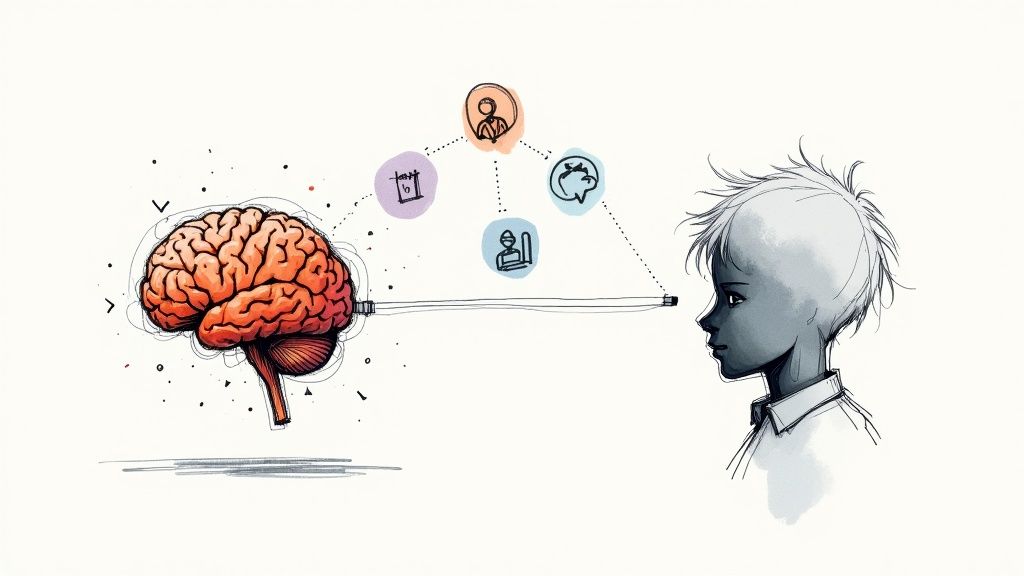
Using AI in your child’s learning doesn't push you to the sidelines—it puts you in the director's chair. Your role shifts from delivering information to becoming a learning designer. This is a powerful change because you know your child better than any algorithm ever could. You know what sparks their curiosity and what makes them shut down.
Think of AI as your creative partner. It handles the heavy lifting of planning and structuring projects, freeing you to focus on what really matters: connection, encouragement, and guiding your child through the process. It’s a partnership where your deep knowledge of your child meets AI’s ability to generate customized ideas.
This changes learning from a chore into a collaborative adventure. You’re no longer just supervising homework; you’re co-creating experiences that build real skills and confidence.
Turning Inspiration Into Action
The biggest hurdle for many parents is turning a child's fleeting interest into a real project. A kid says they like Minecraft, and you're left wondering, "Now what?" AI acts as an instant bridge over that gap.
It can take a simple prompt like "my 8-year-old loves Minecraft and building things" and draft a multi-step quest with a clear goal, a materials list, and even time estimates. This process builds agency, as your child sees their ideas quickly become actionable plans.
Here’s how AI helps you design perfect learning moments:
- Generates Right-Sized Quests: You can ask for project ideas that fit your schedule, whether you have 10, 20, or 45 minutes.
- Provides Structure: AI can outline clear, simple steps that keep your child from feeling overwhelmed.
- Suggests Materials (and Alternatives): Every generated plan comes with a list of supplies, plus a no-kit option for when you need to start right now.
For families just starting to explore these tools, our guide on AI for kids offers more context for getting started safely.
Giving Feedback That Builds Confidence
One of your most critical roles is giving feedback. Generic praise like "good job!" feels nice, but it doesn't help a child grow. AI can arm you with specific, open-ended questions that prompt deeper thinking and build resilience.
Instead of judging the final product, you guide the process.
Parent Script Example: "That's a great first version! Show me where you got stuck and how you figured it out. What’s one change you want to make for version two?"
This kind of feedback celebrates effort and iteration over getting it perfect the first time. It teaches children that mistakes are part of the process. You're not the expert on the topic; you're the expert on helping them learn how to learn.
Structuring the Learning Environment
A well-designed learning space can make a huge difference, and it doesn't have to be complicated. You don't need a dedicated classroom—just a clear spot for focused work.
Consider this simple setup:
- A defined workspace: A corner of the kitchen table is perfect.
- Materials within reach: Keep common supplies like paper and pencils in a designated bin.
- Clear time boxes: Use a timer to honor the 10, 20, or 45-minute commitment.
- Minimize distractions: Put phones away and turn off the TV during project time.
By intentionally designing the environment and the feedback loop, you create a supportive framework where your child can confidently take the lead. This is the heart of personalized learning with AI—it equips you to be the architect of your child’s learning journey.
Turning Your Child's Interest Into a Real Project
The idea of AI-powered learning sounds great, but what does it look like on a busy Tuesday night? The magic happens when you catch a spark of curiosity—dinosaurs, building forts, coding a game—and help your child turn it into a project that builds skills. This is where AI becomes your hands-on co-pilot.
It all starts with a simple framework any parent can use: the Activity Design Recipe. You don't need a degree in paleontology to explore a love for dinosaurs; you just need a process to guide their curiosity. The goal is to get from a passing interest to a tangible thing they can hold up and be proud of.
This process shows how AI can take a child's interest and spin up a personalized learning path, almost instantly.
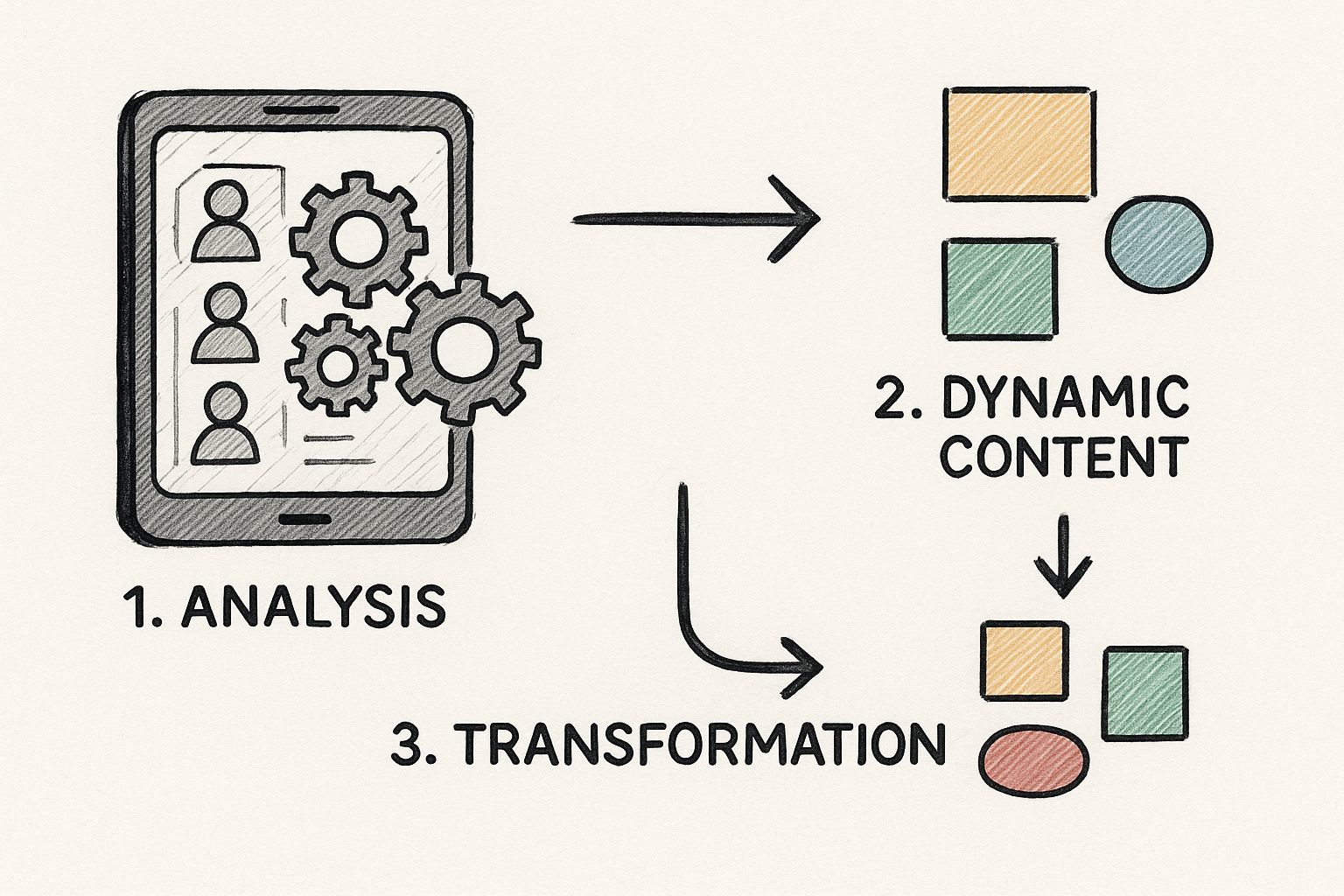
The key is the flow from a simple input—what your kid is excited about right now—to a structured, multi-step output that’s ready to go.
The Activity Design Recipe Step-by-Step
Let's walk through how this works using a classic example: a child who is suddenly obsessed with building forts.
1. Identify the Spark Start with what your child already loves. Frame it with a simple phrase: "Because you like building forts..." This validates their interest and shows that what they care about is the starting point.
2. Name the Target Skill Connect their interest to a core skill. Building a fort isn’t just play; it's a chance to practice creativity, communication, or systems thinking. For this project, let's say the target skill is creativity.
3. Set Clear Constraints Constraints are a parent's best friend. They prevent projects from spiraling and help kids focus.
- Time: 45 minutes
- Materials: 3 blankets, 4 chairs, 6 pillows, 1 flashlight
- Safety: Build in an open space, away from anything breakable.
- No-Kit Option: Design the fort on paper with detailed labels for each part.
4. Draft 3–5 Simple Steps Here's where you can lean on AI. A prompt like, "Create a 45-minute fort-building quest for a 7-year-old focusing on creativity," can generate a clear plan.
- Step 1: Sketch a design for your fort on paper.
- Step 2: Gather your materials and build the first version (v1).
- Step 3: Test its strength. Does it stand up on its own?
- Step 4: Make one improvement to your design and build version two (v2).
- Step 5: Give a tour of the finished fort, explaining your favorite part.
5. Guide with Feedback Prompts Your role isn't to judge the fort. It's to guide the thinking process. The leap from v1 to v2—iteration—is where the deepest learning happens. Use open-ended questions to get them thinking.
“Show me your first version. What’s one thing you plan to change for version two to make it stronger?”
Another great question is: “Where did you get stuck, and how did you figure out a way to get unstuck?” This helps your child build grit and see their own resourcefulness. These are the moments that build genuine confidence.
Why This Process Works
This structured approach transforms passive interest into active creation. Your child isn't just consuming facts about forts; they are becoming an architect and engineer. They’re making decisions, solving problems, and seeing the results of their effort.
A platform like Kubrio uses AI to turn your child’s interests into these step-by-step quests. Start from any spark—dinosaurs, video editing, chess tactics. Kubrio drafts right-sized quests (10, 20, or 45 minutes) and guides you on what feedback to give. Finished work saves to a portfolio so growth is simple to see and share.
How AI Helps You See and Celebrate Real Progress
One of the toughest parts of learning at home is figuring out if your child is really getting it. A finished worksheet is disposable. But a completed project—a hand-drawn map, a short video, a coded game—is a genuine artifact of learning. It’s tangible proof of effort and skill.
AI-assisted learning changes the game by automatically capturing this progress, creating a living portfolio that showcases real growth. It’s the difference between a flat report card and the rich story of your child’s learning journey.
This approach looks past simple grades to highlight what truly matters for the future: effort, resilience, and creative thinking. It’s about celebrating the process, not just the final product.
Capturing the Full Story of Learning
A great learning portfolio does more than just save the final project. It captures the process of getting there. It shows the initial sketch, the first draft, and the polished final version. It also saves the reflections your child had along the way.
This creates a powerful narrative of growth that a simple score could never convey. It shows how a child overcame a challenge, incorporated feedback, and pushed an idea from a rough draft to something they're proud of. For AI to adapt effectively, it relies on an understanding formative assessment principles, where continuous feedback is key.
If you like project-based learning but want it doable at home, Kubrio handles the planning and feedback so you can focus on building and reflecting together.
Building Confidence Through Tangible Proof
When children can see a visual timeline of their work, something powerful happens. They see undeniable proof of their own progress. They can look back at a project from three months ago and see how far their skills have come.
This isn't about comparing them to others; it’s about comparing them to their past selves. This builds deep, intrinsic motivation and a powerful sense of agency.
"I love being able to show my daughter her portfolio. She can scroll back and see the first robot she ever built and compare it to her latest one. It’s a huge confidence booster." — Sarah, Parent in Austin
This visible progress is also incredibly valuable for homeschooling records or sharing with family. It tells a much richer story than any test score. Our guide on building a digital portfolio for students offers more ideas on how to get started.
This tangible evidence helps children internalize their own capabilities. They stop seeing challenges as threats and start seeing them as opportunities to add another impressive artifact to their collection. This shift in mindset is the ultimate goal of agency-first learning.
Managing Screen Time and Safety With AI Learning
Let’s talk about the elephant in the room: What about screen time? It's a worry every parent feels, and for good reason.
The key is to draw a line between passive consumption—zoning out to videos or tapping through quiz games—and active, productive creation. With the right tools, the screen becomes an instrument, not the destination.
The goal of personalized learning with AI isn't to log more hours on a device; it's to make those hours count. We're shifting away from mindlessly absorbing content and toward actively building, designing, and solving problems. This is the crucial leap past the old "edutainment" model, where the only thing your child produces is a high score.
From Passive Viewer to Active Creator
Here’s the real test for any AI learning tool: Does it encourage your child to look up from the screen and engage with the world?
Does it spark an idea that has them building something with their hands, testing a concept in the backyard, or grabbing a sibling to work on a project? If the screen is just a launchpad for off-screen making and discovery, you're on the right track.
When that happens, the screen is no longer a passive babysitter. It’s a powerful creative partner.
A Practical Framework for Families
Of course, even creative screen time needs healthy boundaries. The best way to make rules stick is to create them with your child. This gives them a sense of ownership and builds agency.
Here are a few simple things you can do tonight:
- Set Clear Time Boxes: Agree on project time, like 20 or 45 minutes, and use a visible timer.
- Define "Tech-Free" Zones and Times: Make the dinner table or bedrooms screen-free zones to protect family connection.
- Prioritize Tools with Built-in Safety: Look for platforms that offer safety notes and offline alternatives for every activity.
- Talk Openly About Online Behavior: Have ongoing conversations about kindness and respect. For a deeper dive, check out our parent guide on online safety for kids.
The global EdTech market is on track to hit $404 billion this year, with a huge chunk driven by AI tools. By choosing the right ones, you ensure this technology serves your family’s goals, not the other way around. You can read more about these growing AI in education statistics to get the full picture.
Ultimately, managing screen time isn't just about counting minutes. It’s about maximizing the quality and purpose of those minutes. When an AI tool helps your child create something they are proud of, it stops being a distraction. It becomes an engine for building real-world skills and confidence.
Preparing Kids for the Future With Agency-First Learning

Let's be honest. The skills that will matter in the future aren't the ones you can find on a worksheet. Success won't come from memorized facts, but from creativity, collaboration, and the grit to solve problems nobody has seen before. This is why an agency-first approach is so critical for getting kids ready for a world shaped by AI.
Instead of turning childhood into a high-stakes race for test scores, personalized learning with AI fosters something far more valuable: a love for learning. It meets your child where they are, building on their curiosity to develop the most important skill they’ll ever have—learning how to learn.
Building Motivation From the Inside Out
When learning kicks off with a child's own interests, the battle over motivation disappears. An AI-assisted approach helps you connect a fascination with dinosaurs or video games to a real, skill-building project.
This process builds deep, unshakable confidence. Your child gets to see their own ideas become tangible things they can hold, test, and improve. This is the incredible feeling of seeing their own agency at work. They learn that they can have an idea, make a plan, and bring something real into the world.
You are the most important designer of your child’s education. AI is simply a powerful tool to help you do it effectively, reinforcing your role without replacing it.
This shift is already happening at lightning speed. A stunning 92% of students now use AI tools regularly, a massive leap from just 66% the previous year. This rapid adoption isn't just a trend; it shows how intuitive and genuinely useful these tools have become.
Why Agency Is the Ultimate Future-Ready Skill
Ultimately, putting agency first builds the kind of thinkers and creators the world needs. It develops kids who are resourceful, adaptable, and unafraid of a blank page. They learn to ask good questions, test their assumptions, and improve their work without waiting for instructions.
This is the very heart of personalized learning with AI. It’s a partnership where technology amplifies your ability to guide your child’s unique journey. By focusing on agency, you give them the tools not just to succeed in the future, but to get out there and actively build it.
Answering Your Questions About AI Learning at Home
Jumping into personalized learning with AI can feel like a huge leap, but it’s often more straightforward than you think. Here are a few answers to the questions we hear most from parents.
How Do I Get Started if I’m Not a Tech Expert?
You don’t need to be. The best AI learning tools are built for parents, not coders. The easiest way to start is by picking one platform that helps you turn your child’s interests into simple projects.
Try this: choose one thing your child is obsessed with right now and use a tool to spin up a quick, 10-minute quest. Don't worry about mastering the technology; focus on the fun of making something together. The AI is there to do the heavy lifting.
Isn’t This Just More Screen Time?
This is an important question. The big difference here is the shift from passive consumption to active creation. A good AI-driven learning experience should use the screen as a launchpad for things that happen away from it—building, sketching, and experimenting.
A simple rule of thumb: If the tool helps your child make something they can hold or show you, it’s productive screen time. If the main outcome is a high score, it’s just consumption.
Look for platforms that offer plenty of no-kit options and encourage getting hands-on with materials you already have.
What’s the Right Age to Start?
Most kids are ready to dive into this style of learning around age 6 or 7. This is the sweet spot where their natural curiosity is off the charts. From there, the complexity of the projects can grow with them.
For younger kids (6–9), stick with short quests that involve hands-on building. For older kids (10–13), you can start weaving in more complex skills like research and peer feedback. The right AI tool will adjust the difficulty and steps based on their age.
How Do I Know if My Child Is Actually Learning?
Look for the artifacts. Unlike a worksheet, a completed project is undeniable proof that a skill has been applied. A platform that automatically builds a digital portfolio of their work is a game-changer here.
You can see their progress by comparing their first attempt (v1) with their second (v2). Did they try a new approach? Did they solve a problem? This visible growth in effort and creativity is a much better measure of real learning than any test score. The portfolio tells the story of their journey.