
Preventing Summer Learning Loss Without the Fights
Beating the summer slide isn’t about turning your home into a summer school. Forget the worksheets and flashcards that lead to passive consumption. The real secret is to shift your child from being a consumer of information to an active creator.
This is about building their agency—turning their natural curiosity into small, meaningful projects that build real-world skills. This simple switch gives them ownership over what they learn, making it feel less like a chore and more like an adventure.
What is the Summer Slide, Anyway?
You’ve probably heard the term "summer slide." It’s a real, measurable dip in academic skills that happens when kids are out of school. Of course, a break is crucial for rest. But a long stretch without engaging learning can cause setbacks, especially in subjects like math and reading where skills build on each other.
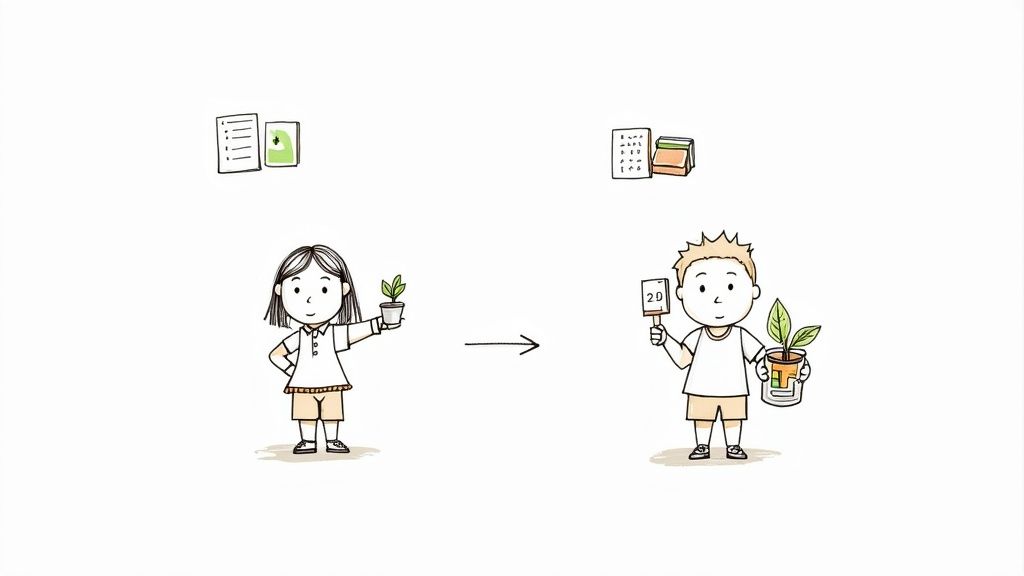
This isn’t a new panic. Research from 1996 found that students lose about two months of grade-level learning over the summer. The drop-off was most noticeable in math, which helps explain why teachers often spend the first few weeks of school just reteaching last year's concepts. You can dig into the early findings on summer learning loss from EBSCO to learn more.
The real enemy isn’t the vacation. It’s the passive, one-size-fits-all “learning” often pushed as a solution—endless worksheets, quiz apps, and edutainment that only ask kids to consume, not create. This stuff just leads to boredom and pushback.
The goal isn't just to keep kids from forgetting fractions. Summer is a golden opportunity to build their agency—their ability to take charge, make decisions, and see a project through from start to finish.
The True Cost of Inactivity
When kids don't actively use their skills, those neural pathways can weaken. It’s like a muscle; if you don’t use it, you lose it. This slide doesn't just show up on a test score; it can chip away at a child’s confidence when they walk back into the classroom.
Learning is sequential. A child who starts the year behind is stuck in a game of catch-up, which is stressful and discouraging. Preventing the summer slide is less about avoiding a deficit and more about building momentum for the year ahead.
The Opportunity Hidden in the Break
Instead of seeing summer as a problem, see it as a chance to learn differently. The legacy school model chops subjects into boxes. Summer breaks those walls down, opening the door for projects that blend skills:
- Creativity: Designing a superhero costume or building a model rocket.
- Research: Diving into the history of their favorite video game.
- Communication: Filming a short tutorial to teach a friend a new skill.
- Grit: Sticking with a problem and debugging a simple line of code.
This reframes the challenge. The focus shifts from preventing loss to sparking curiosity and independence. When you help your child chase what excites them, you’re not just prepping them for the next grade. You're giving them the self-motivation they’ll need for the future.
The Agency-First Method for a Meaningful Summer
To beat summer learning loss, stop trying to turn your home into summer school. The goal isn’t fighting the slide with flashcards. The secret is building momentum through agency, where kids learn because they are invested in what they're doing.
This agency-first method is about helping your child make, ship, and reflect on projects they care about.
It’s the polar opposite of passive, app-driven alternatives that quiz kids without helping them build anything. Those tools often feel like more of the same one-size-fits-all learning, creating resistance and squashing curiosity.
An agency-first summer channels your child's natural interests—Minecraft, baking, or YouTube editing—into skills that will serve them for life.
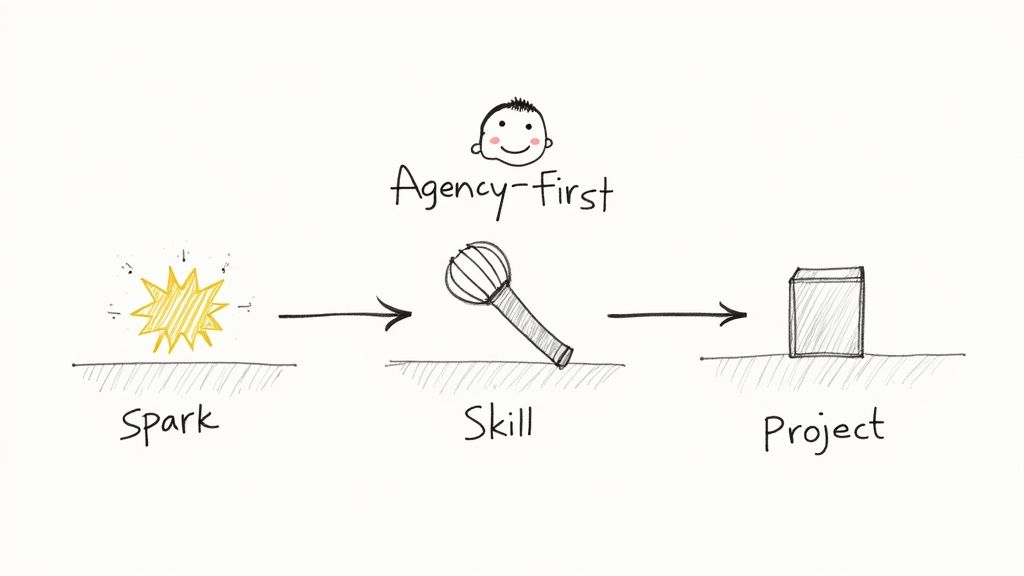
The Spark → Skill → Project Framework
The simplest way to put this into practice is with a three-part framework you can use tonight. It connects your child's passions to meaningful skill development.
Here’s the breakdown:
- Spark: Start with what they already love. This is the "because you like..." part of the conversation.
- Skill: Pinpoint one core skill: creativity, communication, systems thinking, research, collaboration, or grit.
- Project: Define a small, doable project with a clear finish line.
This structure gives you a repeatable recipe for turning any interest into a learning opportunity. The best part? It puts your kid in the driver's seat.
Parent Script: “I know you’re really into building complex structures in Minecraft. Because you like that so much (Spark), let’s practice systems thinking (Skill) by designing a self-sustaining farm (Project). What do you think?”
This simple script reframes the activity. It's not an assignment; it's a challenge born from their interest. You're the co-conspirator helping them do something cool. For parents looking to take this further, understanding personalized learning with AI can unlock more ways to tailor projects.
From Consumption to Creation
Shifting from passively consuming to actively creating is the key to preventing summer learning loss. When a child watches a video or answers quiz questions, the learning is often shallow.
But when they research, plan, build, test, and revise, they engage on a much deeper level.
Quick examples:
- Interest in baking → Skill: Communication → Project: Film a 60-second tutorial on how to decorate a cupcake.
- Interest in YouTube → Skill: Research → Project: Create a one-page report on the top three channels in their favorite genre.
- Interest in LEGOs → Skill: Creativity → Project: Build a vehicle that can carry a small toy across the room.
Each project results in a tangible artifact—a video, a report, a model. This output becomes proof of their effort. This is how you start building a portfolio of their work, making growth visible. Kubrio is a family-driven learning platform that uses AI to turn your child’s interests into step-by-step quests with feedback and a living portfolio.
This agency-first approach sets the stage for a summer filled not with academic catch-up, but with genuine discovery.
Creating Your Family's Summer Learning Rhythm
A summer filled with meaningful learning doesn't happen with a rigid, hour-by-hour schedule. That approach usually burns everyone out by mid-July.
The key to beating summer slide is a simple, flexible learning rhythm. Think of it as a predictable flow to your week that carves out space for focused projects and fun. This isn't about micromanaging; it's about building a loose structure that makes learning a natural part of summer life.
A good rhythm manages expectations. It dedicates time for kids to go deep on things they care about, without the constant "what are we doing now?" struggle.
Designing Your Weekly Flow
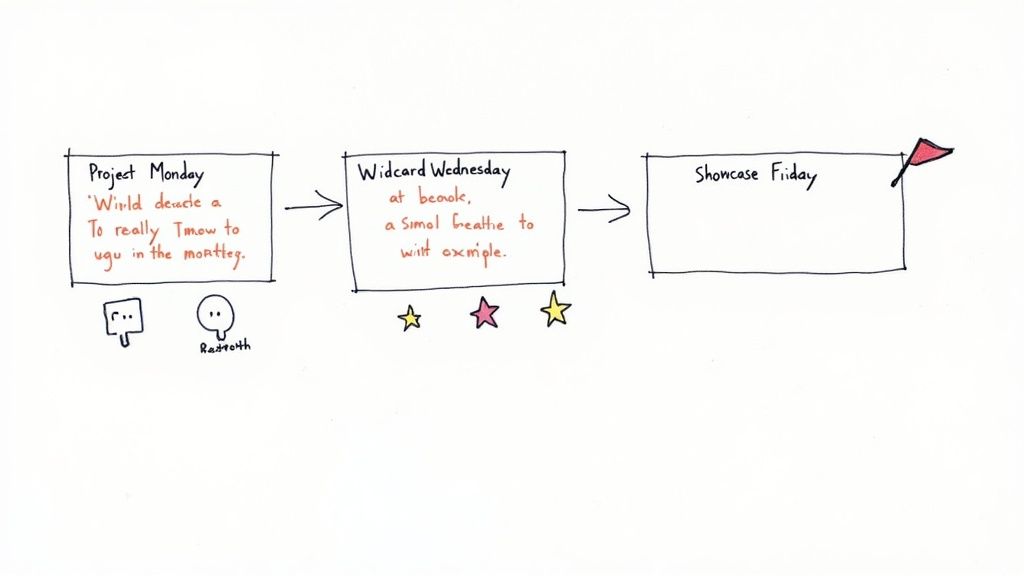
A great way to start is by giving each day a gentle theme. This gives just enough structure without feeling like school-at-home. The goal is a pattern that balances making, moving, and reading.
Here’s a sample rhythm you can adapt for your family:
- Project Mondays: Kick off the week by starting a new quest. This is prime time for brainstorming and planning.
- Tinker Tuesdays: This day is for getting hands-on. Build, code, mix, or test ideas and work through snags.
- Wildcard Wednesdays: A day for a change of pace. A trip to the library, a nature hike, or a family challenge.
- Thoughtful Thursdays: Time for quieter activities like reading, journaling, or writing a script for a video.
- Showcase Fridays: Kids share what they’ve made, even if it's a rough first draft. This builds presentation skills and celebrates effort.
This flow gives your child a clear sense of what to expect while leaving room for their choices. For younger kids, a consistent rhythm is a great way to weave in skills. You might explore integrating preschool reading into daily routines so it feels natural, not like a chore.
Setting Expectations Together
The secret to getting buy-in? Design this rhythm with your child. A simple conversation can make all the difference.
Parent Script: "Let's figure out a good rhythm for our summer so we have time for your projects, playing outside, and relaxing. What’s one big thing you want to make or learn? Let's build our week around making that happen."
This act of collaboration makes them a partner in the plan. You can even create a simple visual checklist together.
This is a fundamental shift from a rigid schedule to a rhythm that breathes.
Old Schedule vs. Agency-First Rhythm
| Element | Old Schedule (The Enemy) | Agency-First Rhythm (Our Approach) |
|---|---|---|
| Focus | Completing assigned worksheets | Exploring interests through projects |
| Pacing | Rigid, time-based blocks (9-10 AM Math) | Flexible, theme-based days ("Tinker Tuesday") |
| Motivation | External pressure from parents | Internal drive from curiosity |
| Outcome | Finished worksheets, shallow learning | Tangible artifacts and reflections |
| Parent's Role | Enforcer or teacher | Co-conspirator and facilitator |
| Child's Feeling | Boredom and resistance | Engagement and ownership |
This agency-first rhythm is designed to kill burnout by building on a child's natural curiosity. It’s built on the truth that real learning happens when kids chase a spark and see it through to something they can be proud of.
If you like project-based learning but want it doable at home, Kubrio handles the planning and feedback so you can focus on building and reflecting together.
Turning Interests Into Actionable Summer Quests
How do we do something about the summer slide without becoming tutors? Stop thinking about "school subjects" and start thinking in projects.
We call them "Quests"—small, manageable challenges with a clear finish line that you can start tonight.
This isn't about piling more onto your plate. It’s about channeling the energy your kid already pours into Roblox or YouTube into activities that build real skills. Every Quest follows a simple recipe: Interest → Skill → Constraint → Steps → Feedback → Share → Reflect. It’s a framework that hands your child the reins.
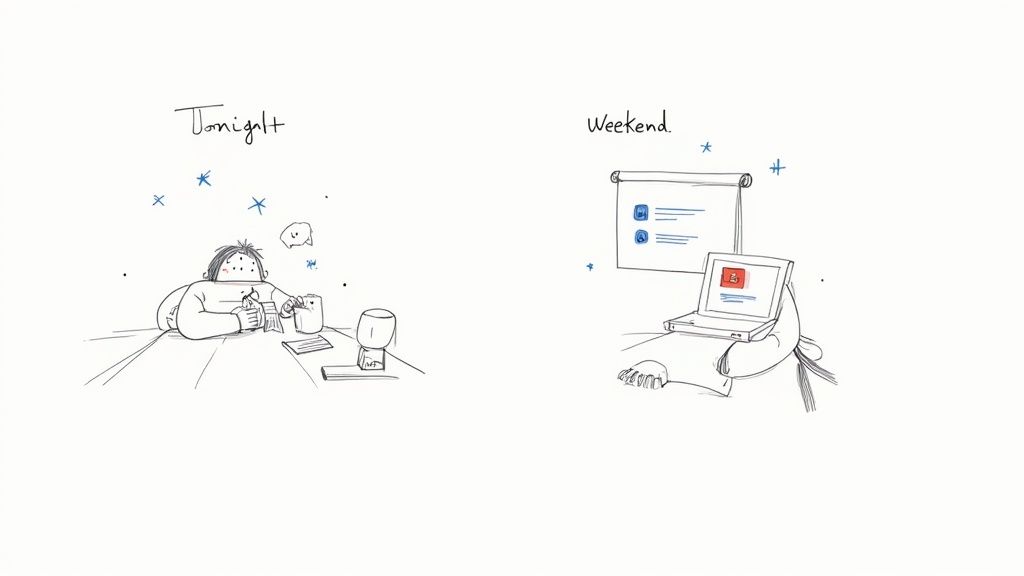
Think of it this way: you can either force a late-night scramble over a worksheet, or you can plan a relaxed, fun weekend project. Quests are designed to feel like the weekend version—structured enough to work, but fun enough that no one is dreading it.
Here are a few examples you can try right away.
Quest 1: The Video Game Critic
This is a game-changer for any kid who loves video games. It subtly shifts them from consumer to thoughtful analyst.
- Interest → Because you love playing video games…
- Skill → Let's practice Communication.
- Constraint → Time: 20 min • Materials: Paper/pencil or notes app • No-kit option: Tell a friend instead of writing.
- Steps →
- Pick your favorite (or least favorite!) game.
- Jot down three things the designers did really well.
- Write down one thing you’d change to make it better.
- Shape those thoughts into a punchy "one-minute review."
- Parent Feedback Prompts →
- “Show me v1 → what will you change in v2?”
- "That’s a sharp point about the controls. How would your change make it easier for new players?"
Weekend Version (45 min): Turn that review into a 60-second video. This adds scripting, speaking on camera, and basic editing.
Quest 2: The Neighborhood Cartographer
Perfect for the kid who’s always exploring. This Quest builds spatial awareness and design thinking.
- Interest → Because you love exploring our neighborhood…
- Skill → Let's practice Systems Thinking.
- Constraint → Time: 45 min • Materials: Large paper, markers • Safety: Adult nearby for exploring.
- Steps →
- Walk around one block and note key landmarks—the big tree, the house with the red door.
- Come back and draw a simple map from memory (v1).
- Go out again to fact-check your map. What did you miss?
- Create a final version (v2), adding a map key with symbols.
- Parent Feedback Prompts →
- "What was the biggest difference between your first map and the final one?"
- "Where did you get stuck, and how did you unstick it?"
Quest 3: The Mystery Solver
If your child is hooked on puzzles, this Quest channels that into research and critical thinking. If you need inspiration, finding captivating 4th grade mystery books can turn reading into an adventure.
- Interest → Because you like solving mysteries…
- Skill → Let's practice Research.
- Constraint → Time: 20 min • Materials: A book, paper, pencil.
- Steps →
- Read the first chapter of a new mystery book.
- Write down three clues the author has dropped.
- Make one bold prediction: Who is the culprit, and why?
- Pitch your theory to a family member.
- Parent Feedback Prompts →
- "That's a great prediction! Which clue makes you most confident?"
- "What question are you hoping the next chapter answers?"
This kind of structured, interest-led project provides consistency. Research shows that for summer programs to have a benefit, they need consistent engagement. Many formal programs struggle to meet the ideal length of five weeks. With short, focused Quests, you can create that rhythm at home.
Of course, coming up with these ideas on the fly is a job in itself. That’s why we built Kubrio. Start from any spark—dinosaurs, video editing, chess tactics. Kubrio drafts right-sized quests (10, 20, or 45 minutes) and guides you on what feedback to give. Finished work saves to a portfolio so growth is simple to see and share.
Building a Living Portfolio to See Real Growth
How do you know if all this summer learning is working? Forget quizzes. The answer is simpler and more inspiring.
Track their journey by building a living portfolio—an ongoing collection of your child's work and their thoughts about it.
This isn’t about creating a high-pressure showcase. It's about making growth visible in a way that feels natural and motivating. A living portfolio can be a shared photo album or a folder on your laptop. The goal is to capture what they create and pair it with their reflections.
Capturing the Evidence of Effort
Every entry should be quick. The formula is simple: a picture of what they made, plus a quick thought about it. This tiny habit turns abstract effort into tangible proof of accomplishment.
Here’s what an entry might look like:
- Photo: A snapshot of a hand-drawn map of your neighborhood.
- Caption: “Neighborhood map v2 — added symbols and a key after testing the route.”
- Reflection: A quick voice note from your kid saying, “I added the key because my first map was confusing for Dad to read.”
This process gives your child a powerful way to see their own progress. They can compare their first attempt to their final version. Suddenly, concepts like iteration and improvement feel real. It’s a concrete way to celebrate the messy thinking that happens along the way.
The Power of the Debrief
Documenting projects is half the story. The magic happens in the conversation that follows. Asking the right questions helps your child think critically about their process. This is where you build resilience.
Try these conversation starters:
- “Show me your favorite mistake and what it taught you.”
- “What changed between v1 and v2?”
- “Which step took the most effort, and what would you try next time?”
These questions shift the focus from a generic "good job" to a meaningful discussion. This is vital. By fifth grade, children from low-income families can be nearly three grade equivalents behind their peers—a gap fueled by unequal summer learning. To learn more, explore research on the summer achievement gap from the San Diego Foundation.
A living portfolio focuses on individual growth and agency, giving every child proof of what they can achieve.
Parent Quote: "The portfolio was a game-changer. Instead of me nagging him about 'doing something educational,' he was excited to add his stop-motion video to our album. He could actually see his animation getting smoother." — Sarah, Austin
If you love project-based learning but don't have the bandwidth to plan it all, that's where Kubrio comes in. It handles the planning and feedback so you can focus on building and reflecting together. The platform automatically saves their finished work and reflections to a portfolio, making it simple to see and share your child's growth.
Burning Questions About Summer Learning
Here are common hurdles parents face and how an agency-first approach changes the game.
How many hours a day should my kid do this?
Forget the clock. The goal is a consistent rhythm, not racking up hours. A single, focused 20-minute quest where your child is excited is more powerful than hours of mind-numbing work. A daily habit of creating and thinking is all it takes to fend off the summer slide.
What if my child just wants to play video games?
Perfect. That's your starting point. Video games are a goldmine for learning—packed with systems thinking, storytelling, and problem-solving. Shift their role from consumer to creator.
- Love Minecraft? Challenge them to build a historically accurate Colosseum.
- Obsessed with Roblox? Have them design a new game level on paper.
- Big into Fortnite? Ask them to create a 30-second tutorial explaining one strategy.
This connects what they love to tangible skills. See our guide to project-based learning for elementary schoolers.
How can I manage this with kids of different ages?
Project-based learning is a lifesaver here. Create one "family quest" where everyone has a role.
For a family mission to "design a new board game," your 12-year-old can write the rules (communication skills), while your 7-year-old designs the board and pieces (creativity boost). This setup naturally teaches collaboration and how to give and receive feedback.
My kid hates anything that feels like school. How do I get them on board?
Stop making it feel like school. Change the language and hand over control. Banish words like "assignments." Frame everything as a "mission" or "quest." Then, ask them: "What's one cool thing you want to make this week?" When the idea comes from them and the goal is a real-world creation—a clay model, a short film—it feels like play. This is the heart of agency-first learning. Need a spark? We have a list of project ideas for kids.