
A Parent’s Guide to Project-Based Learning
Does your child’s learning feel like a race to memorize facts for a test? Many of us grew up with the legacy school model: sit still, absorb information, and prove you remembered it. But that passive approach struggles to prepare kids for a world that requires creativity and resilience, not just right answers.
What if learning was active, driven by your child's own curiosity? That's the core idea behind project-based learning (PBL).
It’s a hands-on method where kids tackle real-world challenges to create something they can be proud of. Instead of just reading about history, they might build a model of an ancient city. Instead of a worksheet on ecosystems, they could design and plant a mini herb garden.
A finished neighborhood map, v2 — the creator added a key and symbols after getting feedback from a friend. This is proof of agency in action.
The Project Isn't Dessert—It's the Whole Meal
In many classrooms, a "project" is the fun thing you do at the end of a unit. In PBL, the project is the entire meal. It's the framework for learning.
The goal is to build agency—giving kids the confidence and skills to take an idea from a spark of curiosity to a finished product. This student-centered approach teaches kids how to manage their work and make meaningful choices.
As they work on a project, they build skills that worksheets can't teach:
- Critical Thinking: They have to analyze problems, research solutions, and make decisions.
- Grit and Resilience: Projects never go perfectly. Kids learn to troubleshoot, adapt, and iterate. Failure becomes a stepping stone, not a stop sign.
- Collaboration: Many projects involve teamwork, teaching kids how to communicate their ideas and work together.
- Real-World Application: The knowledge they gain is immediately put to use in a tangible way, which makes it stick.
This guide gives you practical steps for bringing this powerful approach home, turning your child’s interests into measurable growth and lasting confidence.
The Core Ingredients of a Great Learning Project
What separates a genuine learning project from a complicated craft? A great project-based learning experience isn't about following rigid steps. It’s about understanding the core ingredients: student agency, an authentic challenge, and iteration.
This combination is more than just a trend. Between 2014 and 2024, global research on project-based learning exploded, with academic publications jumping by 800%. It signals a major shift in how we think about preparing kids for the future. You can read more about the growth of PjBL research to see why so many are embracing this approach.
The Seven Stages of a Successful Project
A great project unfolds in stages, each one building essential skills like creativity and grit. Breaking it down makes it completely manageable for any family. This flow is closely tied to a structured design process for kids, which you can explore in another guide.
Here's the journey:
- Find the Spark: It always starts with genuine curiosity. What is your child obsessed with right now? Dinosaurs? Coding? That's your starting point.
- Define the Challenge: Frame that interest as a real-world problem. "How can we design a dinosaur exhibit for our living room that our friends would love?"
- Plan the Work: Map out the steps. What materials do we need? What will the final creation look and feel like?
- Research and Gather: Kids learn how to find answers, whether that means reading books, watching videos, or interviewing a grandparent.
- Create and Prototype: This is the hands-on building phase. The first version (v1) is just a starting point.
- Get Feedback and Iterate: After building v1, the real learning kicks in. Ask questions like, “Show me v1. What will you change in v2?”
- Share and Reflect: The project comes to life when it's shared with an audience—family, friends, or even online. Talking about what they learned solidifies the experience.
This infographic captures the fundamental flow: setting a goal, working together, and looking back on what you learned.
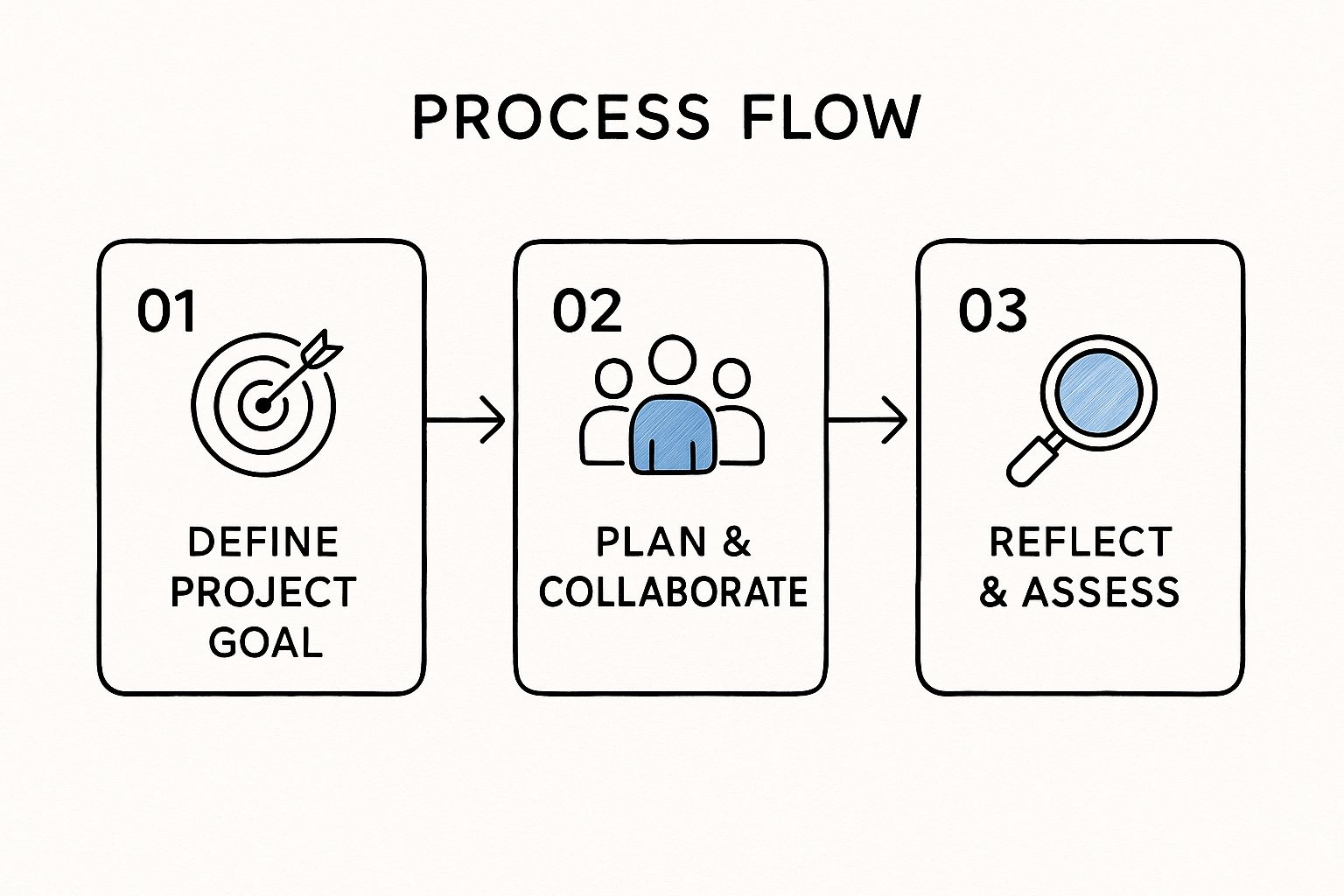
It's a cycle. Reflection isn't the end; it feeds directly into the next step, making it a continuous loop of learning.
Making It Work at Home
You don't need a formal classroom to make this happen. Your role isn't a director giving orders, but a guide asking great questions.
"I love how you changed your plan after testing it. Show me your favorite mistake and what it taught you."
Fit projects into your family's rhythm. A quick 10-minute session might be for sketching an idea. A 45-minute block could be for building a prototype. This flexibility makes project-based learning an accessible tool for any family.
How Project-Based Learning Forges Real-World Skills
The magic of project-based learning isn’t just making subjects more interesting. It’s about building skills kids need for life.
When children build, test, and revise their own creations, they shift from being passive consumers of information to active problem-solvers. This is where deep engagement is born.
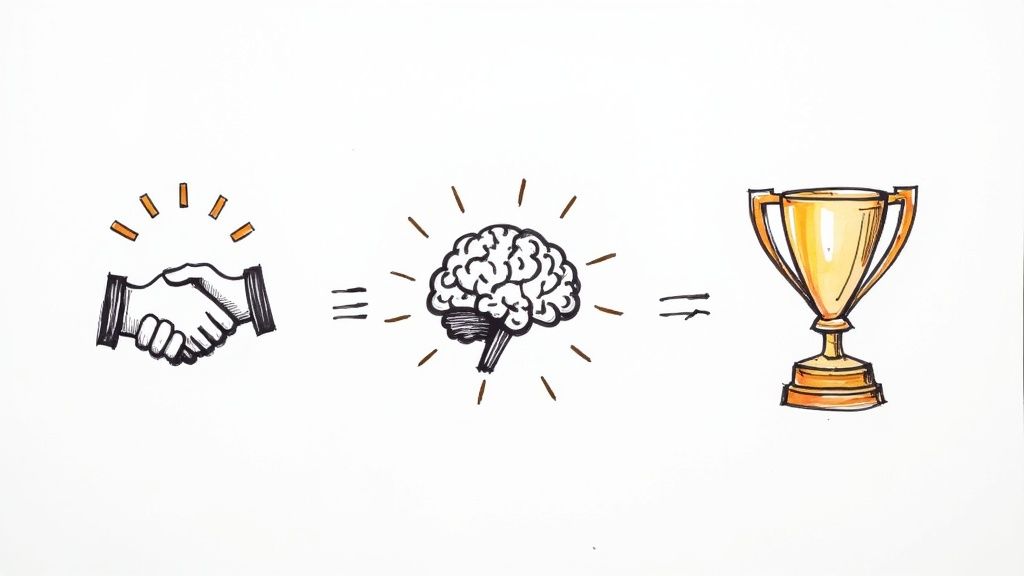
This hands-on approach has a direct impact on how well kids retain what they learn. They apply knowledge in a meaningful context, and the results are powerful.
For example, a 2023 study of over 6,000 U.S. students found that those in project-based AP courses had a 50% test pass rate—eight points higher than peers in traditional classes. The gains held true across all income levels. You can read the full research on PBL's academic impact to see the data for yourself.
Developing Confidence and Resilience
But the gains go beyond academics. The social and emotional growth is profound.
Projects rarely work on the first try. That's a good thing. Navigating small setbacks in a low-stakes environment teaches resilience and grit. When a child’s robot won’t move, they learn to troubleshoot, adapt, and iterate—a process that builds incredible confidence.
This cycle transforms their relationship with failure. A mistake becomes valuable data. They start asking:
- What went wrong here?
- What can I try differently next time?
- How did I get myself unstuck?
These moments of self-regulation are the building blocks of high agency. Kids see themselves not as students who need answers, but as creators who can find them.
Building Agency With Better Feedback
How we talk to our kids during a project matters. The goal is to move beyond generic praise like "good job" and offer feedback that sparks deeper thinking. It’s how we support their growing independence without giving them the answers.
Instead of handing over solutions, ask questions that invite reflection and improvement.
"Your first version is complete. What's one thing you're excited to change or improve for version two?"
This kind of feedback puts the child in the driver's seat. It communicates that their thinking process and effort are just as important as the final product. You're reinforcing the cycle of making, testing, and improving—a skill that will serve them long after the project is done.
Bringing Project-Based Learning Into Your Home
Ready to start? The good news is, you don't need a decked-out classroom or expensive kits. The best projects begin with a simple spark of curiosity and can fit into busy family schedules.
The goal isn't to mimic school. Think of yourself as a guide. Your job is to help frame a clear, doable outcome and set simple constraints that make the project feel manageable. This is how you turn passive screen time into active, creative work.
Start With Your Child’s Natural Curiosity
The most powerful projects are born from genuine interest. Listen for the sparks that are already there. Frame the project with an inviting prompt:
"Because you like [your child's interest], let's try to [create a tangible output]."
For example:
- "Because you're so into Minecraft, let's try to design a new building on paper that we could build in the game later."
- "Because you love drawing animals, let's create a one-page comic strip telling a story about your favorite one."
This approach gives them ownership from the start. It builds agency by showing them their passions are the perfect launchpad for making real things.
Define a Clear and Achievable Outcome
Once you’ve found that spark, figure out what your child will actually make. A vague goal like "learn about space" is tough. A concrete goal like "build a model of a Mars rover using recycled materials" gives them a clear destination.
A great project outcome is:
- Tangible: It results in something they can hold or see—a drawing, a model, a short video.
- Shareable: It's something they can show to someone else.
- Achievable: It can be finished in a reasonable amount of time.
If you like project-based learning but want it doable at home, Kubrio handles the planning and feedback so you can focus on building and reflecting together. The platform's AI Quest Generator can turn an interest into a step-by-step project in minutes.
Setting Simple Constraints to Fuel Creativity
Constraints aren't limitations; they're creative guardrails. They help kids focus. The most important constraints are time, materials, and scope.
Here’s how you can structure projects for different schedules.
Project Variations
- 10-Minute Sprint (Tonight): Focus on a tiny build or a quick sketch. The goal is to get an idea out of their head and onto paper. Reflection is one simple question.
- 20-Minute Iteration: This adds a crucial step: making a first version (v1) and then a second one (v2). This introduces the powerful idea of revision.
- 45-Minute Deep Dive: This adds a research or presentation element. Kids might watch a short video to gather ideas or prepare a 30-second "show and tell" for the family.
Always nail down the practical details before you start.
Safety and Materials Checklist
Time: 20 min • Materials: Cardboard, tape, markers • Safety: Adult nearby for cutting with scissors • No-kit option: Draw the design instead of building a 3D model.
Integrating Reflection and Sharing
A project isn't truly done until your child has reflected on their process and shared what they made. This is where the learning sticks.
Sharing their work builds communication skills and confidence. Reflection helps them connect the dots—understanding what worked, what didn't, and how they can improve next time.
Plan a moment to share the work, even if it's a quick "showcase" at dinner. Then, use simple, open-ended questions to guide their reflection.
Parent Scripts for Reflection
- "What changed between v1 and v2?"
- "Which step took the most effort, and what would you try next time?"
- "Show me your favorite mistake and what it taught you."
These questions encourage your child to think about their process and growth. Snap a photo of the finished work for a digital portfolio to create a visual timeline of their progress.
Five Project Ideas Your Kids Can Start Today
The best way to understand project-based learning is to see it in action. These five ideas are accessible and easy to adapt. Each one includes a clear goal, a feedback loop, and a real, tangible thing your child can hold up and say, "I made this."
These are designed to build specific skills like creativity, research, and communication, turning your child’s curiosity into proof of real progress.
1. The Neighborhood Cartographer
This project transforms a walk around the block into an adventure in design and systems thinking.
- The Spark: "You love exploring our neighborhood, so let's create a real map that someone else could use."
- Target Skill: Systems Thinking
- Final Output: A hand-drawn neighborhood map with a key and symbols.
Safety and Materials
Time: 45 min • Materials: Large paper, markers, clipboard (optional) • Safety: A grown-up must be present for the neighborhood walk • No-kit option: Use a free online drawing tool to create a digital map.
Steps to Follow
- Plan Your Route: Decide on a short, familiar route to map.
- Go on a "Data Walk": Walk the route together and take notes on landmarks and street names.
- Draft Your Map (v1): Back at home, draw the basic path.
- Create a Key: Invent simple symbols for important things like trees, houses, and stop signs.
- Test and Revise (v2): Give the map to a family member. Can they follow it? Use their feedback to add details and make it clearer.
Parent Feedback Prompts
- "I see you used a star for our house. What other symbols can we create for the key?"
- "After our test, what was one thing our 'user' got confused by? How can we fix that in v2?"
2. The Family Documentary Filmmaker
This project helps kids develop communication and storytelling skills by interviewing a family member.
- The Spark: "You love hearing stories about when Grandma was a kid. Let's make a mini-documentary about one of her favorite memories."
- Target Skill: Communication
- Final Output: A 1-2 minute video interview, edited with a simple title.
Safety and Materials
Time: 45 min • Materials: Smartphone or tablet, a simple video editing app (like CapCut) • Safety: Ensure the interview subject is comfortable being recorded • No-kit option: Create an audio-only "podcast" interview.
Steps to Follow
- Brainstorm Questions: Write down 3-5 open-ended questions. (e.g., "Tell me about a time you felt brave.")
- Conduct the Interview: Set up the camera and record. The most important job is to listen.
- Edit the Footage: Trim the video and add a title card like, "Grandma's Story."
- Share and Reflect: Host a "movie premiere" for the family.
Parent Feedback Prompts
- "Which question got the most interesting answer? Why do you think that is?"
- "If you were to do another interview, what one thing would you do differently?"
"My son interviewed his grandpa about his first job. He was so proud to show the final video. It wasn't just a project; it was a real piece of our family history." — Jessica, Parent in Austin
3. The Recycled Robot Designer
A classic project for teaching creativity, problem-solving, and engineering basics with materials you already have.
- The Spark: "You're curious about how robots work. Let's design and build our own using materials from the recycling bin."
- Target Skill: Creativity
- Final Output: A freestanding robot from recycled materials, with at least one moving part.
Safety and Materials
Time: 20 min • Materials: Cardboard boxes, plastic bottles, tape, glue • Safety: Adult supervision is a must for any cutting • No-kit option: Draw a detailed blueprint of a robot, labeling its parts.
Steps to Follow
- Gather Materials: Go on a treasure hunt in the recycling bin.
- Sketch a Plan: Draw a quick sketch of what you want your robot to look like.
- Build v1: Assemble the main body, legs, and head.
- Add a Feature: Engineer one part that can move, maybe using a paper fastener for a joint.
- Test and Improve: Does it stand up? Make adjustments to improve its balance.
Parent Feedback Prompts
- "Show me the part that was trickiest to build. How did you get it to work?"
- "What's one new feature you would add to your robot if you had more time?"
4. The Backyard Scientist
This project channels curiosity into research and observation skills by investigating a question about the world outside.
- The Spark: "You're always watching the squirrels. Let's become scientists and figure out what their favorite food is."
- Target Skill: Research
- Final Output: A one-page "research journal" with a hypothesis, observations, and a conclusion.
Safety and Materials
Time: 20 min (plus observation time) • Materials: Paper, pencil, different nuts or seeds • Safety: Observe animals from a safe distance; wash hands after • No-kit option: Research online to create a poster about a local animal's diet.
Steps to Follow
- Form a Hypothesis: Make an educated guess. "I think the squirrels will like peanuts the most."
- Set Up the Experiment: Place small, equal piles of different foods outside.
- Observe and Record: Watch for a day or two. Take notes on which food is eaten first.
- Draw a Conclusion: Was your hypothesis correct? Write down what you learned.
Parent Feedback Prompts
- "What surprised you most about your observations?"
- "How could we make our experiment even more accurate next time?"
5. The Community Problem-Solver
This project builds collaboration and empathy by brainstorming a solution to a small, local problem.
- The Spark: "I noticed you pointed out the litter on our street. Let's make a plan to encourage people to keep it clean."
- Target Skill: Collaboration
- Final Output: A colorful poster with a catchy slogan and three simple tips for reducing litter.
Safety and Materials
Time: 45 min • Materials: Poster board, markers • Safety: Focus on creating awareness, not picking up litter without an adult • No-kit option: Write a script for a 30-second "public service announcement" video.
Steps to Follow
- Define the Problem: Talk about why litter is a problem.
- Brainstorm Solutions: Think of easy, positive actions. (e.g., "Use the park trash can.")
- Design the Poster: Create a bold headline and clear drawings.
- Choose a Location: Decide where to display the poster (with permission!), like a community board or your window.
Parent Feedback Prompts
- "What is the most important message you want people to get from your poster?"
- "Who can we share this with to make the biggest impact?"
If you like the idea of project-based learning but want to make it easier to do at home, Kubrio handles the planning and feedback so you can focus on building and reflecting together.
How AI Tools Can Simplify Project-Based Learning
One of the biggest hurdles for parents exploring project-based learning is the time it takes to plan and guide a meaningful project. This is where modern tools can be a game-changer, turning a powerful educational method into a manageable family routine.
Think of an AI platform as your personal co-pilot. Instead of spending an hour digging for ideas, you can turn your child’s interest into a structured, time-boxed quest in minutes. This frees you up to do the important part: encouraging your child’s creativity and celebrating their breakthroughs.
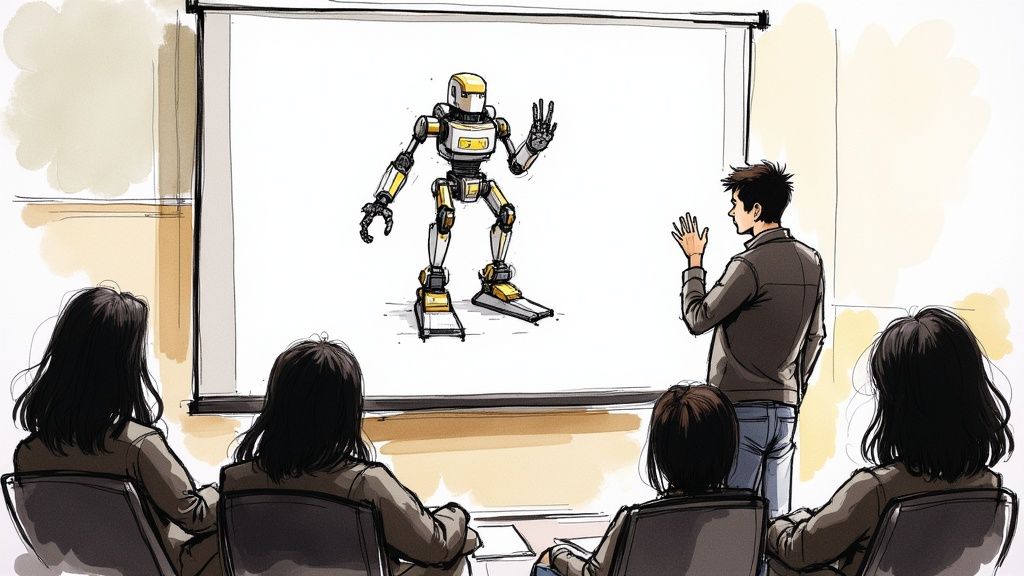
From Planning to Portfolio in Minutes
The magic of these tools is how they handle the administrative work of project-based learning. They provide the scaffolding that makes deep learning possible without turning your home into a school.
- Instant Quests: Start from any spark—dinosaurs, video editing, chess. Kubrio drafts right-sized quests (10, 20, or 45 minutes) and guides you on what feedback to give.
- Targeted Feedback: Instead of just saying "good job," these platforms provide prompts focused on process and reflection, helping kids build agency.
- Automatic Portfolios: Finished work saves to a portfolio so growth is simple to see and share.
This structured, hands-on approach pays off. A SurveyMonkey study found that 59% of employees report better job performance when their training involves real projects instead of lectures, a clear signal that these methods boost skill application.
Making High-Agency Learning Accessible
Ultimately, AI tools make project-based learning less intimidating for busy families. They remove the friction of planning and provide the support you need to ask great questions and guide reflection.
This ensures children develop independence without parents needing to become curriculum designers. For a deeper look into how artificial intelligence is shaping education, it's worth exploring the future of AI interactive video in training and education.
Kubrio is a family-driven learning platform that uses AI to turn your child’s interests into step-by-step quests with feedback and a living portfolio. Learn more about how an AI-powered learning platform can support your family's journey.
Common Questions About Project-Based Learning
Starting a new way of learning always brings up a few questions. Here are some of the most common things parents ask when they begin their project-based learning journey at home.
How young can a child start with project-based learning?
You can start younger than you think. Kids aged 6 or 7 can get a ton out of it. The secret is to keep their first projects short, concrete, and tied directly to what they’re obsessed with right now. A project for a first-grader might be as simple as building the ultimate pillow fort to solve the "problem" of needing a cozy reading spot.
What if my kids have different interests or ages?
This is a feature, not a bug. Mixed ages and interests are a perfect opportunity to teach collaboration. You can design a family project where each kid has a distinct role. For a family documentary, your 11-year-old might handle video editing, while your 8-year-old could be the on-camera interviewer. This lets them contribute based on their skills while working toward a shared goal.
How do I know if they’re actually learning without grades?
Success in project-based learning isn’t measured by a letter grade; it’s measured by growth. Instead of a score, look for progress in their skills and mindset. Are they asking more thoughtful questions? Do they stick with a tricky problem a little longer? Can they explain what they changed between their first and second attempts? The things they create become a powerful visual record. Saving these in a portfolio gives you tangible evidence of learning that tells a much richer story than a report card.