
8 Awesome Sustainability Facts for Kids (And How to Act on Them)
Worried your child's screen time is all consumption, no creation? Many parents feel trapped by the passive, one-size-fits-all learning model that quizzes kids but doesn’t build real skills or a sense of agency. You want your child to understand big ideas like sustainability, but in a way that empowers them to act. This guide shares key sustainability facts for kids and turns them into launchpads for hands-on projects that build real capability.
We'll cover eight core environmental facts, each paired with a simple, 'do-it-tonight' activity. These activities transform abstract ideas into tangible skills like research, communication, and creative problem-solving. By connecting knowledge with action, we help our children become active participants in caring for our world. Let's move beyond memorization and help our kids build the skills they need to make a real-world impact, starting tonight. To understand the broader concept of minimizing our environmental footprint, explore this a practical guide to sustainable living.
1. The Power of the 3 R's: Reduce, Reuse, Recycle
The "3 R's" are a super-team for the planet: Reduce, Reuse, and Recycle. This simple framework helps families see waste not as trash, but as a resource. It's one of the most foundational sustainability facts for kids and a powerful way to build lifelong habits.
Instead of just tossing things away, the 3 R's give us a clear plan. First, we try to Reduce the amount of stuff we use. Then, we Reuse items creatively. Finally, what can't be reused gets sent to be Recycled into something new. This approach keeps useful materials out of landfills and conserves Earth's precious natural resources.
Why This Matters
Following the 3 R's helps kids see that their small, daily choices have a big impact. When communities adopt this mindset, the results are huge. For example, San Francisco now recycles and composts about 80% of its waste. In some schools in Japan, students learn responsibility by sorting their own lunch waste into multiple recycling categories, making it a normal part of their day.
Actionable Tips for Families:
- Reduce: Use both sides of a piece of paper for drawing. Pack lunches in reusable containers instead of disposable bags.
- Reuse: Turn old t-shirts into cleaning rags or craft materials. Donate toys and clothes you've outgrown.
- Recycle: Set up a special bin for paper, plastic, and cans. Check local guidelines to see what your community accepts.
This infographic highlights just how powerful recycling can be for our planet and communities.
These numbers show that recycling isn't just about reducing trash; it's also a major source of energy and resource conservation.
2. Water is Precious: Every Drop Counts
Water is one of Earth’s most valuable resources, but did you know that only 1% of all water on our planet is fresh and safe for us to drink? This simple truth is one of the most important sustainability facts for kids to understand. For every 100 drops of water, only one is available for drinking, cooking, and staying healthy.
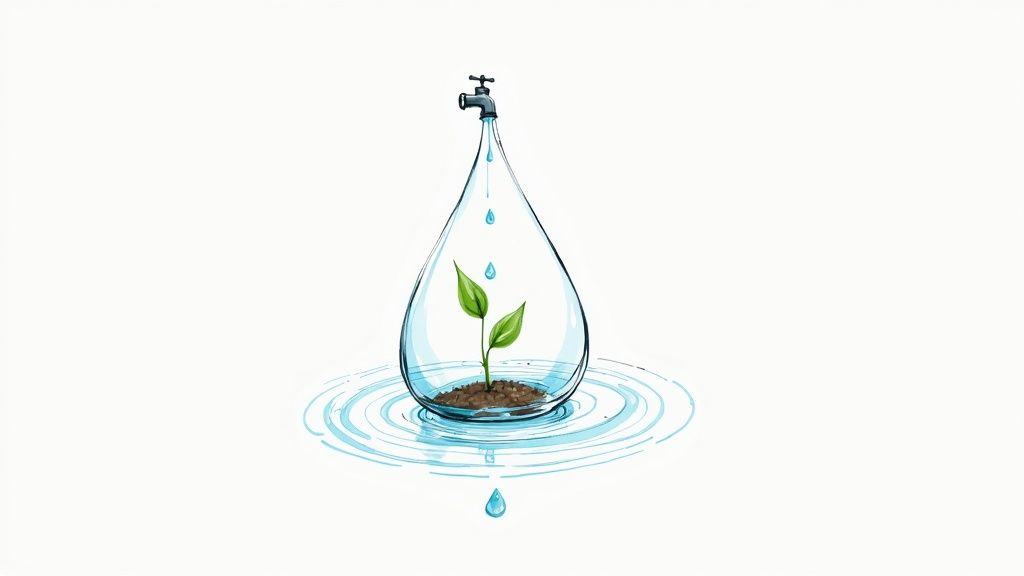
Learning to save water isn't just about turning off the tap; it's about recognizing that this limited resource is essential for all life. When we waste water, we're taking it away from nature and from people around the world who might not have enough. By making small changes, families can help protect this precious supply for everyone.
Why This Matters
Thinking about our water use helps kids develop a sense of global responsibility. When communities prioritize water conservation, the impact is enormous. For example, during severe droughts, simple conservation efforts helped parts of Australia reduce water consumption by up to 50%. In Singapore, advanced treatment systems now recycle 40% of the country's water.
Actionable Tips for Families:
- Time Your Showers: Challenge everyone in the family to take 5-minute showers. Use a fun song to time it!
- Fix Leaks Fast: A dripping faucet can waste thousands of gallons a year. Teach kids to spot and report leaks.
- Water Plants Wisely: Use a watering can instead of a hose to direct water right to the roots where it's needed most.
- Full Loads Only: Wait until the washing machine or dishwasher is completely full before running it.
3. Trees are Earth's Superheroes
Trees are like the planet's quiet protectors, working hard to keep our air clean and our world healthy. One of the most important sustainability facts for kids to learn is that a single large tree can absorb harmful carbon dioxide and produce enough fresh oxygen for two people every day. They are natural air filters working around the clock.
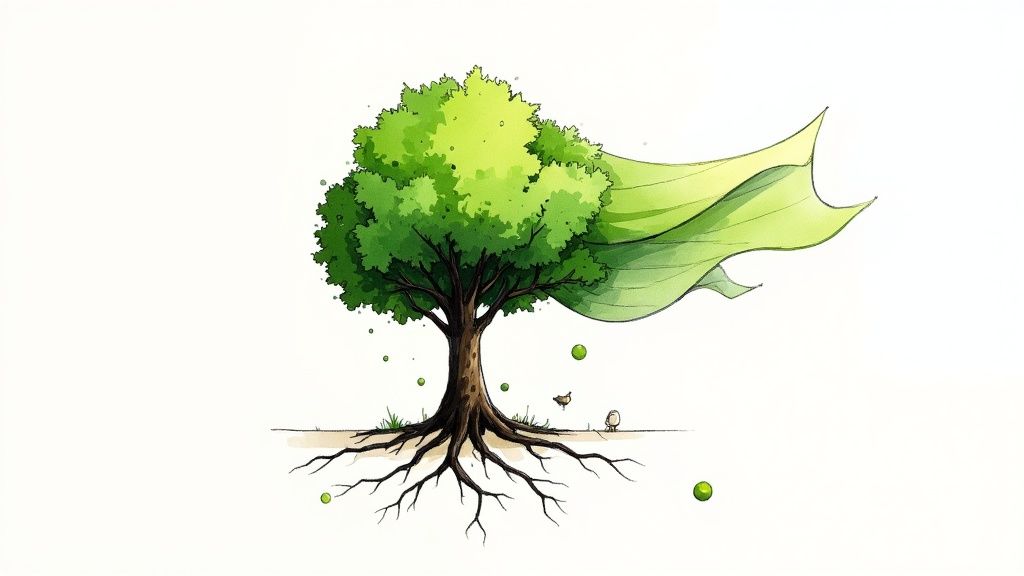
Beyond cleaning the air, trees provide homes for countless animals, prevent soil from washing away during heavy rains, and offer cool shade on hot summer days. Planting and protecting trees is a simple yet powerful way for families to actively fight climate change and support local ecosystems.
Why This Matters
Understanding the role of trees helps children connect with nature and see their direct impact on the environment. For instance, the Amazon rainforest alone produces about 20% of the world's oxygen. On a community level, New York City's initiative to plant one million trees improved air quality and lowered summer temperatures in many neighborhoods. These examples show that every tree truly counts.
Actionable Tips for Families:
- Plant Native Trees: Choose tree species that naturally grow in your local climate. They will thrive better and support local wildlife.
- Join a Planting Event: Look for community or school events dedicated to planting trees in parks or neighborhoods.
- Adopt a Tree: Care for a young tree in your neighborhood. Help water it during dry spells and protect it from damage.
- Create Tree Art: Encourage kids to draw or build models of trees to teach friends about their importance.
4. Renewable Energy: Nature's Power Sources
Renewable energy comes from nature's power sources that never run out, like sunshine, wind, and flowing water. This is one of the most exciting sustainability facts for kids because it shows us a clean way to power our world. It's a powerful alternative to fossil fuels like coal and oil, which create pollution and will eventually be used up.
Solar panels turn sunlight into electricity, giant wind turbines use moving air to generate power, and hydropower stations use flowing rivers to create energy. These amazing technologies help us light our homes and charge our devices without hurting the environment.
Why This Matters
Shifting to renewable energy is a global goal to protect our planet. Many countries are leading the way. For example, Costa Rica often runs on nearly 100% renewable energy for months at a time. In Denmark, wind power is so effective that it sometimes generates more electricity than the entire country needs. To truly appreciate nature's power sources, you can dive deeper with a comprehensive guide on how solar panels work.
Actionable Tips for Families:
- At School: Talk to a teacher about the possibility of installing solar panels on the school roof.
- At Home: Use smaller solar-powered gadgets like calculators, chargers, or garden lights to see clean energy in action.
- Explore: Visit a local wind farm or solar installation if there's one nearby. Seeing the technology up close makes it more memorable. Learn more about how kids can explore sustainability projects.
- Get Creative: Build a mini wind turbine or a solar oven as a science project to demonstrate the principles of renewable energy firsthand.
5. Biodiversity: Earth's Amazing Animal and Plant Communities
Biodiversity means all the different kinds of life you can find in one area: the variety of plants, animals, fungi, and even tiny microorganisms. Think of it like a giant puzzle where every piece is essential. This variety is one of the most important sustainability facts for kids because a rich biodiversity keeps our planet healthy, resilient, and balanced.
From the smallest insect to the largest whale, each living thing has a special job to do. When we protect biodiversity, we are protecting the intricate web of life that supports everything, including us. It ensures we have clean air, fresh water, and healthy soil to grow our food.
Why This Matters
A healthy ecosystem with high biodiversity can better withstand threats like climate change and disease. For instance, the reintroduction of wolves to Yellowstone National Park created a ripple effect that restored the balance of the entire ecosystem. In the ocean, coral reefs cover less than 1% of the floor but support about 25% of all marine species.
Actionable Tips for Families:
- Plant for Pollinators: Create a small butterfly or bee garden at home using native flowers to provide food and shelter.
- Build a Habitat: Construct simple birdhouses, bat boxes, or "bee hotels" to give local wildlife a safe place to rest.
- Be a Responsible Pet Owner: Never release pet fish, turtles, or other animals into the wild. They can disrupt the natural balance.
- Shop Smart: Look for products with labels indicating they are sustainably sourced, such as FSC-certified paper.
6. Transportation Choices: Moving Without Polluting
How we get from place to place makes a huge difference for our planet's health. Many cars and trucks burn gasoline, which creates pollution that makes the air dirty and contributes to climate change. But there are lots of fun, healthy alternatives like walking, biking, and taking buses. This is one of the most important sustainability facts for kids because it connects directly to our daily routines.
Making smart transportation choices helps keep our air clean and our bodies healthy. By choosing to move without polluting, we can reduce our family's carbon footprint and turn a simple trip into a fun adventure.
Why This Matters
Our transportation decisions have a big impact. In cities around the world, leaders are creating new ways for people to get around. For example, Amsterdam in the Netherlands has more bikes than residents and features amazing networks of bike lanes. In Norway, a huge number of new cars sold are electric, showing a major shift away from gasoline-powered vehicles.
Actionable Tips for Families:
- Walk or Bike: Plan to walk or bike to school one or two days a week. It's a great way to get exercise.
- Use Public Transport: For longer trips, look into taking a bus or train. It reduces the number of cars on the road.
- Combine Errands: Try to do all your errands in one trip instead of making several separate ones. This saves fuel and reduces emissions.
- Advocate for Change: Talk to community leaders about the importance of safe bike lanes and sidewalks in your neighborhood.
7. Sustainable Food: Eating to Help the Planet
The food we eat has a huge effect on our planet's health. This is one of the most important sustainability facts for kids to understand because it connects directly to our daily meals. Growing food uses lots of water, land, and energy, and some foods require far more of these resources than others.
Sustainable eating means choosing foods that are grown and transported in ways that protect the environment. It involves thinking about where our food comes from, reducing food waste, and making choices that are kinder to the Earth.
Why This Matters
Making mindful food choices teaches kids about the entire food system. It shows them how their decisions can support healthier ecosystems. For example, school gardens in California now provide fresh, locally grown vegetables for lunch programs. On a larger scale, Denmark successfully reduced its national food waste by 25% through powerful awareness campaigns.
Actionable Tips for Families:
- Go Local and Seasonal: Choose fruits and vegetables that are in season in your area. They often taste better and require less energy to transport.
- Start a Garden: Plant a small herb garden on a windowsill or join a school gardening project. This is a hands-on way to learn how food grows.
- Reduce Food Waste: Pack lunches in reusable containers and plan meals to use up leftovers. Start a compost bin for food scraps.
8. Climate Change: Understanding Our Changing Planet
Climate change is one of the most important sustainability facts for kids to understand. It means our planet's long-term weather patterns are changing, mostly because human activities have released extra "greenhouse gases" into the atmosphere. These gases act like a cozy blanket around the Earth, trapping the sun's heat and making everything warmer.
This extra warmth causes big changes, like stronger storms and melting ice caps. But the great news is that kids have incredible power to be part of the solution. By making smart, climate-friendly choices every day, young people can help protect our planet for the future.
Why This Matters
Understanding climate change helps kids see how interconnected everything on Earth is. Small actions, when multiplied by millions of people, can lead to huge positive shifts. For example, youth activist Greta Thunberg inspired a global movement of students demanding climate action. In Bhutan, the entire country is "carbon-negative," meaning it absorbs more carbon dioxide than it produces.
Actionable Tips for Families:
- Learn Together: Explore kid-friendly resources from NASA or NOAA to understand the science behind climate change. For a deeper dive, you can learn more about what sustainability means for kids on kubrio.com.
- Practice Energy Conservation: Make it a family rule to turn off lights and unplug electronics when they're not in use.
- Start a Conversation: Join or start an environmental club at school. Talk to friends and family about what you’ve learned.
From Facts to Agency
Learning these sustainability facts for kids is the first step. The real goal is to move from knowing to doing. The most powerful lesson you can give your child is a sense of agency—the belief that their ideas and actions can create real change. Agency is about building, testing, and making a tangible impact.
Your Next Steps: Building Sustainability Skills at Home
The journey from fact to action starts with simple, family-driven projects. If you like project-based learning but want it doable at home, Kubrio handles the planning and feedback so you can focus on building and reflecting together. Here’s how to transform these concepts into powerful learning experiences:
- Turn "Reduce, Reuse, Recycle" into a Design Challenge: Don't just sort the recycling. Challenge your child to invent a new use for a plastic bottle. Can they build a bird feeder, a storage container, or a piece of art? This shifts the focus from a chore to a creative act.
- Make Water Conservation a Measurement Quest: Instead of just saying "turn off the tap," ask your child to be a "water detective." Have them measure the water saved by using a bucket in the shower or turning off the faucet while brushing their teeth. They can create a chart to track progress, making the invisible visible.
- Connect Food Choices to a Creative Project: After discussing sustainable food, try a family cooking challenge using only locally sourced ingredients. Your child can help plan the meal, design the menu, and document the process—turning dinner into a project with a delicious outcome.
Why This Approach Matters
When children take an idea, design a solution, and see the result, they build a powerful mental model for life. They learn to observe a problem (like food waste), brainstorm a solution (starting a compost bin), and test it. This is the core skill set they will need to navigate a complex future with confidence and creativity. It's about empowering them to see themselves not just as residents of the planet, but as its active caretakers and innovators.
FAQ
-
How can I make these topics interesting for a younger child (6-8)? Focus on hands-on activities. Turn recycling into a sorting game, plant a single seed and watch it grow, or go on a "nature walk" to count the different types of birds or insects you see. Use stories and simple visuals to explain big ideas.
-
What if we live in an apartment with no yard? Many of these activities are perfect for small spaces. You can start a small herb garden on a windowsill, build a "bug hotel" on a balcony, practice strict recycling, and focus on reducing energy and water use indoors.
-
How do I talk about serious topics like climate change without scaring my child? Frame the conversation around hope and action. Focus on the positive things your family can do, like saving energy or planting trees. Emphasize that millions of people are working together on these big challenges and that their actions, no matter how small, are an important part of the solution.
-
What’s a simple project we can do tonight? Start a "Waste Audit." For one evening, collect all the trash your family produces in one bag. Before throwing it out, sort through it together. Ask questions: "What could we have reused? What could be recycled? How can we create less of this tomorrow?" This simple activity builds observation skills and agency.