
The Power of Boredom: Why Unstructured Time Helps Kids Learn
The magic of boredom isn't about having empty time; it's about giving kids the mental space to discover their own interests and build real agency. In our rush to schedule every moment, we've accidentally replaced this crucial ingredient with passive, one-size-fits-all "learning" that expects kids to consume, not create.
Why Our Kids Have Forgotten How to Be Bored
It’s a scene we all know: a moment of quiet is immediately filled by a screen, a structured class, or a parent’s well-meaning suggestion. We want the best for our kids, but this constant engagement chips away at their ability to generate their own ideas, solve their own problems, and develop that internal drive we call agency.
By eliminating downtime, we send the message that being alone with your thoughts is something to be avoided. This habit of immediate distraction is the enemy of self-reliance.
The Decline of Unstructured Play
This isn't just a feeling; it’s a measurable trend. Since the 1970s, children’s time in unstructured outdoor activities has plummeted by 50%.
Today’s kids often spend hours relatively motionless, a world away from a generation ago where long afternoons were spent inventing games, navigating social dynamics, and learning to rely on internal resources for fun.
A huge part of this shift is the pull of screens. If you're looking for ways to dial back the digital noise, exploring practical strategies to reduce screen time can be a great first step.
Reframing Boredom as an Opportunity
We see boredom as a problem to solve. But what if we reframed it as a necessary pause—a quiet moment that lets a child's mind wander, connect ideas, and explore whatever sparks their curiosity?
When we create space for boredom, we are trusting them to:
- Build creative confidence: Realizing they can invent a game or start a project on their own is a huge boost.
- Develop problem-solving skills: Figuring out "what to do next" is low-stakes practice in making decisions.
- Strengthen self-reliance: They learn to find purpose from within, not just from what’s handed to them.
Embracing unstructured time helps kids build the foundation for a life of curiosity, innovation, and self-directed learning.
How Boredom Rewires Your Child's Brain for Creativity
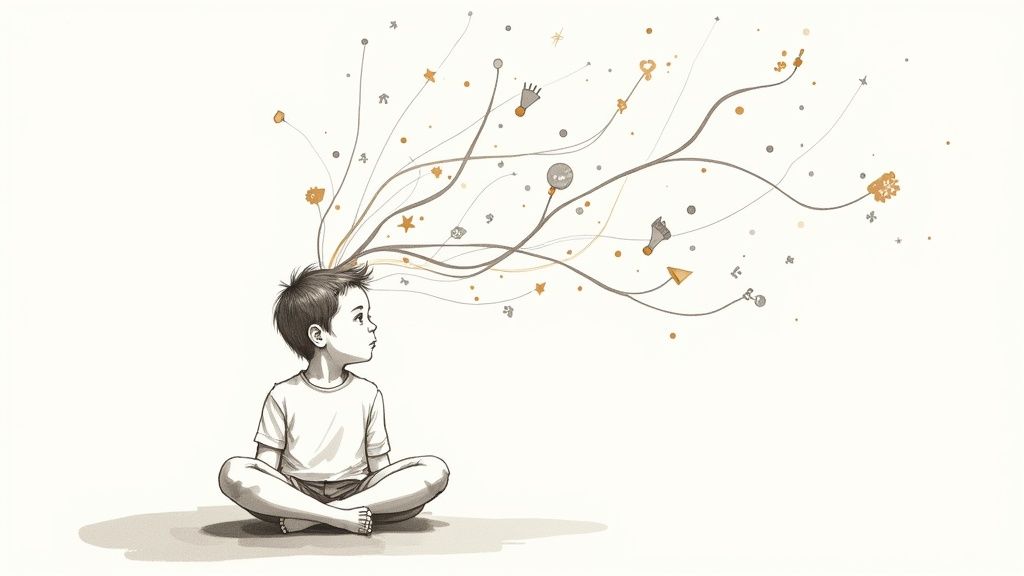
When your child says, "I'm bored," it’s not a problem to be solved. It’s a signal that their brain is shifting into one of its most powerful creative states. Boredom isn’t inactivity; it's the mental warm-up for innovation.
During these quiet moments, a part of the brain called the default mode network (DMN) lights up. Think of it as your child's internal workshop—a space where their mind connects old memories with new ideas and does the deep thinking that scheduled activities interrupt.
Instead of just consuming information, their brain starts producing it. An aimless doodle becomes a comic strip. A pile of blankets transforms into a fortress. That’s the power of boredom in action.
The Science of Self-Direction
This process builds a critical life skill: executive function. These are the mental muscles for planning, focus, and managing goals without constant reminders. When left to their own devices, kids must answer, "What do I want to do now?" This simple act is a workout for the brain.
As psychologist Dr. Sandi Mann notes, “Letting children be bored is a way of encouraging them to be more creative.” A bored mind, she argues in her book The Upside of Downtime, actively seeks stimulation, leading it to forge new connections and generate novel ideas. You can read the full research about self-directed executive function from a study that confirms this link.
This means allowing for boredom is a strategic choice. It’s trusting them to build their own internal compass.
From Boredom to Agency
Every time a child moves through the discomfort of boredom to find their own activity, they are practicing agency. They learn to:
- Generate ideas independently.
- Solve their own problems.
- Trust their own curiosity.
Boredom gives kids the space to figure out who they are and what they care about, laying the groundwork for a lifetime of independent, curious learning.
How to Turn 'I'm Bored' Into a Creative Spark
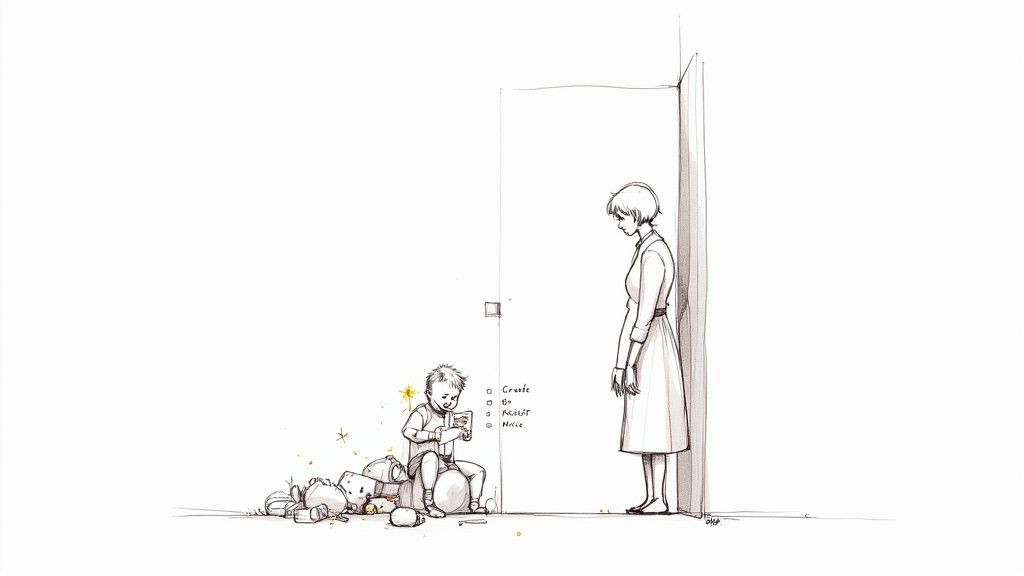
Hearing "I'm bored" feels like a failing grade. But it’s actually an invitation. It signals that your child's brain is ready to find its own purpose. Your job isn't to provide the answer; it’s to create the conditions for them to find it.
This doesn't demand elaborate plans. It’s about making small shifts to build their agency.
Step 1: Create the Space (Tonight)
Intentionally schedule unstructured, screen-free time. This isn't neglect; it’s trust.
- Schedule 'Nothing Time': Put 30–60 minutes of unstructured time on the family calendar. Call it "Explore Time" or "Free Build Hour."
- Prepare a 'Boredom Box': Fill an old shoebox with simple, open-ended materials. Think cardboard tubes, tape, string, markers, and paper—a pile of potential waiting for an idea.
- Set Clear Boundaries: Announce screen-free rules ahead of time. "We're having a no-screens hour at 2 PM" sets the expectation calmly.
Step 2: Resist the Rescue
When the "I'm bored" complaint lands, pause. Hand the responsibility for "what's next" back to your child.
Parent Scripts for Responding to 'I'm Bored'
| Instead of This (Passive Solution) | Try This (Agency-Building Prompt) |
|---|---|
| "Why don't you go draw a picture?" | "That sounds like a boring problem. What's one idea you have to solve it?" |
| "Here, you can watch a show." | "I trust you to find something interesting. Let me know what you come up with." |
| "Let's build a Lego set together." | "What's something you could make with only three materials from your room?" |
Resisting the urge to rescue them from discomfort is where self-reliance begins.
Step 3: Recognize the Spark
Once your child pushes through boredom, you'll see sparks of interest. Notice the process, not just the product.
Maybe they arrange action figures into a battle scene—a spark for storytelling or learning about chess. Or they watch ants on the sidewalk, a quiet fascination with systems. These are the seeds of self-directed projects.
Kubrio is a family-driven learning platform that uses AI to turn your child’s interests into step-by-step quests with feedback and a living portfolio. It helps you build on those self-discovered passions without taking over.
What Productive Boredom Looks Like
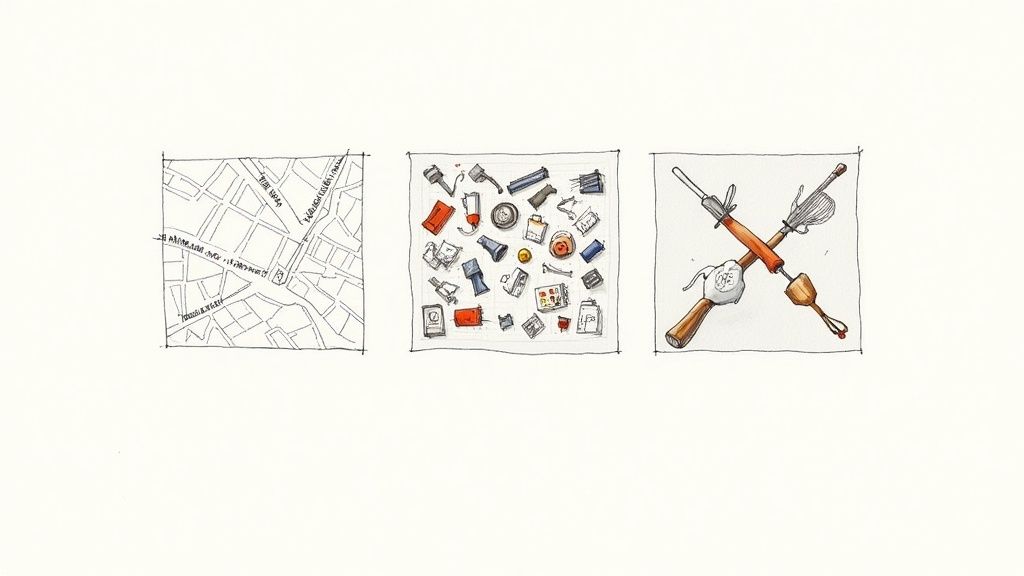
The power of boredom shows up in small, unexpected bursts. These aren't parent-led activities. They are "spark stories"—moments that begin when a kid follows a flicker of curiosity. This is where real agency kicks in.
"I was thrilled. Boredom had given my daughter the space to fail, try again, and make something that was entirely her own." — Sarah, a mom in Austin
From Aimless Doodles to Neighborhood Cartographer
A ten-year-old, restless on a Saturday, starts doodling squiggly lines. The lines become roads, and soon she’s mapping the route from her house to the park from memory.
- The Spark: An aimless doodle becomes a question: "What does my neighborhood actually look like from above?"
- The Process: Her first draft is a mess. She asks a parent for a walk to "fact-check" her map, adding symbols and inventing a key.
- The Skill: What started as boredom becomes a hands-on lesson in research and systems thinking. She's not just drawing; she's building a functional model, a core concept in cartography for kids.
The final product is more than a drawing. It’s an artifact that shows a complete learning cycle: question, research, iteration, and a final product. This is the essence of building agency.
Finding the Right Balance
Embracing boredom doesn't mean ditching structure. It’s about finding a rhythm that carves out space for your child to just be. You are the designer of their learning environment, not a micromanager. You set the stage for their agency to take the lead.
The Rule of Thirds: A Simple Framework
A flexible "Rule of Thirds" can help you see where the time is going:
- One-Third Structured Activities: School, soccer practice, piano lessons. These build discipline and specific skills.
- One-Third Responsibilities: Chores, homework, and family duties. These teach accountability.
- One-Third Free Time: The sacred space for boredom, play, and self-directed projects. This is where creativity and problem-solving take root.
This framework gives you a quick audit of your child’s week, helping you make intentional shifts. It’s a powerful tool for parents ready to explore how kids can choose their own learning path within a supportive structure.
From Unstructured Play to Focused Projects
Free time naturally blossoms into something more. The imaginative worlds your kid builds with LEGOs are seeds of genuine passion.
A child creating a complex society for stuffed animals is practicing the fundamentals of storytelling. You can honor their idea while introducing tools to bring it to life, like making a short comic book.
Science backs this up. A study found children with more free play time developed stronger self-regulation skills, which later linked to better performance in reading and math. You can read more about the study's findings on play and academic skills here.
Share & Reflect: Making Learning Visible
The incredible things kids create out of boredom can vanish instantly. Capturing them makes their growth visible and cements their sense of agency. A quick photo and a one-line caption turn a passing interest into a milestone.
This simple habit turns a five-minute chat into a powerful learning moment.
Reflection Prompts
- What changed between v1 and v2 of your map?
- Where did you get stuck, and how did you unstick yourself?
When kids see their own progress—from rough sketch to finished project—they internalize the lesson that they are capable of turning their ideas into reality.
FAQ on Boredom and Unstructured Time
What if my kid just whines the whole time? A: The initial whining is the sound of their brain shifting gears. Hold the line calmly. You might offer a "boredom box" with simple materials like cardboard, tape, and markers. The discomfort is the gateway to self-reliance. They will push through it.
How much unstructured time is the right amount? A: There’s no magic number. Start with 30 minutes of screen-free, unstructured time each day. The goal is to find a healthy rhythm that works for your family, not to enforce a rigid rule.
Is all screen time the enemy of agency? A: Not at all. The question is: are they consuming or creating? Passively scrolling videos is different from coding a game or creating a stop-motion movie. When screen time involves problem-solving and making something, it can build agency.
For more perspectives, the folks at PlayPause often share great articles. You can find Insights on Unstructured Time from the PlayPause Blog.