
Active Learning for Kids: How to Build Real Confidence & Agency
Is your child learning by doing, or just watching? Active learning is the difference between completing a worksheet on photosynthesis and actually planting a seed, watering it, and watching it grow. It’s where kids build real skills and confidence by getting their hands dirty with projects, experiments, and creative challenges. Instead of passively consuming content, they develop agency—the belief that they can shape their own world.
What is Active Learning and Why Does it Matter Now?
In a world overflowing with screens, it’s easy for kids to become passive consumers. The real enemy isn't the screen itself, but the one-size-fits-all “legacy school model” that often produces nothing but memorized facts—endless digital worksheets or apps that demand clicks but zero creativity. This passive approach teaches a skill that’s becoming less valuable in an AI-shaped future that needs innovation and resilience.
Active learning is the antidote. It’s a hands-on cycle where kids get to make, ship, and reflect on real-world projects. This process builds the one thing that matters most: agency.
Agency is a child’s belief that they can shape their world. It’s the feeling they can solve problems and bring ideas to life. It’s the foundation of confidence, grit, and creative thinking.
When children engage in active learning, they aren’t just memorizing facts. They are:
- Solving real problems: Figuring out how to design a stronger paper bridge.
- Developing critical thinking: Asking "what if?" and testing their own theories.
- Building resilience: Learning that mistakes are part of the process and iterating from a first draft to a second version (v1 → v2).
- Discovering who they are: Getting a glimpse of what truly excites them.
This image shows the massive difference in retention between passive and active approaches.
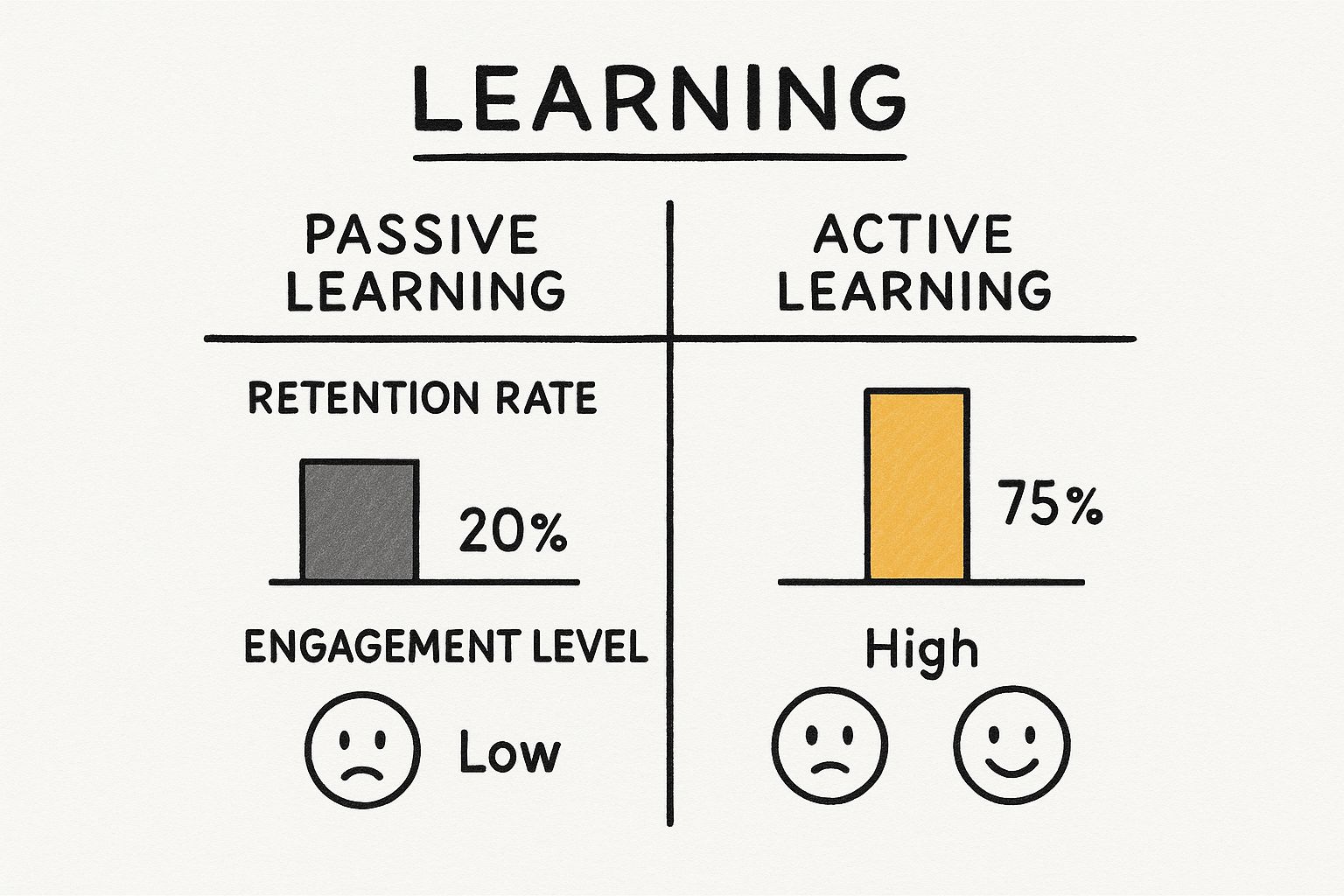
The data is clear: doing is more powerful than just seeing. Children can remember up to 75% of what they learn through hands-on practice.
To help you spot the difference at home, here’s a quick comparison.
Active vs. Passive Learning: What It Looks Like at Home
| Activity Type | Passive Learning | Active Learning (Builds Agency) |
|---|---|---|
| Watching a Video | Watching a 20-minute documentary about space. | Watching a 5-minute video on rocket propulsion, then designing a bottle rocket. |
| Reading a Book | Reading a chapter and answering questions. | Reading a story, then writing a new ending or creating a diorama. |
| Using an App | Playing a quiz app with pre-set answers. | Using a coding app to build a simple game from scratch. |
| Doing a Craft | Following a step-by-step kit where the outcome is set. | Given materials (cardboard, tape) and a challenge: "Build a castle." |
When you foster this sense of ownership, you give your child a critical gift for their future. You can see how this works in our guide on project-based learning for elementary kids. Ultimately, active learning helps kids grow into the thinkers and creators our world needs.
What Active Learning Looks Like in Action
Active learning isn't an abstract theory; it’s messy, vibrant, and happens right in your living room. It’s the difference between a child passively absorbing facts and one who is actively shaping their own understanding. Think less about memorizing dates and more about building, questioning, and creating.
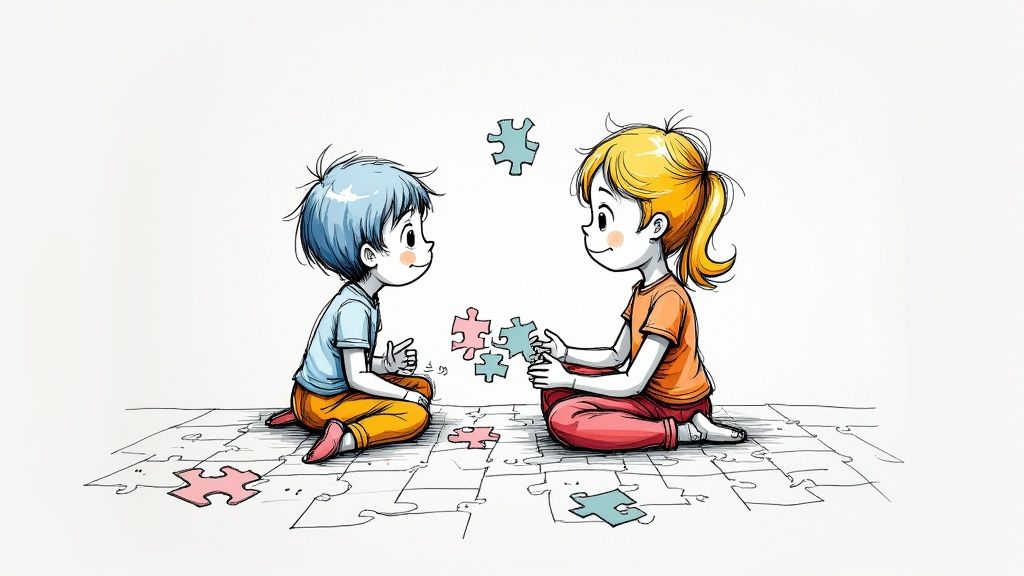
This shift turns your child from a spectator into a participant. It channels their natural curiosity into something tangible—play that produces artifacts and builds real skills.
From Consumption to Creation
Active learning transforms interests into projects with a clear outcome. Instead of just watching a video about castles, a child might be challenged to build a model fortress out of cardboard, testing different designs. This is where real ownership kicks in.
Here are a few ways this comes to life:
- Designing a board game: A kid who loves fantasy stories creates their own board game—complete with rules, characters, and a map. This teaches storytelling, systems thinking, and communication.
- Starting a family debate: Instead of just reading about recycling, the family debates, "Should we try to produce zero waste for one week?" This sparks research and persuasive speaking.
- Building a simple machine: With household items, a child could be challenged to build a working catapult. Suddenly, physics feels like a game.
The Power of Iteration
A key piece of the puzzle: active learning isn’t about getting it perfect on the first try. It’s about creating a first version (v1), seeing how it works, and making it better in a second version (v2).
When a child revises their board game rules after a friend finds a loophole, they learn a powerful lesson about feedback and resilience. This cycle of building, testing, and improving is where real confidence is forged.
This iterative loop teaches kids that mistakes aren't failures; they're useful data. It builds agency by proving they have the power to analyze a problem and make things better. If you like project-based learning but want it doable at home, Kubrio handles the planning and feedback so you can focus on building and reflecting together.
How Active Learning Builds Confidence and Critical Thinking
Active learning does more than keep kids busy—it connects what they do with who they become. When a child shifts from passively consuming to actively building and improving, they develop the skills that define a confident, independent thinker.
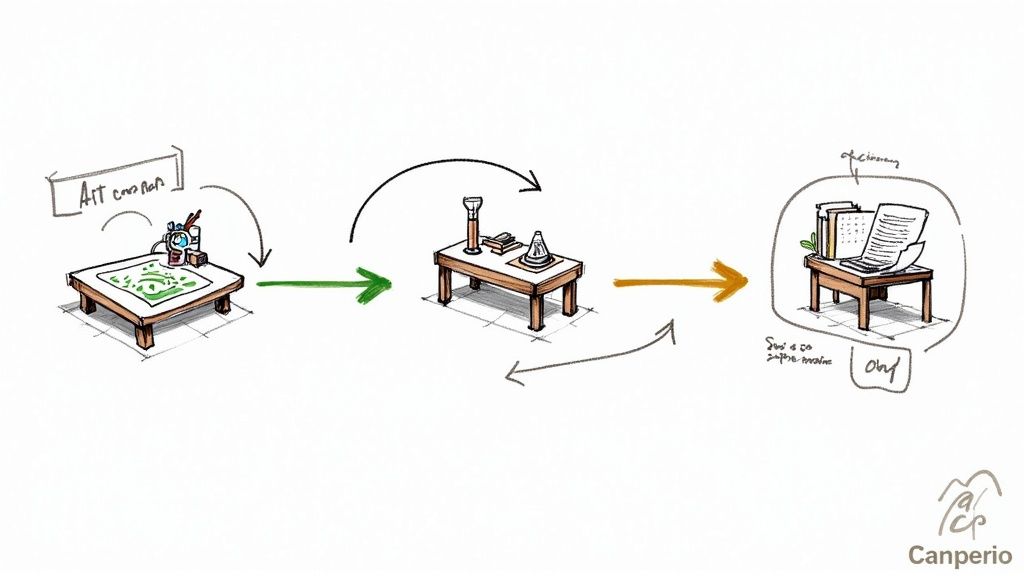
Real confidence isn’t born from a parent saying "good job." It comes from the competence a child feels when they solve a tough problem or make a project better based on their own observations. This is the power of iteration—the journey from a first draft (v1) to a second, better version (v2).
Learning How to Learn
That v1-to-v2 cycle is the heart of active learning. It teaches kids how to learn. A child who builds a wobbly Lego tower (v1), figures out why it fell, and rebuilds it with a stronger base (v2) isn't just playing. They're practicing a mental model they can apply to everything.
This hands-on cycle builds skills that last a lifetime:
- Problem-Solving: They learn to spot what’s not working and brainstorm solutions on their own.
- Grit and Resilience: The process makes mistakes feel normal—just part of the journey.
- Critical Thinking: They analyze their own work and ask, "How could this be better?"
Fostering True Agency
Every time a child makes a meaningful choice and sees the impact, their sense of agency grows. A weekend project, like designing a map of the neighborhood, becomes a powerful lesson in self-reliance. They decide the route, create the key, and test its accuracy. They are in the driver's seat.
When a child revises their project after testing it, they aren’t just making a better map. They are learning, "My choices matter, and I have the power to improve things."
This ownership is the foundation of an independent mindset. By encouraging this cycle of making, testing, and improving, you help your child build an identity based on what they can do, not just what they know.
How to Start Active Learning at Home Tonight
The best way to understand active learning is to try it. You don’t need an elaborate plan or expensive supplies. All you need is a little curiosity and 10-20 minutes. The goal is to shift from passive consumption to active creation. Here’s a simple recipe you can use tonight.
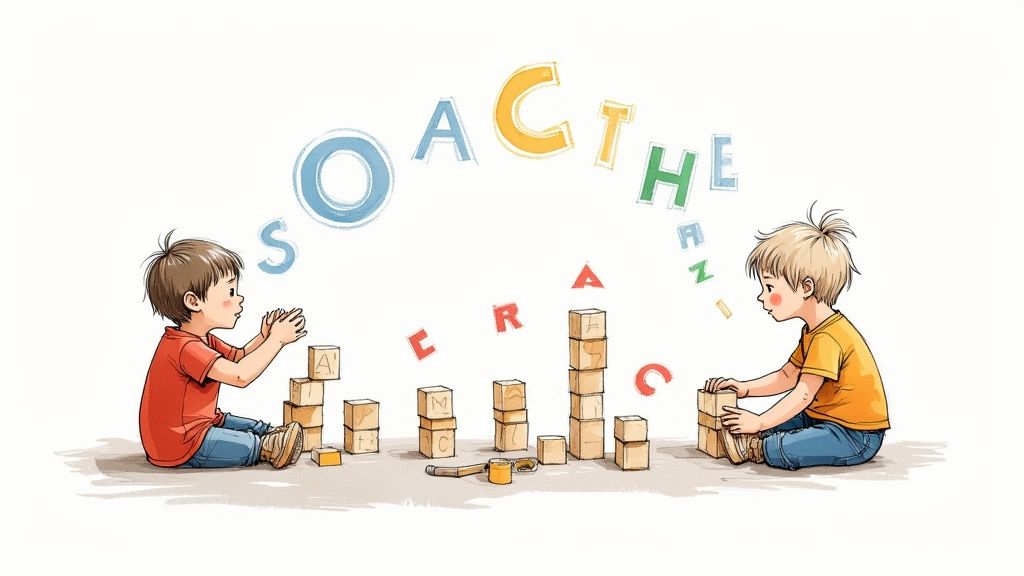
Let's take a common interest—exploring the neighborhood—and turn it into a hands-on quest.
The Neighborhood Cartographer Quest
This quest gets kids moving, observing, and thinking about how things connect. It taps into skills like spatial awareness and communication. Weaving physical activity into learning can boost a child’s movement by about 10 minutes per class—a simple win for health and focus.
- Pick the Spark: "Because you like exploring our neighborhood..."
- Name the Skill: Systems Thinking (understanding how parts work together).
- Set Constraints: Time, materials, and a no-kit option.
- Draft 3-5 Steps: Use action verbs.
- Feedback Prompts: Focus on iteration.
- Share Idea: Show the final map to the family.
- Reflect: Ask two simple questions.
Three Ways to Play Tonight
Pick the version that matches your family’s energy.
The 10-Minute Sketch (Micro-Build):
- Time: 10 min
- Materials: Paper, pen.
- Steps: Head outside and sketch the path from your front door to the end of the block. Add one landmark.
- Reflection: “What’s one thing you noticed today that you’ve never really seen before?”
The 20-Minute Draft (Add Iteration):
- Time: 20 min
- Materials: Paper, markers, clipboard.
- Steps: Walk the route to the park, sketching landmarks. Back home, draw the full map (v1).
- Feedback: “Show me v1. What will you change in v2 to make it even clearer?”
The 45-Minute Expedition (Add Presentation):
- Time: 45 min
- Materials: Large paper, colored pencils, ruler.
- Steps: Do the 20-minute version. Then, add a map key with symbols. Present the finished map to the family.
- Reflection: “Where did you get stuck, and how did you unstick it?”
This simple recipe—spark, skill, steps, and reflection—is the engine behind powerful hands-on learning. It takes an ordinary walk and turns it into a project that builds real agency.
How AI Can Support Active Learning at Home
For most parents, technology feels like the problem, not the solution. We picture kids glued to screens, passively swiping through apps. But what if the right tech could be a co-pilot for active learning, designed to boost your child’s agency?
Think of it less as a distraction and more as a launchpad. The secret is shifting from app-driven quizzes to family-driven systems that help kids build real things. These tools don't replace you; they give you structure and support.
Here's how the right AI can supercharge active learning:
- Turns Sparks into Quests. A fleeting interest in dinosaurs? A smart platform can instantly spin that into a step-by-step project, scaled for a 10, 20, or 45-minute session.
- Gives Structured Feedback. Instead of a generic “Good job!”, AI can offer specific prompts that push your child to reflect on how to take their first draft and make it better.
- Captures Their Journey. As your child finishes projects, the work is saved to a portfolio, creating a visual timeline of their growth.
This is exactly what we’ve built at Kubrio. It's a family-driven learning platform that uses AI to turn your child’s interests into guided quests, complete with feedback and a living portfolio. This isn’t about more screen time; it's about using technology to unlock your child’s creative potential.
Building a Portfolio That Shows Real Growth
The true power of active learning isn't just in the doing; it's in seeing how far you’ve come. A worksheet gets a grade and is forgotten, but a project—with its messy first draft and final version—tells a story of genuine growth.
A portfolio is a tangible record of your child’s learning journey. It shifts the focus from grades to growth and from outcomes to effort. Instead of asking, "What did you get?" you can start asking, "What did you learn along the way?" A portfolio captures the whole process: the idea, the mistakes, and the improvements that took them from v1 to v2.
From Artifacts to Identity
This approach helps children see their own progress over time, building the confidence that only comes from real competence. You can help them articulate this process with simple reflection scripts.
Parent Script: “Show me your favorite mistake in this project and tell me what it taught you.”
Focusing on engagement like this is crucial. Active learning environments can boost a child’s verbal participation by as much as 13 times compared to passive lectures.
Capturing the Journey
Each project, whether a hand-drawn map or a coded animation, becomes a chapter in their story. A well-maintained digital portfolio for students is perfect for this, automatically capturing artifacts and reflections.
Simple prompts can deepen this process:
- “What’s the biggest change between your first try and your second?”
- “Which part took the most effort? What might you do differently next time?”
This record doesn’t just show what your child has learned; it helps them discover who they are becoming: a problem-solver, a creator, and a resilient human being.
Frequently Asked Questions About Active Learning
Diving into active learning can feel different from the school routine, but it's often more intuitive than you think. Here are common questions parents ask.
What if my child hates "normal" school projects? Active learning starts with what your child is obsessed with right now. If it's video games, the project is designing a new level on paper or writing a backstory for a character. The magic is connecting their real passions to a hands-on activity that creates a tangible artifact.
How do I find the time for this? You don’t need to set aside entire afternoons. Active learning for kids thrives in short, focused bursts of 10 or 20 minutes. A quick challenge to build the tallest marshmallow tower or a collaborative story game while making dinner. It’s about consistency, not cramming.
Do I need to buy expensive kits and supplies? Absolutely not. The most creative projects often come from using what you already have. Cardboard boxes, tape, and recycling bin items are your best friends. Having fewer materials often sparks the most ingenious solutions. The focus is on the process—brainstorming, problem-solving, and tinkering.
How do I give feedback that’s better than "Good job!"? Focus on their process, not just the product. Your goal is to get them to reflect on their own work. Try asking open-ended questions that build resilience and confidence.
Parent Script: “What was the trickiest part, and how did you figure it out?” or “If you were going to make v2, what’s one thing you would do differently?”
This kind of conversation shows you value their effort and thinking, helping them become more powerful learners.