

Your kid can read. So why won't they?
Your kid learned to read — and somewhere around age 9, stopped wanting to. It's not your kid: reading for fun drops from 57% of 8-year-olds to 35% of 9-year-olds, and the standard fixes — logs, book reports, reward charts — measurably make it worse. What makes reading stick is what happens after the book: talking about it.
Why is reading important for kids?
Reading for pleasure is one of the strongest predictors of how a kid develops — in one major study, more strongly linked to teens' progress than their parents' education. And the evidence points at enjoyment, not obligation.
Researchers following thousands of British children found that kids who read for pleasure made substantially more progress in vocabulary and math between ages 10 and 16 — and that reading for pleasure was more strongly linked to that progress than whether their parents had a university degree. In the US, the Adolescent Brain Cognitive Development study of more than 10,000 kids aged 9–13 linked early reading for pleasure to better cognition, better school performance, and fewer mental-health problems — independent of family income.
The OECD found something even more striking in its PISA data: 15-year-olds from the lowest-status families who were highly engaged readers outscored disengaged readers from the highest-status families. Engagement with reading is one of the few levers that cuts across background entirely.
Notice what all three findings have in common: they're about kids who want to read. That distinction is the whole story, because wanting to read is exactly what's disappearing.
The love of reading collapses at age 9
Scholastic's Kids & Family Reading Report calls it the "decline by nine": 57% of 8-year-olds read books for fun most days of the week. At age 9, it's 35%. Kids who say they love reading drop from 40% to 28% in that same single year.
It doesn't recover. By 2023, only 14% of American 13-year-olds read for fun almost every day — down from 27% in 2012. In the UK, the National Literacy Trust's 2025 survey of nearly 115,000 children found that fewer than 1 in 3 kids aged 8–18 enjoy reading in their free time — the lowest in the survey's 20-year history.
Here's the detail that should change what parents do about it. A 2025 study of 20 years of American time-use data found reading for pleasure fell by more than 40% — while reading aloud with children stayed unchanged. Parents kept doing the one thing every article tells them to do, and kids stopped reading anyway. Reading aloud to a 5-year-old is necessary. It is not sufficient for a 10-year-old — and almost all the standard advice quietly stops applying once a kid can read on their own.
So what happens between "learns to read" and "stops reading"? For many kids, school happens to reading.
Book reports and reading logs make it worse
Ask a kid aged 9–13 what reading means and they'll often describe the accountability system around it: the log to fill in, the quiz to pass, the report to write, the points to earn. Every one of those tools was built to encourage reading. The evidence says they do the opposite.
In a study of 112 second and third graders, researchers Sarah Pak and Allyson Weseley assigned kids either a mandatory or a voluntary reading log for two months. Interest in reading fell in the mandatory group — and rose in the voluntary group. Their conclusion: when reading is framed as something kids must be forced to do, kids conclude it's not something anyone would choose.
Teachers say the same thing from the inside. "The best way to kill students' love of reading is to assign them reading logs," one teacher-librarian wrote in Education Week's roundup on the practice. Reading researcher Stephen Krashen reviewed the evidence behind Accelerated Reader, the points-and-quizzes program used in thousands of schools, and found that only two of its four ingredients — access to books and time to read — are supported by research. The tests and the prizes are not. And a meta-analysis of 128 experiments found that tangible rewards reliably undermine the intrinsic motivation they're meant to build.
None of this means teachers are wrong to check comprehension. It means the checking apparatus — prove it, log it, score it — is exactly what a kid learns to associate with books. The question for parents is what to replace it with.
The benefits come from talking about the book
Here's the part almost every "benefits of reading" article skips. Comprehension, empathy, critical thinking — those don't come from minutes-on-page alone. They come from processing the story: putting what happened into your own words, forming an opinion about it, defending it out loud.
The evidence for this is direct. In the OECD's analysis of parent involvement, students who regularly discuss books, films, and TV programs with their parents showed better reading performance in nearly every country studied — in the strongest cases by more than 25 points, most of a school year's worth of progress. The OECD's own summary: these activities demand no specialized knowledge, only "genuine interest and active engagement."
Cognitive science explains why. A meta-analysis of 28 studies on "learning by teaching" found that explaining material to someone else deepens learning far more than restudying it — and the effect is strongest when the teaching is interactive, a live back-and-forth rather than a lecture. Related work by Fiorella and Mayer found the gains are biggest when the explainer works from memory, recalling rather than reciting notes. A kid answering unscripted questions about a book they read is that exact condition.
Parents see this without the citations. Kids who won't write three sentences about an assigned book will monologue about a chosen one — any parent of a Wings of Fire or Warrior Cats kid knows the dinner-table character debates. One parent described her son's dinosaur phase: "he became the expert and I became the audience for a kindergarten version of a TED talk."
Kids love talking about their books. What they hate is being examined on them. The difference between the two is who's asking, and why.
Flip the interview: your kid as the podcast guest
This is the observation we built Kubrio's book podcast project on. Instead of a teacher checking whether your kid read the book, your kid goes on air about it.
When they finish a book — any book, at any reading level — they pick one of three AI hosts and sit down for a recorded interview, about seven minutes: what happened, which character they'd want to meet, the part that surprised them, what they would have done differently. Your kid is the guest. The host asks a good next question and reacts to what your kid said — it has not read the book for them, it never supplies answers, and the episode only works if your kid has something to say. The conversation is the proof they read it.
Then it comes back as a real, finished podcast episode, with a title and a cover, in your kid's actual voice. Episodes stack into an audible record of everything they've read and what they thought about it. Nothing is public unless your kid chooses to share — and when they do, you get the episode that evening.
Notice what's missing: no quiz, no points, no log, no grade. The interview format does the reflective work — recalling the story, forming opinions, defending them out loud — as a conversation a kid wants to have, not an assessment they want to escape. And podcasts are a medium kids already love: 46% of US kids aged 6–12 have listened to one, and 72% of their parents say podcasts genuinely excite them.
The purpose of the whole project is one thing: making a kid want to read the next book, because finishing a book now means something happens.
How to get your kid talking about books this week
You can start the conversation habit tonight, with or without the project.
- Let them pick the book — and abandon it. Choice is the single thing kids most ask for, and kids are far more likely to finish a book they chose. Quitting a boring book is a reader's skill, not a failure.
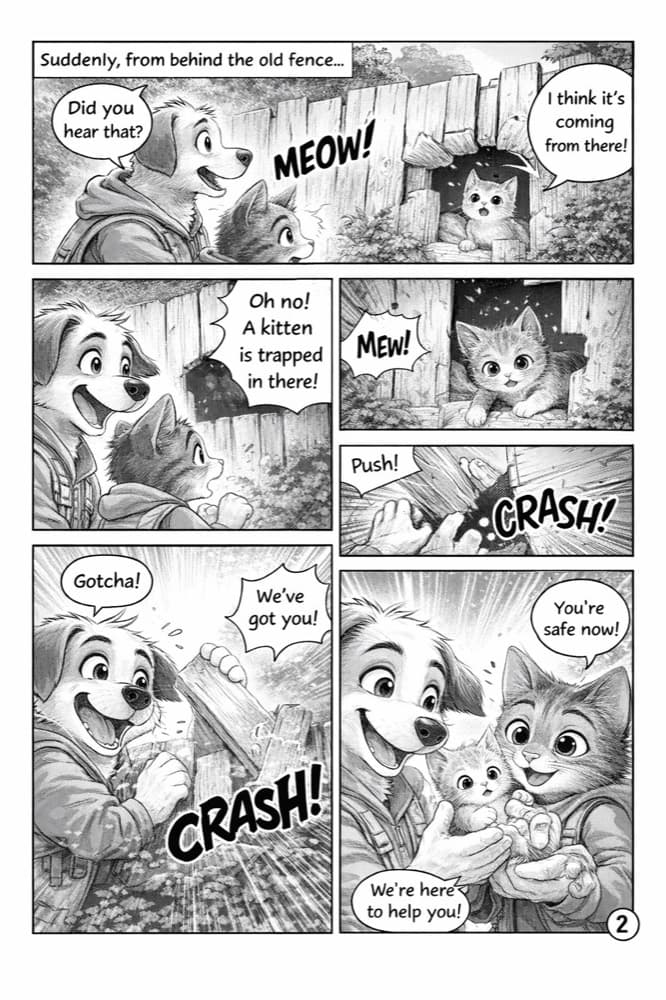
- Count graphic novels and audiobooks as real reading. The National Literacy Trust found kids who read graphic novels in their free time are about twice as likely to enjoy reading overall. The format wars aren't worth losing the reader.
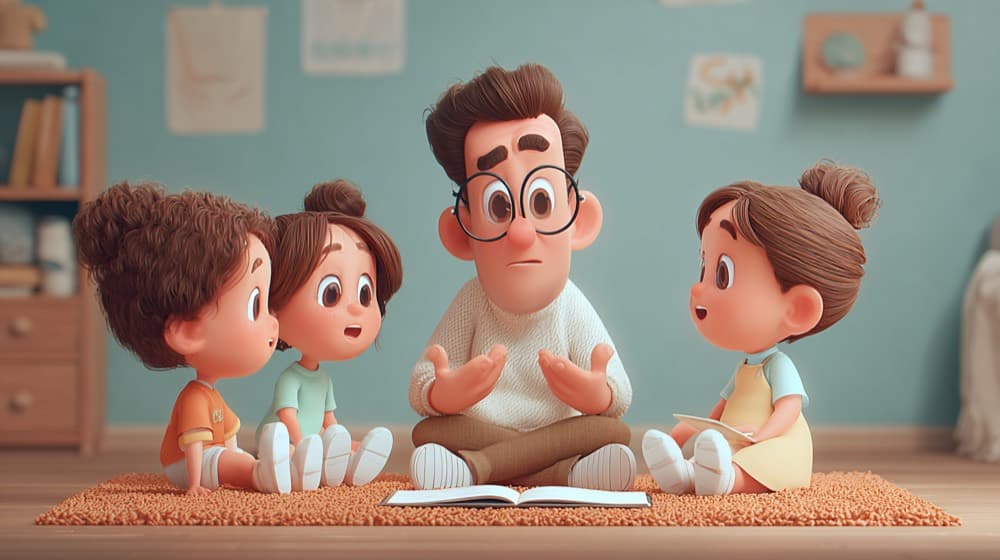
- Ask opinion questions, not quiz questions. "Which character would you want as a friend?" and "What would you have done differently?" open a conversation. "What was the main idea?" closes one.
- Listen like an interviewer, not an examiner. Follow up on what they said, not on what the book said. You're not checking; you're curious.
- Let them go on air. In the podcast project, the interview and the finished episode happen in one sitting — $39 as a single project, or part of the Kubrio membership along with the rest of the podcast projects.
Frequently asked questions
Is it normal for my child to suddenly hate reading?
It's common — and it has a name. Scholastic's data shows reading for fun drops sharply at age 9, right when school reading turns into assignments, logs, and levels. A kid who "hates reading" usually hates the apparatus around reading. Restore choice, drop the checking, and give finishing a book a real payoff.
Do graphic novels and audiobooks count as reading?
Yes. Graphic novels are real reading with complex narratives, and National Literacy Trust research links them to roughly double the odds of enjoying reading overall. Audiobooks build vocabulary and story comprehension, and they let a kid meet books above their decoding level. In Kubrio's book podcast, kids talk about whatever book they finished, in whatever format.
Should I reward my child for reading?
Be careful with it. Across 128 experiments, tangible rewards reliably reduced intrinsic motivation for the rewarded activity — and the reading-log study found interest fell exactly when logging was mandatory. The payoff that works isn't a prize for minutes read; it's something real the kid gets to make or say because they read.
How much should kids read each day?
There's no magic number, and the famous minutes-per-day charts are correlational. What the data consistently shows is that enjoyment drives volume: kids who enjoy reading are about twice as likely to read above their level. Aim for a kid who reaches for the book, not a timer that hits 20 minutes.
Should I still read aloud to a kid who can read?
Yes. In Scholastic's surveys, 83% of kids aged 6–17 say they love being read to, yet most parents stop by age 9. Reading aloud lets you share books above their level — and gives you both something to talk about, which is where the benefits live.
Last updated August 31, 2026.
Related: Go on air about the book you just read · Podcast projects for kids · Why should kids learn to draw? · Why should kids learn to make movies?