
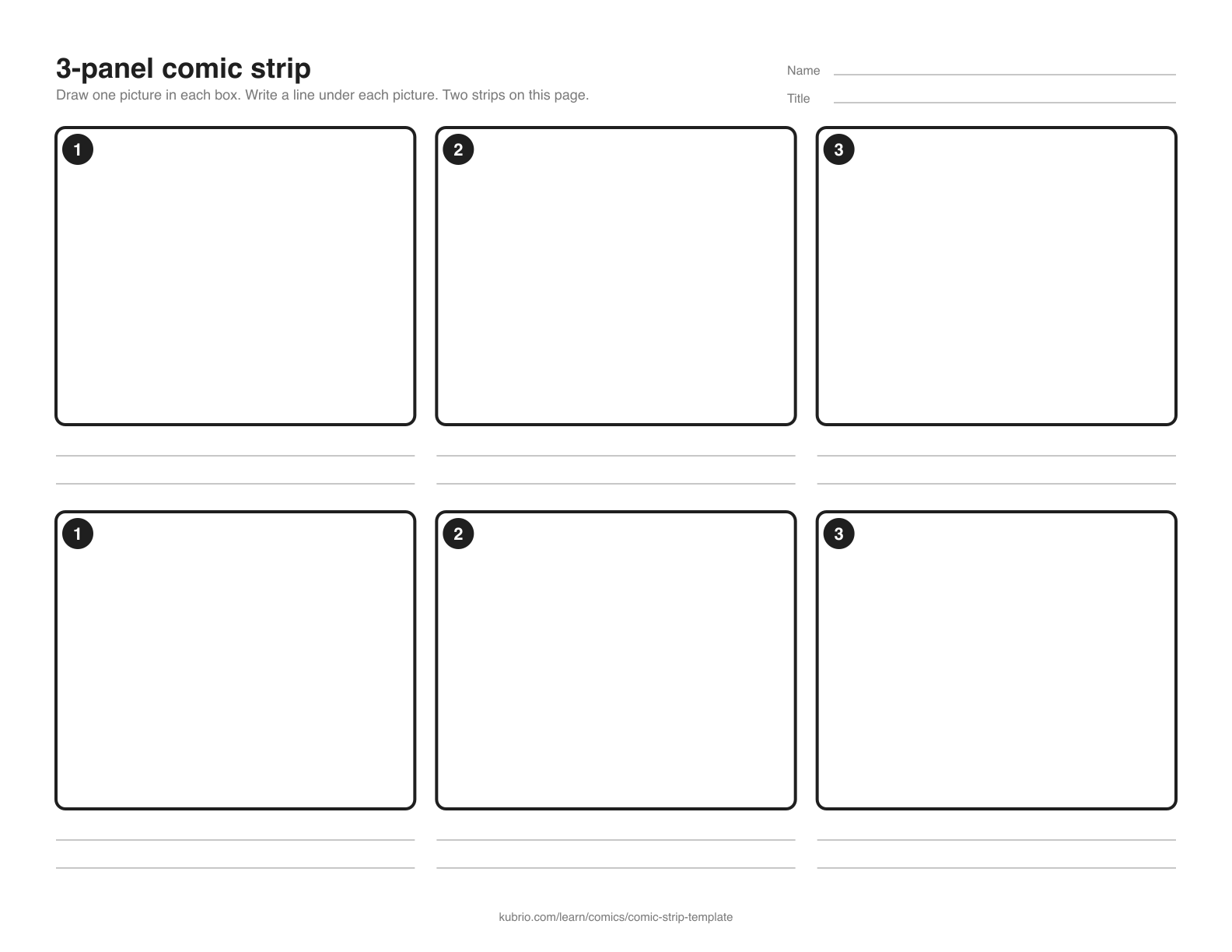
3-panel comic strip
3 panels · Landscape
Two strips per page. Setup, twist, punchline: the shortest comic that still tells a joke or a story.
Print one of the six free templates below, hand your kid a pencil, and they have blank comic panels to fill. Each PDF prints on US Letter or A4, and you need no account and no email. Pick the 3-panel or 4-panel comic strip template for a joke, the 6-panel or 9-panel comic panel template for a story, or the comic book template page for a mixed-size layout.
3 panels · Landscape
Two strips per page. Setup, twist, punchline: the shortest comic that still tells a joke or a story.
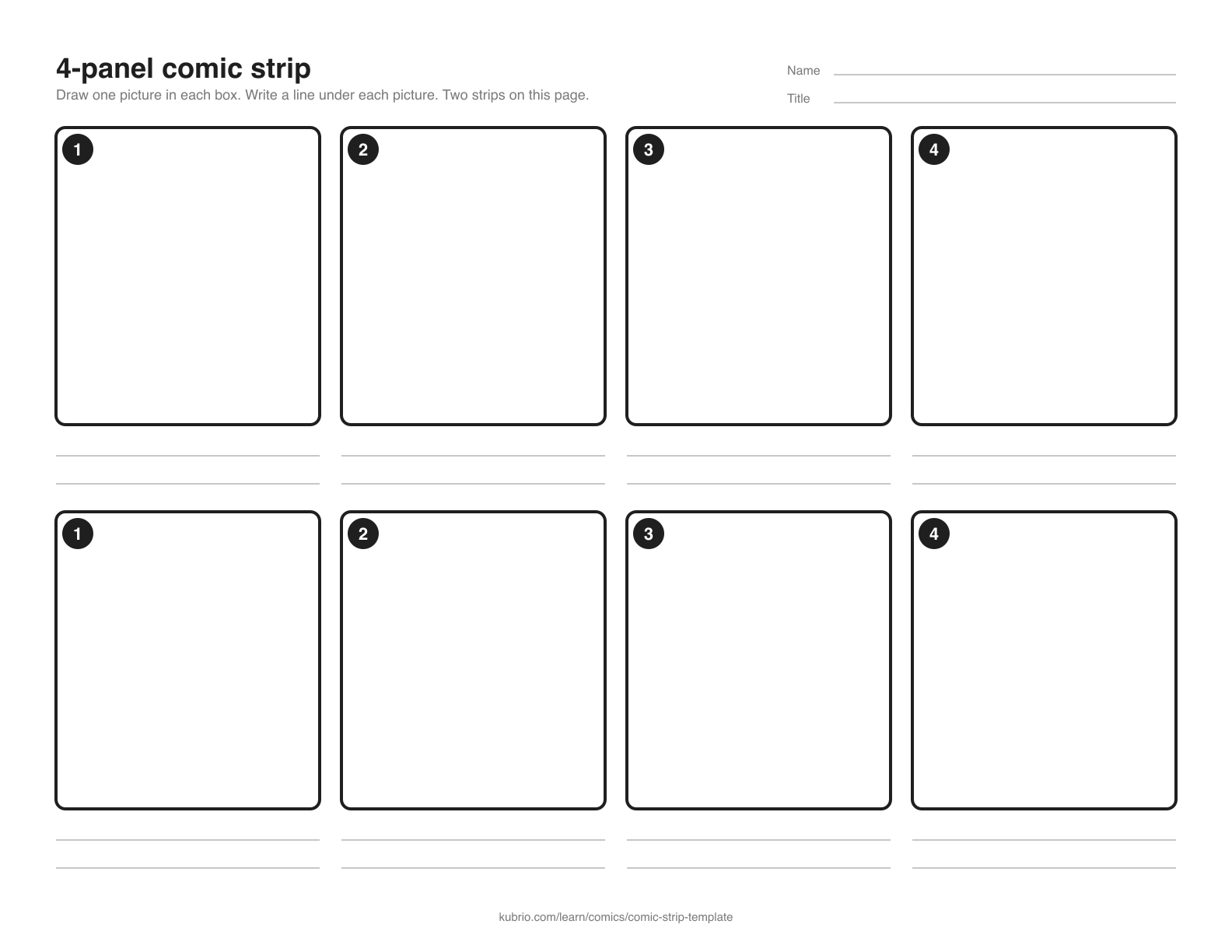
4 panels · Landscape
Two strips per page. The classic newspaper shape, with room for a beat before the punchline.
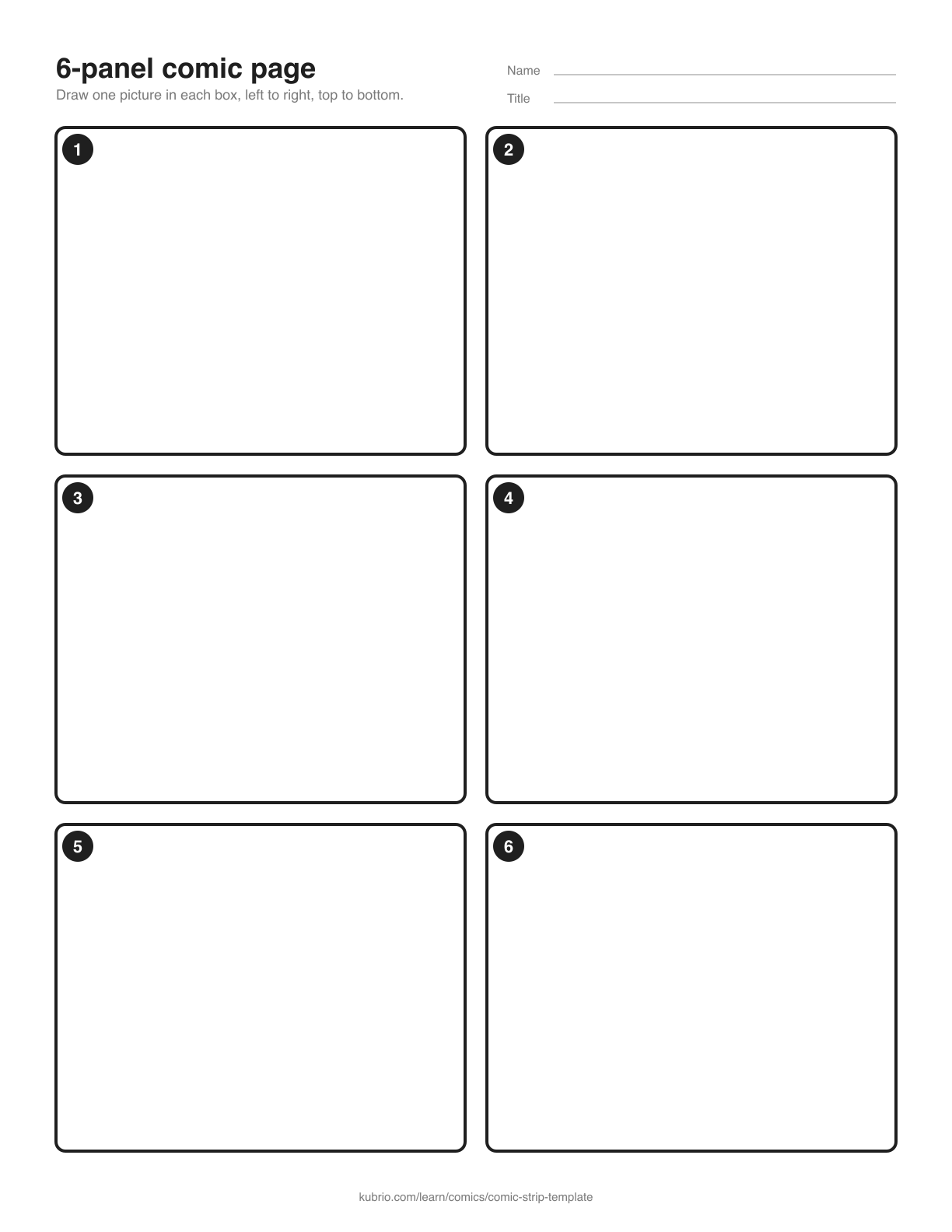
6 panels · Portrait
Six equal panels in two columns. Enough room for a short story with a real middle.
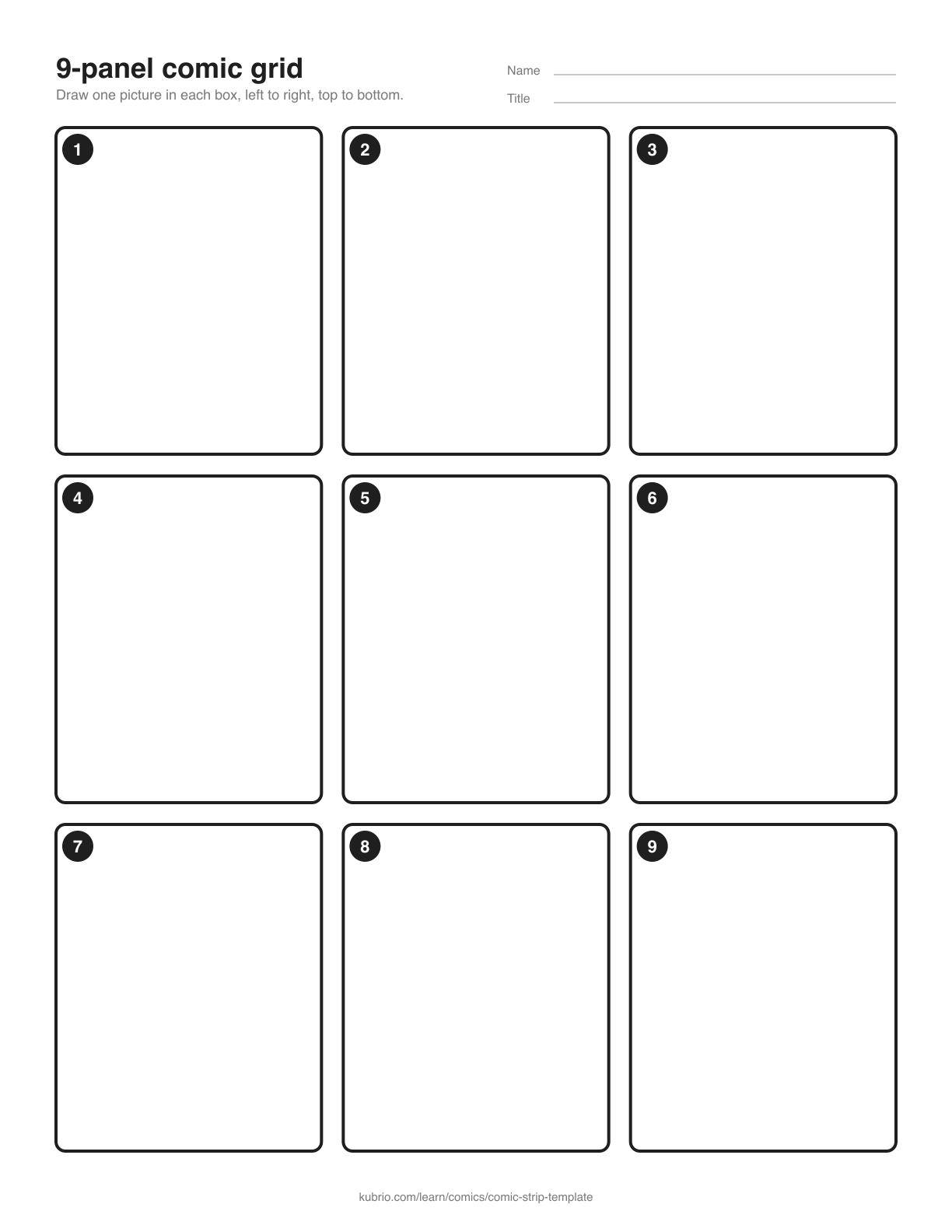
9 panels · Portrait
A three-by-three grid. Small panels push your kid to draw one clear thing at a time.
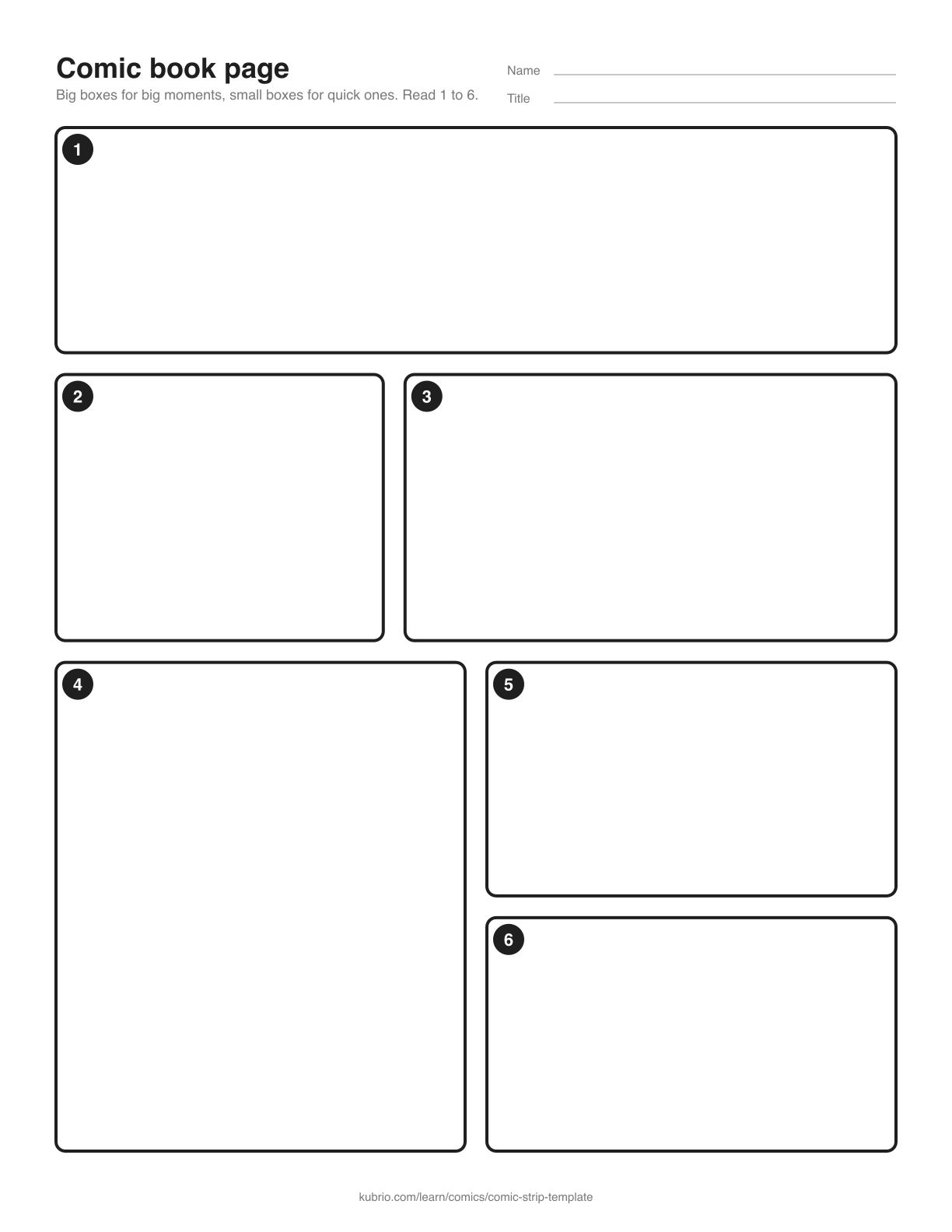
6 panels · Portrait
Six panels in mixed sizes. A wide opener, a pair, a tall panel, and two small ones for a comic book look.
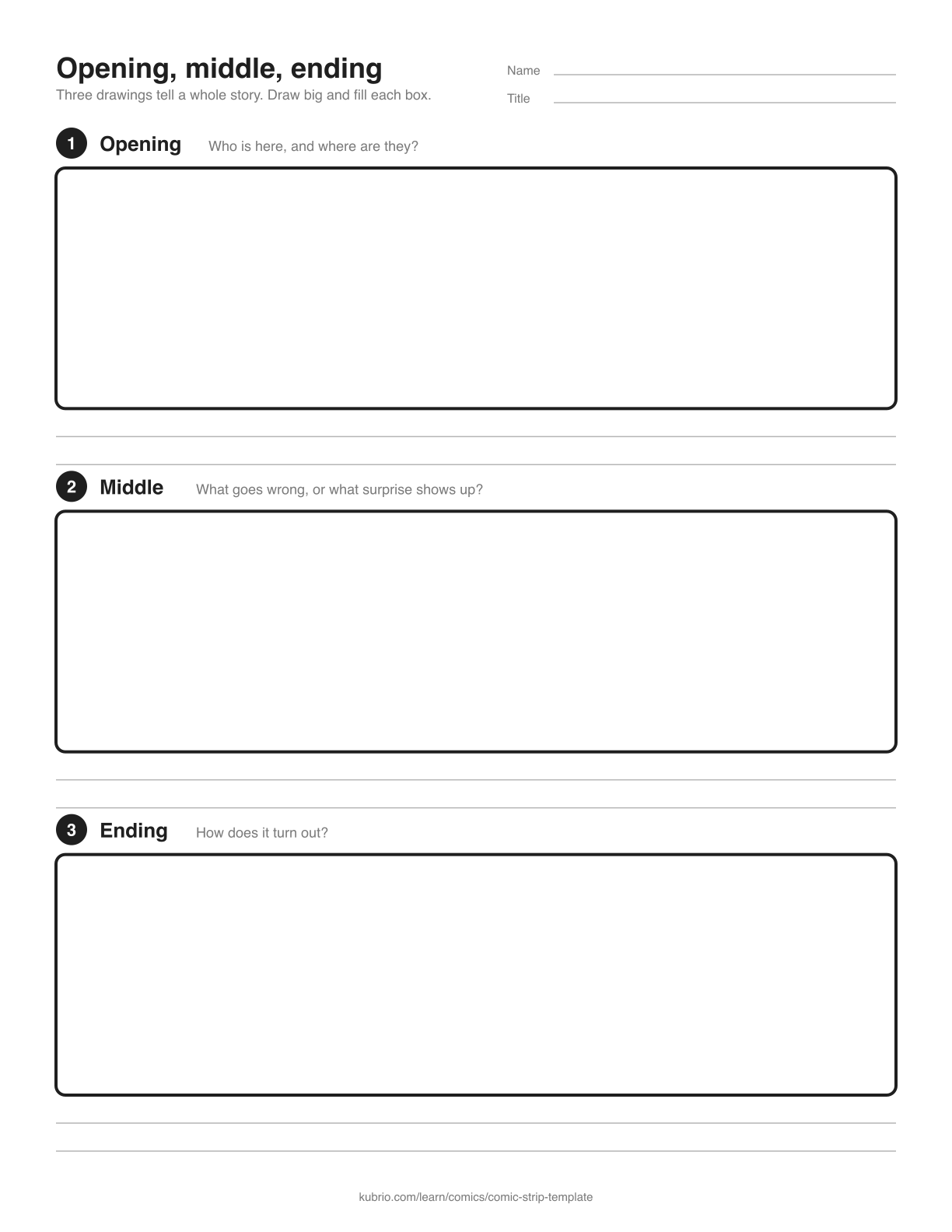
3 panels · Portrait · Matches Comic Studio
Three big boxes for three drawings. The same plan Comic Studio uses to build an 8-page comic.
Ten minutes of setup gets a comic started. Your kid does the drawing; you ask questions.
Choose US Letter or A4, print at 100 percent (not fit to page), and use plain paper. Thicker paper is better for markers.
Before any drawing, ask your kid what happens in one sentence: "A cat tries to catch a laser dot and ends up on the ceiling." Say it out loud, then write it at the top.
Draw panel 1 first, then 2, then the rest. Stick figures count. A clear, simple picture reads better than a crowded one.
Draw speech bubbles in pencil after the pictures, so the words fit around the characters. Write on the lines under each panel if you want a narrator.
Trace over the pencil with a black marker, erase the pencil, and have your kid read the comic to you. If a panel confuses you, ask what to change.
A comic is a row of pictures that lead the eye from one moment to the next. These five habits make a comic easier to read.
In panel 1, show the whole place and everyone in it, so the reader knows where the story happens. Artists call this an establishing shot.
A close-up fills the panel with a face or an object. Use it when a character is surprised, scared, or about to say something important. Use wide shots when characters run, fall, or fight.
Aim for ten words or fewer per bubble. Draw the bubble first, write inside it, and point the tail at the speaker's mouth. Read bubbles left to right, top to bottom.
If two panels look the same, the story has not moved. Change the angle, the distance, or what the character is doing. Panel 2 should show something panel 1 did not.
The final box is the payoff: the punchline, the twist, or the ending. Plan it first, then draw the panels that lead up to it.
The opening, middle, ending planner uses the same plan as Comic Studio. Your kid draws three pictures on paper, uploads them, and Comic Studio builds an 8-page comic they can read, title, and share with family.
Turn three paper drawings into an 8-page comic.
A course with six short films, from one message to a finished comic.
Learn how a joke works and draw one in four panels.
A comic strip template is a printable page with empty, numbered boxes called panels. Your kid draws one scene in each panel, left to right, to tell a short story or joke. The boxes are already measured, so your kid skips the ruler and starts drawing.
Three or four. Three panels give a setup, a twist, and a punchline. Four add a pause before the punchline. A first-time cartoonist finishes a short strip, and finishing is what makes them want to draw another.
A comic strip is a single row of panels, usually three or four, built around one joke or moment. A comic book page stacks several rows of mixed-size panels and continues the story on the next page. The templates cover both.
Yes. Every template comes as a US Letter PDF and an A4 PDF. Print at 100 percent or "actual size" so the margins stay even. The files are vector, so the lines print sharp at any size.
Yes. Print as many copies as you need for your family, a class, or a club. No account, email address, or payment is needed.
Yes. Stick figures and simple shapes make good comics, because the story and the words carry the joke. Ask your kid what happens in each box before they draw, and the drawing becomes the easy part.
It is a page with three big boxes for the three drawings Comic Studio uses: an opening that shows who and where, a middle where something goes wrong or surprising, and an ending that wraps it up. Fill it on paper, then bring the drawings to Comic Studio to turn them into an 8-page comic.
Start with a pencil and a printed page. When the drawings are done, Comic Studio puts them in order and builds the pages.
Open Comic StudioKubrio · Ages 6–13
Movies, games, comics, and robots your kid makes in Kubrio's studios. Studio plans start from $49 a month per kid.