


How do I teach my kid a second language?
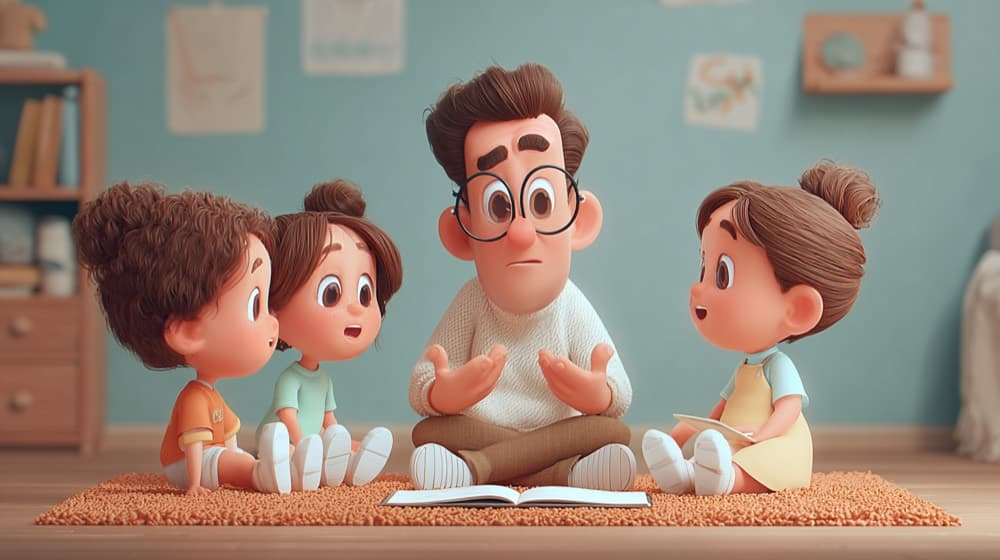
Real fluency comes from consistent exposure and real conversation, not from an app alone — younger kids absorb a language best through immersion (media, a bilingual caregiver, a class where the target language is actually spoken), while older kids can layer on structured tools like Duolingo or a tutor once they have the patience for it. Apps are a genuinely useful supplement for vocabulary and daily practice, but on their own they rarely produce a kid who can hold a real conversation. Kubrio doesn't teach foreign languages — it has no language-learning app — but its reading and writing apps build the habit of working closely with language and defending your own thinking, which is a real (if adjacent) asset once the actual language practice is happening elsewhere.
Real fluency comes from consistent exposure and real conversation, not from an app used alone. A younger kid absorbs a second language best through immersion — hearing and using it regularly, ideally with a person, not just a screen — while an older kid can layer structured tools like a vocabulary app or a tutor onto that same foundation. Apps are a genuinely useful supplement for daily practice and vocabulary; on their own, without real conversation, they rarely produce a kid who can actually talk to someone in the language.
That's the honest core of it, and it's true regardless of which tools you end up using. Below is what actually works by age, why apps alone tend to fall short of what their marketing implies, a framework for building real exposure at home, and — because it's the honest reason a Kubrio page is answering this — exactly where Kubrio fits, and where it doesn't.
What actually works, by age
Ages 4–7: immersion beats instruction. Young kids don't learn a second language by being taught grammar rules — they absorb it the same way they absorbed their first language, through repeated, meaningful exposure. A bilingual grandparent, a playgroup where the language is genuinely spoken, or a steady diet of age-appropriate shows and songs in the target language will do more at this age than any app. The single best lever is consistency: a little exposure every day beats a lot once a week.
Ages 8–11: add structure, keep the exposure real. This is the age where a kid can start benefiting from a more formal class or a well-designed app for vocabulary and grammar patterns — but it should sit alongside real exposure, not replace it. Dual-language books, subtitled shows in the target language, and a conversation partner (a relative, a tutor, an exchange pen pal) matter more at this stage than most parents assume, because a kid who's only ever drilled vocabulary in an app often can't actually produce a sentence under real conversational pressure.
Ages 11–13: real conversation becomes the bottleneck. By this age a kid can handle explicit grammar instruction and self-directed app practice, but the thing that actually determines whether the language sticks is whether they're using it to say something they mean, to a real person, regularly. A weekly conversation lesson with a tutor (services like iTalki or Preply connect families with language tutors, including ones who work with kids) closes a gap that solo app practice usually can't.
The honest limit of language-learning apps
Duolingo and similar apps are genuinely good at what they're built for: bite-sized vocabulary and pattern drilling, with a streak mechanic that keeps a kid opening the app. That's real value — daily repetition matters for language acquisition. But it's worth being honest about the gap: research and plenty of real-world experience both point the same direction, that app-only practice, with no real conversation, tends to plateau well short of actual fluency. A kid can rack up a long Duolingo streak and still freeze up the first time an actual person speaks to them in that language, because recognizing a word in a drill and producing it under real conversational pressure are different skills. The streak measures consistency with the app, not fluency in the language.
That doesn't mean skip the apps — it means treat them as the vocabulary layer, not the whole plan, and pair them with actual speaking practice wherever you can find it.
A framework for building real exposure at home
- Make the language show up in daily life, not just app time. Labels around the house, a bedtime story in the target language once a week, a family meal where you all try to use a few phrases — small, repeated, low-pressure exposure beats an occasional long lesson.
- Prioritize a real person over a real app. A weekly conversation with a tutor, relative, or language-exchange partner will move a kid toward fluency faster than the same amount of time spent solo in an app.
- Use media your kid already likes, in the target language. A show or a video game they'd watch anyway, switched to the target language with subtitles, turns exposure into something they'd choose rather than something assigned.
- Let production lag behind comprehension — that's normal. A kid who understands far more than they can say yet is progressing normally; don't mistake a quiet phase for a stalled one.
- Keep it consistent, not intense. Ten minutes most days beats an hour once a week, for the same reason cramming doesn't build real memory in any subject.
Where Kubrio fits — and where it doesn't
To be direct: Kubrio does not teach foreign languages. There's no language-learning app in the studio, and nothing in Kubrio is built to teach your kid Spanish, Mandarin, French, or any second language — for that job, the real tools are the ones above: immersion, a tutor, and a well-chosen app used as a supplement, not the whole plan.
Where Kubrio is a genuine, if adjacent, asset is in how closely its apps work with language itself — just not a second one. In Book Club, a kid reads a real book and sits for a recorded AI interview about it, getting asked increasingly sharper questions about what they read and why — the exact skill of defending your own understanding of a text under real questioning, which is the same muscle a kid eventually needs to hold a real conversation in any language, including a new one. That's a genuine connection, not a stretch — but it's a connection to the habit of working closely with language and one's own thinking, not to second-language acquisition itself.
If your family is already deep in Kubrio's reading and writing apps, keep that going — it builds real skill. For the actual second-language piece, the honest next step is the age-based path above: exposure first, conversation early, apps as the vocabulary layer underneath it, not the whole strategy.
Frequently asked questions
What's the best app for kids to learn a second language?
No single app produces real fluency alone. Duolingo and similar tools are solid for daily vocabulary practice, but pair them with real conversation — a tutor, a bilingual relative, or immersion media — since app-only practice tends to plateau well short of actual speaking ability.
What age is best to start a second language?
Earlier is genuinely an advantage for a young kid's ear and accent, but a kid of any age can make real progress — the biggest factor at every age is consistency and real exposure, not the starting age itself.
Is immersion really better than an app?
For actual fluency, yes — a kid who regularly hears and uses a language with real people progresses faster than one drilling vocabulary alone. Apps are a useful supplement for daily practice, not a substitute for real exposure.
My kid has a long Duolingo streak but can't hold a conversation. Is that normal?
Yes, and it's the most common gap in app-only language learning. Recognizing and drilling vocabulary in an app is a different skill from producing language under real conversational pressure — the fix is adding a real conversation partner, not abandoning the app.
Can bilingual media (shows, games) actually teach a language?
Yes, especially when it's content your kid already enjoys, switched into the target language with subtitles. It turns exposure into something chosen rather than assigned, which matters for consistency over time.
Does Kubrio teach kids a second language?
No. Kubrio has no language-learning app. [Book Club](/apps/bookclub) builds real skill in reading closely and defending your understanding of a text — a genuinely adjacent habit — but for second-language instruction itself, a dedicated tool or tutor is the honest choice.
Is a tutor worth it for a kid, or is that overkill?
For real conversational ability, a weekly tutor session (in person or through a service like iTalki or Preply) closes a gap solo app practice usually can't — it's often the single highest-leverage addition once a kid has some vocabulary foundation.
How much daily practice actually matters?
More than duration does. Ten consistent minutes a day builds real language memory better than an occasional hour-long session, the same way spaced practice works better than cramming in most subjects. --- Want your kid building the close-reading and hold-your-own-in-conversation habits that make any language click faster? [Start your family account](https://app.kubrio.com/start).