
What do I do with all my kid's artwork?
You can't keep it all, and trying to is why the pile wins. The fix is a small, repeatable system: photograph everything before it leaves the house, let your kid pick a handful of true keepers instead of you guessing, and give yourself permission to recycle the rest without guilt. Some of what your kid makes never needs this system at all — a drawing that becomes a finished film, comic issue, or field journal is already the keeper version, kept automatically, which is the honest reason Kubrio builds toward a real finished thing instead of another loose page.
You can't keep it all, and the instinct to try is exactly what turns a proud pile into a guilty one. The honest fix is a small system: photograph everything before it leaves your hands, let your kid — not you — choose a handful of true keepers, and give the rest a fast, guilt-free exit. That's it. It sounds almost too simple for how much anxiety this question causes, but the anxiety comes from treating every drawing as sacred, and no system survives that assumption.
This is a real logistics problem before it's anything else, so the rest of this page starts there — a system you can run this weekend with paper, a phone, and nothing else. Then it gets into something a little different: why some of your kid's work never turns into a pile in the first place, and how Kubrio's apps are built around that second idea on purpose.
Why the pile always wins
Three things stack against you. First, kids make a lot — a typical school year produces hundreds of pages between school worksheets, home drawings, and craft projects, far more than any wall or drawer can hold. Second, every piece arrives with a little emotional tax attached: throwing it away can feel like throwing away the effort, or the kid, even though it isn't. Third, there's no natural cutoff — nobody tells you when enough is enough, so the pile just grows until a drawer won't close and the guilt of dealing with it grows right along with it.
None of this means you're bad at this. It means you're missing a system, and a system is the only thing that actually works against volume plus guilt plus no cutoff.
A framework: keep less, keep better
1. Photograph it before it leaves your hands. A phone photo, right when the piece comes home, in decent light, on a plain surface — five seconds, and it captures the thing permanently without taking up a single inch of drawer space. This one habit does more work than every other step combined, because once a photo exists, letting go of the physical page stops being a loss.
2. Set a keeper quota, and mean it. Pick a number that fits a real container you already own — one flat box per kid per year is a good default — and once it's full, something has to leave before something new comes in. A quota isn't cruel; it's the only thing that forces an actual choice instead of an ever-expanding pile that never gets one.
3. Let your kid pick the keepers, not you. Once or twice a year, spread everything out and ask your kid which pieces matter to them. Kids are often less attached to individual pages than parents assume — what they usually want kept is the memory of making something, which the photo from step one already covers, so the physical keeper pile shrinks fast once they're the one deciding.
4. Digitize the rest instead of storing it. For pieces too big or too three-dimensional to just photograph well, a scanning app built for exactly this (Artkive and Keepy are two well-known ones) turns a shoebox of papers into an organized digital archive in an afternoon. It's not the same as keeping the physical object, and for the 95% of work that was never going to make the keeper box, that's the right trade.
5. Recycle without a ceremony. Do it in a normal trash or recycling run, not a dramatic one, and not usually with your kid watching — not because it's shameful, but because making an event out of it teaches a kid to grieve every discarded page instead of trusting that the good ones are safe. The photo and the keeper box are where the real memory lives; the recycling bin is just where the extra paper goes.
When "keeping it" should mean "finishing it" instead
Here's the part of this question a storage system can't fully solve, because it's not actually a storage problem: a lot of what makes the pile hard to deal with is that most of the pages in it were never finished into anything. A drawing that's just a drawing is a single loose page, competing with two hundred other loose pages for a spot in a box. A drawing that became something — a scene in a film, a page in a published comic, an illustrated entry in a keepsake journal — isn't competing with anything, because it's already the finished, kept version of itself.
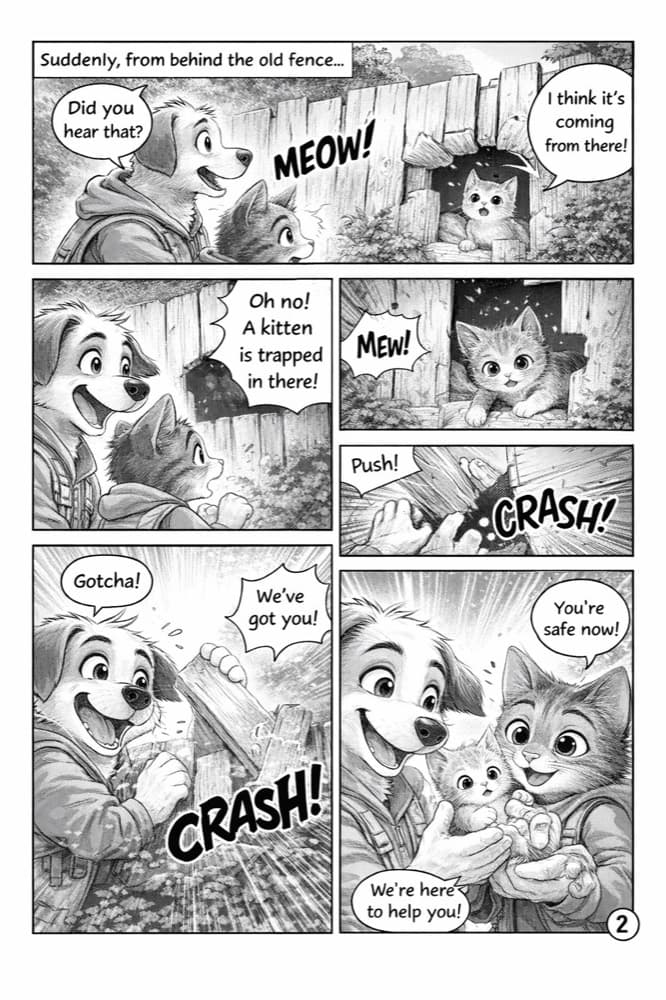
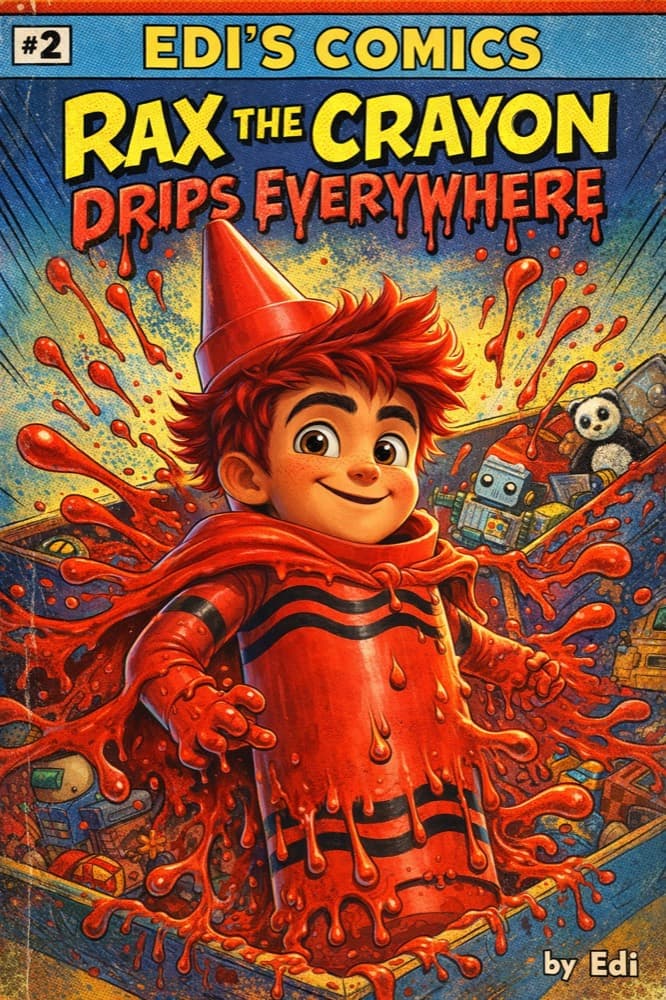
This is the honest reason Kubrio's apps are built around finishing a real thing instead of producing another loose page. In Sketchling, your kid draws every key frame by hand on real paper — the same kind of paper that would otherwise end up in the pile — and the AI Crew bridges the motion between those drawings into a finished film your kid keeps. The paper isn't lost; it becomes something that was never going to sit in a drawer in the first place. In Origin Stories, individual pages of a comic your kid is drawing panel by panel come together into a real, bound issue, published under their own pen name — one keepsake instead of a loose stack. In Wild World, a kid's field notes and sketches from a nature walk become chapters in an illustrated journal with its own cover, not scattered pages that need sorting later.
None of this replaces the system above — Kubrio doesn't solve the pile of school worksheets already stuck to your fridge, and it isn't trying to. What it does is make the ongoing creative work a kid does inside it arrive already finished and already kept, so that particular category of paper never becomes a pile you have to deal with at all.
A checklist you can run this weekend
- Do you have a fast, five-second way to photograph a piece the moment it comes home — a habit, not a someday project?
- Is there a real, physically limited container for keepers, or does "keep it" currently mean "put it somewhere and hope"?
- Has your kid ever been the one choosing what stays, or has that always been your call?
- Is there a stack of already-photographed pages you could recycle today, guilt-free, because the memory is already saved?
- Of what your kid made this month, how much was a loose page versus something that got carried through to an actual finished thing?
If that last answer is "mostly loose pages," that's not a failure — it's just where the honest opportunity is, whether that means a finishing project at home or one that runs itself.
Frequently asked questions
Do I have to keep any of my kid's artwork?
No, and keeping none of it doesn't make you a bad parent. What actually matters to most kids later is knowing their work was seen and mattered in the moment, not that a physical drawer of it survived. A photo plus a genuine reaction in the moment covers that; a full archive is a bonus, not a requirement.
Is it bad to throw away my kid's drawings?
Not if you've photographed it and it isn't one of the pieces they chose to keep. The guilt usually comes from treating every page as equally precious, which isn't sustainable and isn't even what most kids expect. A quiet recycling run is fine; what would actually hurt is a kid noticing their work only gets thrown out in secret while something they knew you cared about gets kept.
Should I let my kid throw away their own artwork?
Yes, and it's often the healthiest version of this whole process — a kid who gets to choose what to keep is practicing real ownership over their own work, not just producing it for someone else to judge and store.
What's the best way to digitize a large pile of old artwork?
A phone camera in decent light handles most flat pieces fine. For a genuinely large backlog, or bulky 3D pieces, a dedicated scanning-and-archiving app (Artkive and Keepy are two established ones) will get through a shoebox faster and organize it better than a manual photo-by-photo approach.
My kid gets upset when I recycle their drawings. What do I do?
Slow the pace and involve them in the choosing instead of doing it while they're not looking, at least at first — a kid who picks the keepers themselves rarely protests the pieces that don't make the cut, because the decision was theirs, not something done to them.
Is there an app that just stores my kid's artwork?
Yes — several scanning-and-archive apps exist specifically for this (Artkive and Keepy, for example), and they're a genuinely good fit if storage and organization is the whole problem you're solving. Kubrio is a different kind of tool: it's not an archive for artwork your kid already made elsewhere, it's a studio where the work itself finishes into a film, comic, or journal as part of making it.
Does Kubrio store or back up my kid's artwork for me?
Kubrio isn't a storage service for artwork made outside it. What it does is turn the drawing your kid makes inside an app like Sketchling or Origin Stories into a finished piece — a film, a comic issue, a journal — that's kept in their portfolio at [kubrio.com/made](/made) as a byproduct of making it, not a separate archiving step you have to remember to do.
How much of my kid's schoolwork should I actually keep?
Very little, honestly — most worksheets and in-class assignments are proof a task was completed, not a piece your kid will care about later. Reserve real keeper space for the rare pieces with a story behind them (something they were proud of, worked hard on, or asked to keep themselves), and photograph the rest before it goes. --- Want your kid's next drawing to finish into something worth keeping automatically? [Start your family account](https://app.kubrio.com/start).