
Claymation ideas for kids: how clay animation works, and 12 short films to make
By Kubrio Editorial Team. Reviewed by Vlad Stan, founder of Kubrio.
Claymation is a film made by moving a clay character a tiny bit, taking a photo, and repeating until the photos play back as motion. A kid can make one with a lump of modeling clay, a phone, and an afternoon, and the best first films are only five to ten seconds long. This guide explains how it works, what you need, and 12 short ideas that are small enough to finish. In Kubrio's stop-motion course, your kid makes a stop-motion film starring their toys, and clay characters work the same way.
What is claymation, and how does it make things move?
Claymation is stop-motion animation with clay. You pose a character, take one photo, move it slightly, take another, and play the photos quickly one after the other. Your eye reads the small changes as movement, the same trick as a flipbook.
The clay is the fun part, because the character can change shape. A ball can squash, stretch, grow a mouth, and turn into a different animal between two photos. That is why clay is a good first material: your kid can fix a mistake by pushing the clay back.
If your kid likes drawing more than sculpting, the flipbook course uses the same idea on paper.
How much work is a claymation film?
More than it looks, and that is worth saying out loud before you start. The Smithsonian, reporting on the Young V&A exhibition about Aardman, says each animator on a Wallace and Gromit film makes about two seconds of footage a day. A museum workshop at MoPOP notes that LAIKA's films are shot at 24 frames per second, so every second of film is 24 photos.
Your kid does not need that pace. A kids' activity from DIY.org suggests about 8 frames per second, which looks a bit choppy but is far less work. At 8 frames per second, a 10-second film is 80 photos. That is a good afternoon, not a week.
What do we need to make a clay animation?
You need five things, and you probably own most of them:
- Modeling clay. Plasticine-style clay stays soft and can be reshaped again and again. Air-dry clay hardens, so it is better for a character that does not change.
- A phone or tablet with a stop-motion app. Any app that shows the last photo faintly over the new one works. Many free ones exist.
- Something to hold the phone still. A stack of books or a cheap stand. If the phone moves between photos, the picture jumps.
- A flat table and a plain background. A sheet of colored paper is enough.
- Steady light. A lamp is better than a window, because the sun moves and clouds change the brightness between photos.
Tip for the parent: tape the phone down and mark the clay's starting spot on the paper with a pencil. These two small things prevent most of the frustration.
What are good claymation ideas for kids?
The best ideas are tiny. One character, one action, five to ten seconds. Here are 12, roughly easiest first.
- The blob that becomes an animal. A ball of clay slowly turns into a cat, then a fish. Practices: small, steady changes.
- The bouncing ball. A clay ball drops, squashes, and bounces back up. Practices: timing.
- The growing flower. A stem pokes out of the ground and a flower opens. Practices: patience.
- The sneeze. A clay face builds up to a giant sneeze and its nose flies off. Practices: build-up and surprise.
- The sandwich that eats itself. Clay slices of bread, cheese, and tomato disappear one bite at a time. Practices: removing pieces in order.
- Two characters meet. One walks in from the left, the other from the right, and they wave. Practices: moving two things at once.
- The monster who is scared of a mouse. A big monster, a very small mouse, and one reaction. Practices: contrast and character.
- The race. A snail and a hare race and the snail wins by one frame. Practices: speed through step size.
- The clay name. Letters of your kid's name wriggle into place. Practices: planning where things end up.
- The melting snowman. A clay snowman sags and slumps into a puddle. Practices: working backwards from the ending.
- The pet who gets a haircut. A fluffy clay dog loses its fur piece by piece. Practices: change over time.
- The one only your kid would invent. A potato that wants to be a pirate. Practices: starting from a want.
Notice that every idea has a character and one thing the character wants or does. That is what makes a ten-second film feel like a story rather than a clay demo. Our guide on making an animation with your kid goes deeper on story.
Kubrio Worlds · Ages 6–12
Let your kid explore the new worlds.
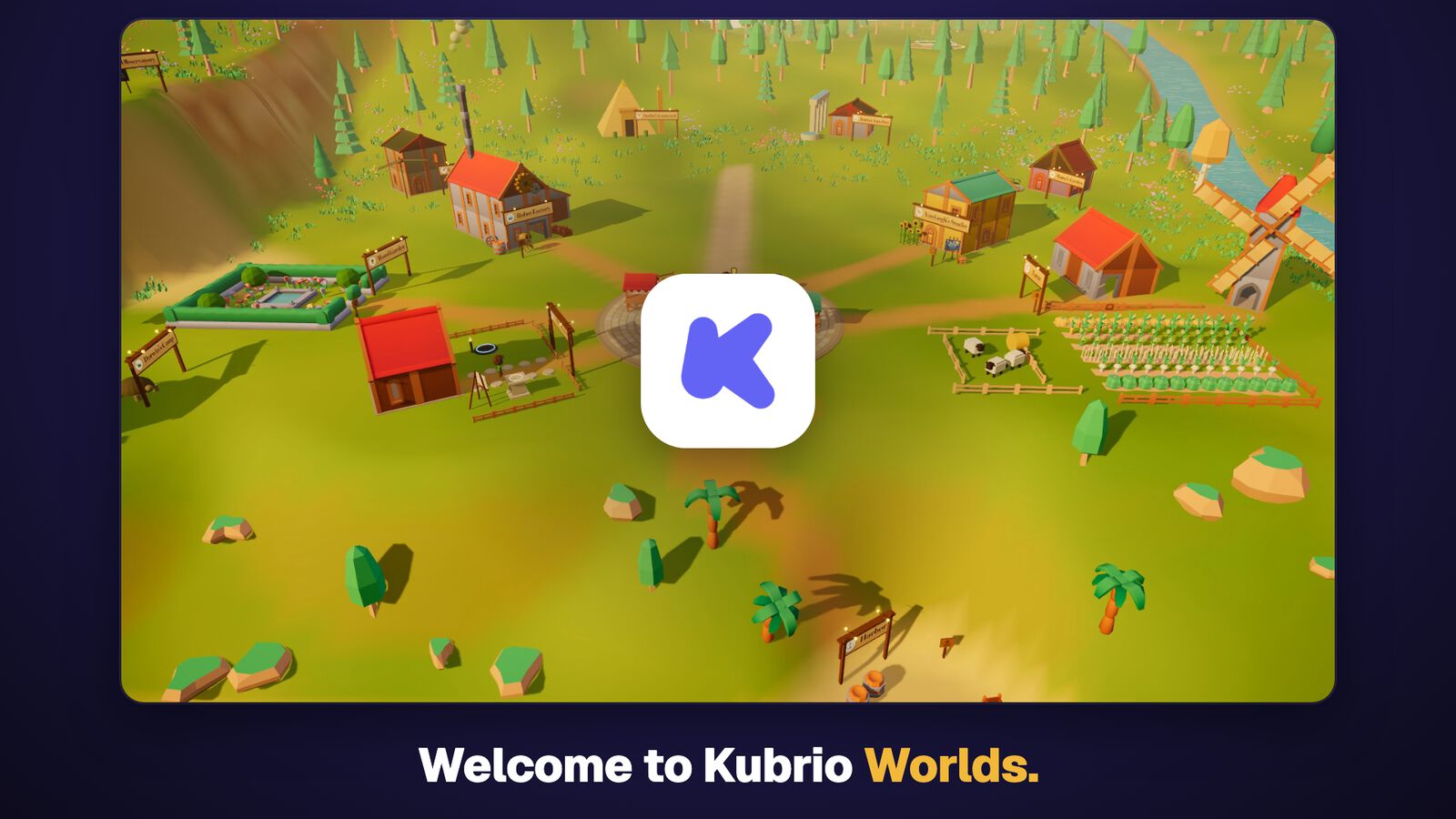
A 3D village where kids paint with Vincent van Gogh, launch rockets, and run a farm. Every world teaches something useful, with quizzes and things to make. You set the screen time.
3 days free, then $49 $19 a month per kid.
 ▶ 1:45 tour
What are the steps for a first claymation?
Start with the end in mind: a short film with a beginning, a middle, and a surprise. Here is the order that works.
- Pick one idea from the list and say it as one sentence: "A monster sneezes his nose off."
- Sketch three pictures of the start, the middle, and the end.
- Shape the character and make a spare of any small part that might get lost.
- Set up the phone, lamp, and background, then tape the phone down.
- Take a photo, move the clay a little, take another. Small moves look smooth. Big moves look jumpy.
- Play it back every 15 or 20 photos so your kid sees the film growing.
- Add a sound or a voice when the photos are done.
If your kid wants to build a character first and a plot second, the monster course is a good warm-up: your kid designs a monster and plans its movie. The stop-motion course is the full how-to for the filming steps.
What do kids usually get stuck on?
Most kids get stuck on moving too much. The clay wants to jump, and the film looks like a slideshow. The fix is to say "half as far" out loud before every move.
The second sticking point is boredom around photo 30. Plan a short film, set a timer for a break, and play the film back. Seeing it move is the best motivation there is.
The third is accidents: a bumped table, a squashed hand, a dropped phone. A pencil mark on the table and a taped-down phone fix nearly all of them.
How does this connect to what Kubrio does?
Kubrio's line is that kids make real things with their own hands, and the AI crew asks questions and helps but never does the work. Claymation fits that well, because the clay, the moves, and the story are all your kid's. When your kid is ready to turn a character and a story into a longer film, the Animation Studio is where that happens. Claymation does not need Kubrio, though. A lump of clay and a phone are enough to start.
What to do at home this week
- Buy or find one pack of modeling clay in two or three colors.
- Download one free stop-motion app and test it with a pen moved a tiny bit across the table.
- Let your kid pick one idea from the list and say it as one sentence.
- Shoot 40 photos together on the first day and play them back.
- Add a sound on the second day, and share the film with one person.
FAQ
What age can kids start claymation? Most kids around 6 can take the photos and move simple shapes with a grown-up nearby. By 9 or 10, many can plan a short story and finish a film alone. By 12 or 13, kids start to care about smooth timing and sound.
What app should we use? Any stop-motion app that shows the previous photo faintly over the live view will do, and several free ones exist. Pick one your family can use on a phone or tablet you already own, and test it before the clay comes out.
How many photos do we need? It depends on the speed. At about 8 photos per second, a 10-second film needs around 80 photos. At 12 photos per second, it needs 120. Start with the smaller number.
Is claymation different from stop motion? Claymation is one kind of stop motion. Stop motion is the name for any film made from photos of real things you move between shots, such as toys, paper cutouts, or clay.
What if the clay keeps sticking or breaking? Warm it in your hands first, and work on baking paper or a plain board. If a small part keeps falling off, make it a bit bigger or press it on harder.