
Game Studio · With Krea
Game designer for kids: research like a real one
A game designer researches a topic first, then turns the findings into the game's places, rules, items, and questions. In this course your kid researches one artist the way designers do: who, when, and where, then a close look at the paintings, then a game built from the facts. Krea hosts four short films for kids 6 to 13, with Claude Monet as the example all the way through, and your kid ends with a designer's research notebook about one artist. Plan about 4 minutes of films and 45–60 minutes of research and making. With Kubrio, your kid takes that research into an island game in the Game Studio, or onto a paper game board.
Game designer for kids: research like a real one is part of Kubrio Learn: short courses that inspire kids to make things. Learn more
Watch all 4 lessons in the appWhat your kid makes
Your kid ends with a designer's research notebook about one artist: a timeline, a map with a dot, three fact cards checked in two places, the artist's three rules, five color swatches, and a list that turns each fact into a place, a rule, an item, or a question for a game.
- Ages
- 6 to 13
- Time
- 4 films, about 4 minutes, then 45–60 minutes of research and making
- You need
- Paper and a pencil, colored pencils, crayons, or paints, a grown-up and a phone or computer, for museum websites
- Host
- Krea
The 4 lessons
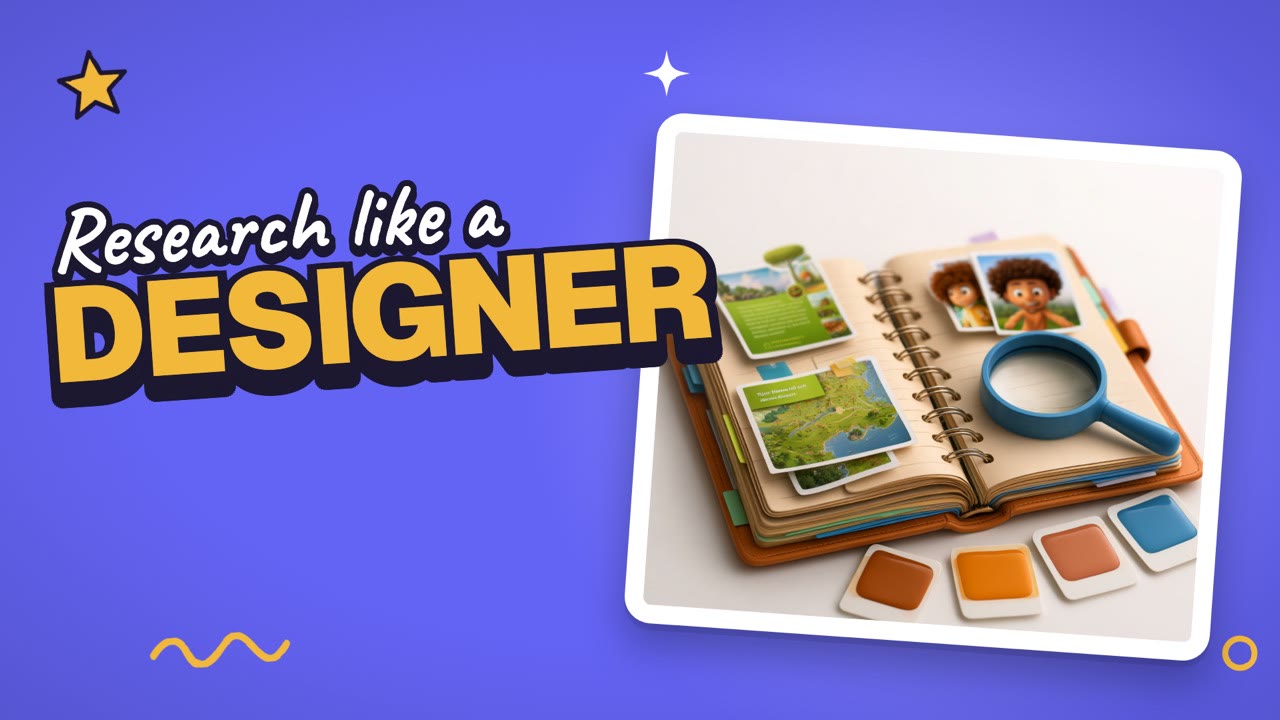
Lesson 1. Designers research first
Game designers study before they build, so every detail in their world comes from something they found.
- Pick an artist, or any topic you love
- Write the name at the top of a page
- Keep the page for the next three lessons
Where: Paper
Lesson 2. Who, when, where
Every researcher asks who, when, and where. Krea's Claude Monet facts: born in Paris in 1840, young when steam trains were new, and painting his garden pond at Giverny, in France. People laughed at his painting Impression, Sunrise, and that's how Impressionism got its name.
- Look on a museum website with a grown-up
- Draw a timeline and a map with a dot
- Write three fact cards, each checked in two places
Where: Paper
In the app
Lesson 3. Look like a detective
Monet painted the same haystacks again and again, in summer, at sunset, in a thaw, and in snow, to show how light changes them. Side by side, the paintings show three rules: the light changes everything, fast little dabs often painted outside, and soft, bright colors with hardly any black.
- Put four paintings side by side
- Write the artist's three rules
- Paint five colors from the paintings
Where: Paper
In the app
Lesson 4. Turn research into a game
Every fact becomes a place, a rule, an item, or a question. Monet's pond becomes the first place, the light rule becomes a game rule, and the palette paints the whole board.
- Turn each fact into a place, a rule, an item, or a question
- Make the palette the colors of the board
- Build it on paper, or as an island in the Game Studio
Where: Paper
In the app
Lesson 1 transcript: Designers research first
Want to make a game about a famous painter? First, you research. Just like a real game designer!
Game designers study before they build. They visit real places, read old books, and look at paintings.
Why? So their world feels true. Every detail comes from something they found.
Today my topic is a painter. Claude Monet.
He painted ponds, bridges, trains, and haystacks. Lots of haystacks!
My game will be a walk through his paintings. But first, I need to get to know him.
Your turn. Pick an artist, or any topic you love. Write the name at the top of a page. Then press Next.
Free guides to practise with
Questions parents ask
What does a game designer do?
A game designer decides what a game's world looks like, what its rules are, and what the player does there. Before building, a designer researches: real places, old books, and pictures, so every detail feels true. This course practices that research step, then turns the facts into a game.
Does my kid need the Game Studio?
No. Every lesson works with paper and pencils, and the game can be a paper board. Kids who use the Game Studio can build the research as an island in its Island game instead.
Where do the paintings and facts come from?
Every painting in the films is a real Claude Monet work in the public domain: the Stacks of Wheat series, Water Lilies, Water Lily Pond, Arrival of the Normandy Train, and Cliff Walk at Pourville from the Art Institute of Chicago (CC0), and Impression, Sunrise through Wikimedia Commons. Each fact was checked in two places, the same rule your kid learns in lesson 2. It's a first taste of art history, the story of who made famous art and why.