
Graphic novels for kids: a reading list by age, and why readers start making their own
By Kubrio Editorial Team. Reviewed by Vlad Stan, founder of Kubrio.
The best graphic novels for kids match the reader's age: short, funny series like Narwhal and Jelly or Dog Man for 6- to 8-year-olds, longer adventures and memoirs like Bone and Smile for 9- and 10-year-olds, and award winners like New Kid and Roller Girl for 11 to 13. Below are 22 books sorted by age, with what each one is about, so you can pick the next one without guessing. Kids who read a stack of them often want to draw one, and Kubrio's course Make your own comic turns your kid's own drawings into an 8-page comic.
Do graphic novels count as real reading?
Yes, graphic novels count as reading, and the people who hand out the biggest prize in American children's books agree. In 2020, Jerry Craft's New Kid became the first graphic novel to win the Newbery Medal, the American Library Association's top award for children's literature. Five years earlier, Cece Bell's El Deafo became the first graphic novel to earn a Newbery Honor, and Victoria Jamieson's Roller Girl earned one the next year.
Reading a comic asks a lot of a kid. They read the words, read the pictures, and fill in what happens in the gap between two panels. If you want the longer case, with what the research says about vocabulary and reluctant readers, our article Are comic books good for kids? goes through it.
Do kids who read comics enjoy reading more?
Kids who read comics say they enjoy reading more, though nobody has shown that comics cause it. The UK's National Literacy Trust surveyed 64,066 children and young people aged 8 to 18 in 2023, and in its March 2024 report found that 2 in 5 (40.7%) read comics or graphic novels in their free time at least once a month. Of the kids who read comics, 58.6% said they enjoyed reading, against 33.1% of kids who didn't. Daily reading followed the same pattern: 35.7% against 22.8%.
That's a correlation. Kids who already love reading may simply read everything, comics included. What it does tell you is that comics sit inside a reading life, not instead of one.
What are good graphic novels for ages 6 to 8?
Good graphic novels for 6- to 8-year-olds have big panels, short chapters, few words per page, and a lot of jokes. Read the first one aloud together, and let your kid do the voices.
- Narwhal and Jelly by Ben Clanton. A cheerful narwhal and a sensible jellyfish, with short chapters a new reader can finish alone. Start with Narwhal: Unicorn of the Sea.
- Dog Man by Dav Pilkey. A police officer with a dog's head, a cat villain, and a lot of silliness. Kids reread these until the covers fall off.
- Cat Kid Comic Club by Dav Pilkey. A frog and a crowd of tadpoles make their own comics, in every style from stick figures to clay. This is the one most likely to send your kid to the paper drawer.
- Owly by Andy Runton. A kind owl and his friends, told almost entirely without words. Good for a kid who isn't reading yet, because they can still tell you the whole story.
- Investigators by John Patrick Green. Two alligator spies who travel through the sewers, with a pun on nearly every page.
- Babymouse by Jennifer L. Holm and Matthew Holm. A mouse who daydreams her way through school, where each daydream is a different kind of story.
- Hilda by Luke Pearson. A blue-haired girl who meets trolls, giants, and spirits in the hills around her home. The art is quieter than the others, and it suits kids who like folk tales.
What are good graphic novels for ages 9 to 10?
At 9 and 10, kids are ready for longer stories, real feelings, and series that run eight or nine books. This is the age when many kids read their first memoir without knowing that's what it is.
- Smile by Raina Telgemeier. A true story about a sixth grader who knocks out her front teeth, and the years of braces, friends, and crushes that follow. Most kids go straight on to Sisters and Guts.
- Bone by Jeff Smith. Three cousins from Boneville get lost in a valley full of dragons, rat creatures, and a secret queen. Funny at the start and an epic by the end.
- Amulet by Kazu Kibuishi. A girl and her younger brother follow their mother into a world of robots, elves, and a stone that talks.
- El Deafo by Cece Bell. Bell's own childhood after she lost her hearing, drawn with everyone as rabbits. The Newbery Honor book above.
- Hilo by Judd Winick. A boy robot falls out of the sky with no memory, and two kids try to find out who he is.
- The Cardboard Kingdom by Chad Sell. A neighborhood of kids turn boxes into costumes and invent a whole world for one summer. Have a box ready; our list of cardboard crafts for kids has the builds.
- Sunny Side Up by Jennifer L. Holm and Matthew Holm. A girl spends a summer at her grandfather's retirement community, and slowly finds out why.
- Wings of Fire: The Graphic Novel by Tui T. Sutherland, adapted by Mike Holmes. The dragon series many kids already love, in comic form.
Kubrio Worlds · Ages 6–12
Let your kid explore the new worlds.
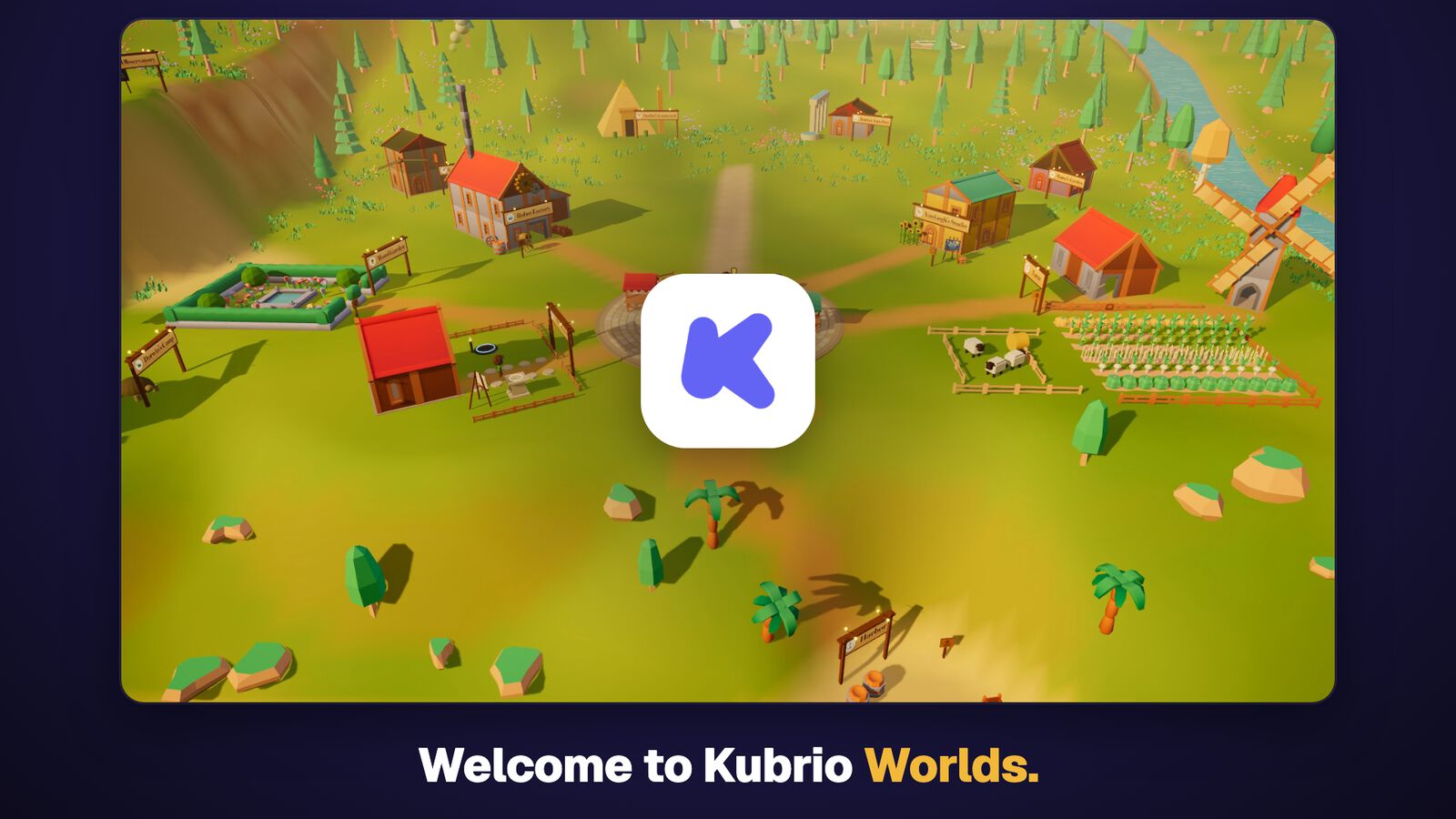
A 3D village where kids paint with Vincent van Gogh, launch rockets, and run a farm. Every world teaches something useful, with quizzes and things to make. You set the screen time.
3 days free, then $49 $19 a month per kid.
 ▶ 1:45 tour
What are good graphic novels for ages 11 to 13?
From 11 to 13, kids can read graphic novels about school, friendship, identity, and hard history, and the best of them have won the same prizes as any novel.
- New Kid by Jerry Craft. Jordan wants to go to art school but ends up at a private school where he's one of very few kids of color. Funny, sharp, and the 2020 Newbery Medal winner. Class Act continues it.
- Roller Girl by Victoria Jamieson. A girl signs up for roller derby camp and her best friend doesn't. A Newbery Honor book about growing apart.
- When Stars Are Scattered by Victoria Jamieson and Omar Mohamed. Mohamed's childhood in the Dadaab refugee camp in Kenya, caring for his younger brother. A 2020 National Book Award finalist for Young People's Literature. It deals with loss, so read it together or be ready to talk.
- The Witch Boy by Molly Knox Ostertag. In Aster's family, girls become witches and boys become shapeshifters, but Aster wants to do magic.
- Mighty Jack by Ben Hatke. A retelling of Jack and the beanstalk with a garden that grows dangerous things overnight.
- Twins by Varian Johnson and Shannon Wright. Twin sisters start middle school and, for the first time, don't do everything together.
- Amulet again, if your kid didn't start it at 9. The later books get darker and bigger, and older kids often read all nine in a month.
The ages are a guide. A strong 7-year-old reader may love Bone, and a 12-year-old who has just started reading for fun may want Dog Man, which is fine. Look through any book before you hand it over: a few on this list touch on loss, war, or growing up, and you know your kid.
Why do kids who read graphic novels want to make one?
Kids who read graphic novels want to make one because the format shows them how it's done on every page: a panel, a picture, a few words, and the next panel. Nothing about a comic is hidden behind a printing press. A kid who has read forty Dog Man books has studied forty lessons in pacing without noticing.
There's a second reason it's worth encouraging. Pictures and words together help people remember. In a small study, Aleixo and Sumner (2017) gave undergraduates the same material on sleep as comic pages, as plain text, or as comics with pictures that didn't match the words. The students who read the matching comic scored best on a memory test, and the mismatched comic scored worst. That study used adults and one topic, so treat it as a hint, not a rule. But it fits what you'll see at home: when your kid draws the story, they remember it.
A graphic novel is long, so don't start there. Start with a four-panel comic strip, one joke in four boxes. Then an 8-page comic. Then, if your kid wants more, a series with the same hero. Kubrio's course Make a comic series helps your kid plan exactly that: a series with one hero across several stories. Your kid does the drawing and the deciding; Kubrio's AI crew asks questions and never draws the comic for them.
What to do at home this week
- Go to the library together. Most children's sections have a graphic novel shelf. Let your kid pick three from this list or anywhere else, with no rule about "real books".
- Read the first chapter of one aloud. Take turns: you read the words, your kid points to which panel comes next. It teaches the reading order without a lecture.
- Ask one question after each book. "Which panel would you draw differently?" works better than "What was it about?"
- Fold one sheet of paper into four boxes. Your kid draws a four-panel story starring a character they invent, not one from the book.
- Pick a hero and a problem. If your kid gets stuck, our comic book ideas for kids has 20 premises, each with a hero, a problem, and a twist.
- Read the finished comic at dinner. Your kid reads it out loud and does the voices. Then ask what happens next, and you may have a series.
FAQ
What age are graphic novels for? Graphic novels are written for every age, from early readers to adults. For kids, the books above start around 6 with short, funny series and go up to 13 with award winners about school, family, and history. Pick by your kid's reading level and interests more than the number on the back cover.
Are graphic novels good for reluctant readers? Often, yes. The pictures carry part of the story, so a kid who stalls on a full page of text can still follow along and finish a book. The National Literacy Trust found that kids who read comics were far more likely to say they enjoy reading, though that doesn't prove the comics caused it.
Should my kid read only graphic novels? A kid reading graphic novels every day is reading every day, and that's what matters most. If you want variety, offer novels by the same authors or on the same topics, and read a chapter book aloud at bedtime. Most kids move between formats on their own.
What's the difference between a comic book and a graphic novel? A comic book is usually a short issue, often part of a running series, and a graphic novel is a longer, complete story bound as a book. The way you read them is the same: panels, pictures, and words in order. Many graphic novels for kids are series too, like Bone and Amulet.
How do I know if a graphic novel is right for my kid? Flip through it before you buy or borrow it, and read the first few pages. Look at how many words are on a page and what the story is about, since some books for older kids deal with loss or war. Library staff and the children's section of a bookshop can also suggest books by age.
How can my kid make their own graphic novel? Start small: a four-panel strip, then an 8-page comic, then a series with the same hero. Kubrio's Make your own comic course turns your kid's drawings into an 8-page comic, and Make a comic series helps them plan more stories with the same hero. Paper and a pencil are enough to begin.