
Every studio · With Tek
How to make paper mache: a mask from newspaper
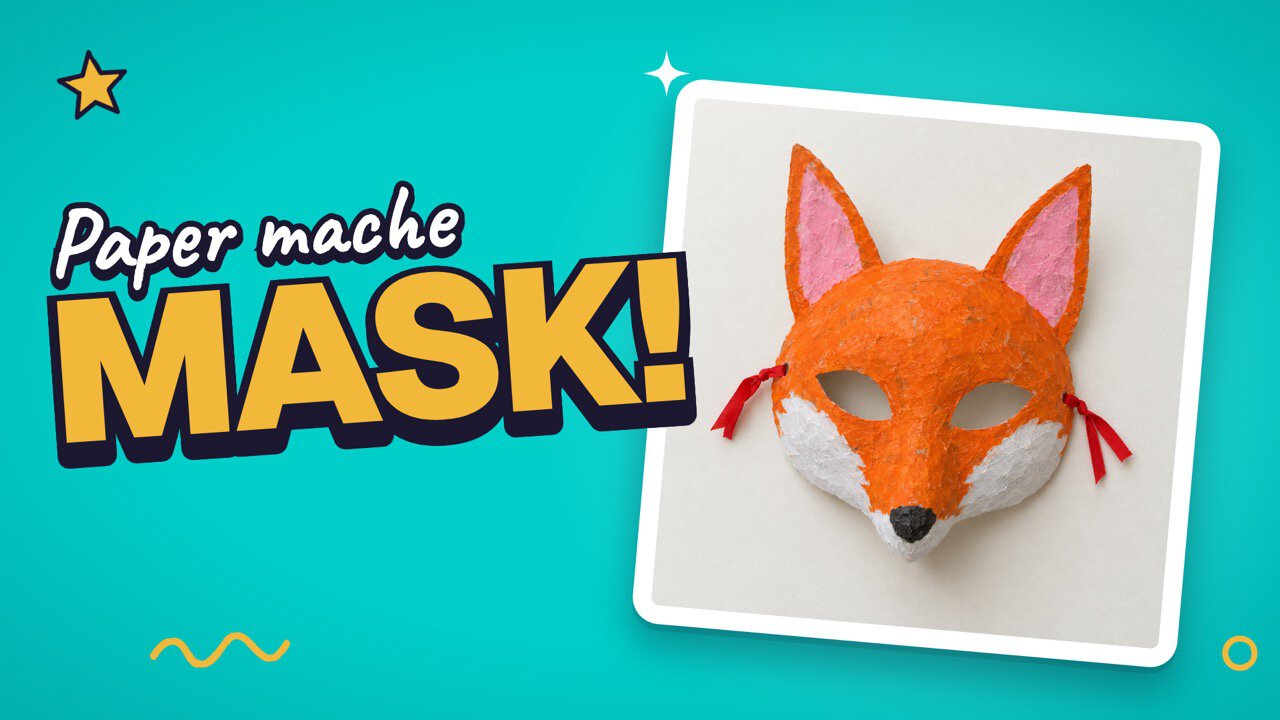
To make paper mache, you mix flour and water into a paste, dip torn newspaper strips in it, and lay them in crisscross layers over a mold, like a balloon, until it dries hard. In this course your kid designs a mask on paper, mixes the paste, builds three layers over a balloon, and paints the mask once it's dry. Tek hosts four short films for kids 6 to 13, with a fox mask as the example all the way through, and your kid ends with a paper mache mask of a character they invent. Plan about 4 minutes of films and about 90 minutes of making, spread over two or three days while the layers dry. Kubrio's studios aren't needed for the mask, and the character your kid invents for it can star next in a short cartoon, since the Animation Studio's Characters room takes your kid's own drawing.
How to make paper mache: a mask from newspaper is part of Kubrio Learn: short courses that inspire kids to make things. Learn more
Watch all 4 lessons in the appWhat your kid makes
Your kid ends with a paper mache mask of a character they invented: designed on paper, built from three layers of newspaper strips over a balloon, painted in the character's colors, and tied on with a ribbon. It's ready for a play, a party, or a story they act out.
- Ages
- 6 to 13
- Time
- 4 films, about 4 minutes, then about 90 minutes of making over two or three days (the layers need a day or two to dry)
- You need
- Paper and a pencil for the design, flour, water, salt, a bowl, and a spoon, old newspaper and some tape, a balloon, or a bowl and plastic wrap, paint, a brush, a ribbon, and a grown-up for the cutting
- Host
- Tek
The 4 lessons
Lesson 1. Design your mask
A mask turns you into someone new. Your kid picks a character and draws it as big as their face, with eye holes and big shapes that stick out.
- Pick an animal, a creature, or a character you invent
- Draw it as big as your face, with two eye holes
- Add big shapes that stick out, like ears or a beak
Where: Paper
Lesson 2. Mix the paste
The paste is one cup of flour, one cup of water, and a pinch of salt, stirred smooth like pancake batter. Torn strips stick better than cut ones.
- Cover the table and mix the paste
- Add a splash of water if it's too thick
- Tear a big pile of finger-wide newspaper strips
Where: At home
In the app
Lesson 3. Layers, then wait
Strips go flat and crisscross over a balloon or an upside-down bowl, three layers deep. Then the mask dries for a day or two.
- Set a head-size balloon in a bowl, with a grown-up to tie it
- Dip, wipe, and lay strips flat and crisscross
- Tape on scrunched newspaper for ears, add three layers, and let it dry
Where: At home
In the app
Lesson 4. Paint it and wear it
A dry mask is hard and sounds like a little drum. A grown-up trims it and cuts the eye holes, and the bottom stays open for breathing.
- Tap to check it's dry, then pop the balloon
- Have a grown-up trim the edge, cut eye holes, and poke ribbon holes
- Paint it white, then in your character's colors, and tie on a ribbon
Where: At home
In the app
Lesson 1 transcript: Design your mask
Hi, I'm Tek! Today you start a mask. Made from newspaper, flour, and water!
A mask turns you into someone new. For a play, a party, or a story you act out.
First, pick who it is. An animal, a creature, or a character you invent.
I pick a fox. Pointy ears, a pointy nose, and white cheeks.
Draw it as big as your face. Put two eye holes where your eyes go.
Add shapes that stick out. Ears, horns, a beak, or a nose. Big shapes look great from far away!
Your turn. Pick your character, and draw your mask on paper, as big as your face. Then press Next.
Free guides to practise with
Questions parents ask
What is the recipe for paper mache paste?
This course uses one cup of flour, one cup of water, and a pinch of salt, which keeps it from going moldy. Stir it smooth, like pancake batter, and add a splash of water if it's too thick. Many recipes use more water for a thinner paste, and both work.
How long does paper mache take to dry?
About a day or two for three layers, depending on how warm and dry your home is. The mask is ready when it's hard and sounds like a little drum when you tap it. Lesson 3 ends on the wait, so plan the course over two or three days.
Do we need a studio or an app for this?
No. Kubrio's studios aren't needed: the whole course happens at home with flour, water, newspaper, and a balloon. A grown-up ties the balloon, trims the edge, cuts the eye holes, and pokes the ribbon holes, and the bottom of the mask stays open so your kid can always breathe. Keep balloons and popped balloon pieces away from younger children.