
Is Minecraft good for kids? What it builds, what to watch, and what comes next
By Kubrio Editorial Team. Reviewed by Vlad Stan, founder of Kubrio.
Yes, for most kids from about 8, Minecraft is one of the better games they can play: it's a building game first, the violence is cartoon zombies and skeletons, and Creative mode has no enemies at all. What makes it good or not is how it's set up: who your kid can play and chat with, which mode they play in, and how much of the week it takes. In Kubrio's How to make a 3D game course, your kid takes the same habit off the screen and builds a 3D island adventure on a baking tray, with hills, walls, a key, and a villain they designed.
What age is Minecraft for?
Minecraft is rated for 10 and up in the US, and most reviewers say 8 is fine with a parent nearby. The ESRB rates it E10+ for Fantasy Violence, with the labels Users Interact and In-Game Purchases. Common Sense Media's review puts the main game at 8+ and calls it a sandbox game that fosters creativity.
The gap between 8 and 10 is mostly about the online side, not the game itself. The ESRB's own guide for parents (2024) says the base game has no gory content, and that the Users Interact label is there because players can chat online if they choose. A 6 or 7-year-old playing Creative mode on their own world, with you in the room, is a different game from a 10-year-old on a public server.
What does Minecraft actually teach?
Minecraft gives kids practice in planning, building in three dimensions, and finishing something big, and the research on it is promising but thin. In 2025, Slattery and colleagues reviewed 29 studies of Minecraft used for learning in children, teenagers and young adults. Studies reported gains in spatial thinking, creativity, critical thinking, math, science and language. The authors also judged every one of those studies to be at medium or high risk of bias, and said the effects need repeating in stronger studies.
So the honest answer is: likely, not proven. Here's what you can see at home without a study:
- Planning. A kid who builds a castle has to decide where the door goes before the walls are up. Ask them to show you the plan, and you'll often hear one.
- Thinking in 3D. Building a staircase, a bridge, or a tunnel means picturing a shape from above and from the side.
- Sticking with it. Big builds take days. A house that falls into lava gets rebuilt.
- Playing together. Siblings and friends on one private world split the jobs: one mines, one builds, one decorates.
A word on the video game studies you may have read. Granic, Lobel and Engels (2014) reviewed the benefits of playing video games in American Psychologist, including better spatial skills. Most of that spatial evidence came from fast action and shooter games, not building games, so it doesn't transfer to Minecraft one for one.
Is Minecraft safe for kids?
The game itself is safe for most kids; the risks come from strangers online, chat, and spending. Three things are worth setting up on day one.
Who they play with. Minecraft's official parents' guide says child accounts must be linked to an adult account, and that they have online multiplayer and chat turned off by default. You turn on what you want from the Xbox family settings. A Realm is a private, invite-only world, which is a good middle step: your kid plays online, but only with friends you've said yes to. Public servers are a different place. The ESRB notes that private community servers are not controlled or moderated by Mojang, the company that makes the game.
What they hear. If your kid plays with others, you can set chat to friends only or off. Plenty of kids play happily with chat off and talk to their friends in the same room instead.
What they buy. The Marketplace sells skins, worlds and add-ons for Minecoins, which cost real money. The ESRB says child accounts need a parent's approval to buy. Keep it that way, and decide together what's worth saving up for.
Creative or Survival: which mode should my kid play?
For kids under 8, or any kid who gets scared or frustrated, start in Creative; move to Survival once they ask for a challenge. Minecraft's own page on Creative and Survival modes describes Creative as unlimited blocks, flying, and no danger, and Survival as gathering, crafting, hunger, and monsters at night.
Survival has a difficulty setting, and Peaceful turns the hostile monsters off. That's a good bridge: your kid has to gather and craft, but nothing chases them. Survival on Normal is where the zombies and Creepers come in, and where the "fantasy violence" in the rating lives.
Kubrio Worlds · Ages 6–12
Let your kid explore the new worlds.
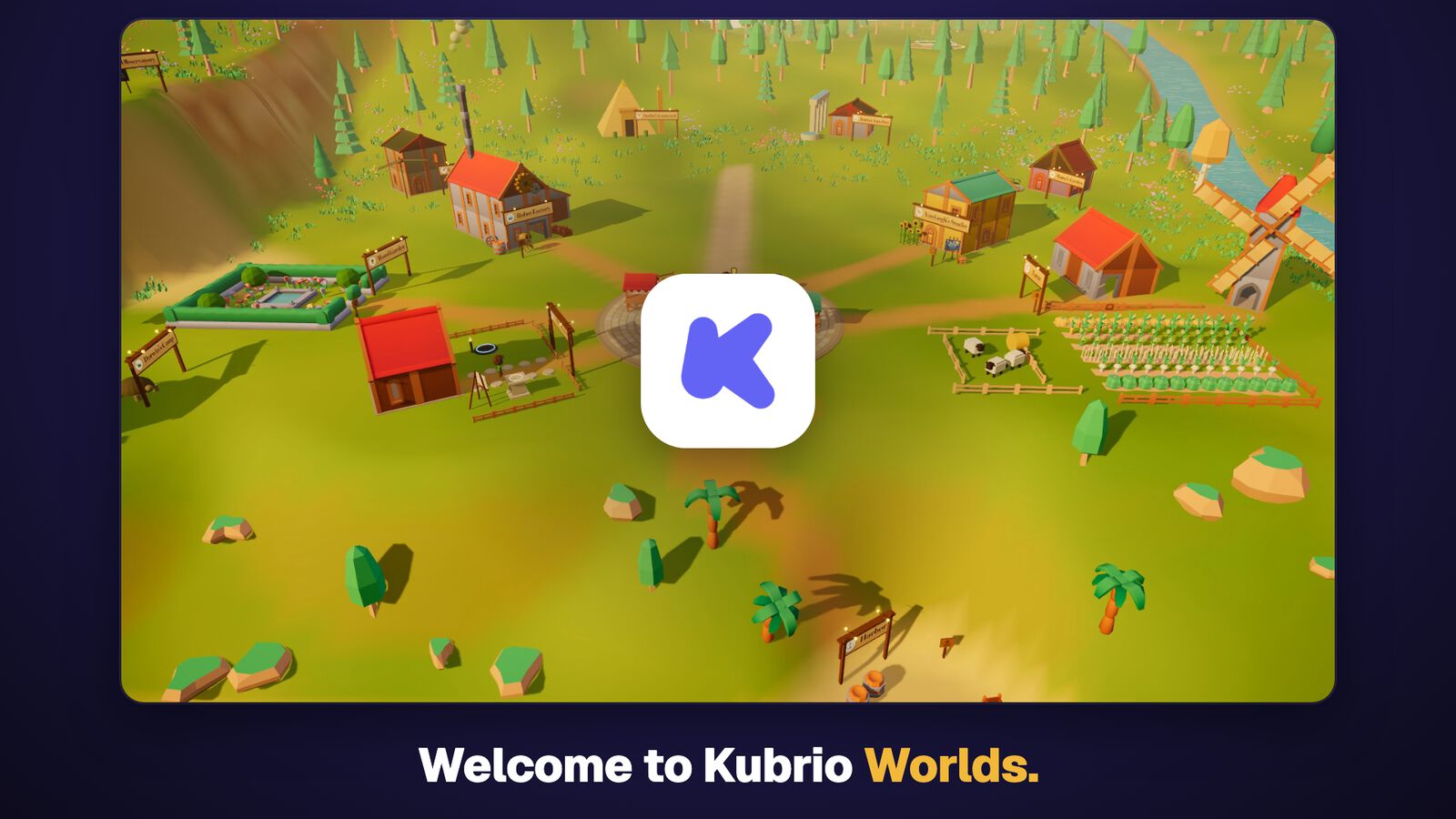
A 3D village where kids paint with Vincent van Gogh, launch rockets, and run a farm. Every world teaches something useful, with quizzes and things to make. You set the screen time.
3 days free, then $49 $19 a month per kid.
 ▶ 1:45 tour
How much Minecraft is too much?
There isn't one right number; too much is when Minecraft starts pushing out sleep, homework, outdoor play, or time together. The American Academy of Pediatrics' January 2026 policy statement, Digital Ecosystems, Children, and Adolescents, puts the weight on how platforms are designed and on families setting their own boundaries, and the AAP's Family Media Plan is a free tool for doing that together.
What works in a lot of homes:
- Set the limit by builds, not minutes. "Finish the bridge, then we eat" ends better than a timer going off in the middle of a staircase.
- Give a five-minute warning. Minecraft has no natural stopping point, so make one.
- Keep it in a shared room. Especially for kids under 10, and especially with multiplayer on.
- Watch for the shift. If your kid only wants to watch other people play on video, or melts down every time it ends, that's the moment to adjust, not to ban.
Is Minecraft better than other video games?
For most families, Minecraft is one of the stronger choices, because the main thing you do in it is make something. Many games give a kid a level to beat; Minecraft hands them an empty world and asks what they'll build. That's the part worth growing.
It isn't perfect for every kid. Some kids find the open world aimless and do better with a game that has a clear goal. Some get pulled into watching videos of other players more than playing. And the building is limited to blocks: your kid can build a castle, but they can't decide what the castle is for, who lives in it, or why anyone would want to get in. That's game design, and it's the next step.
How does a kid go from playing Minecraft to designing a game?
The step from playing worlds to designing them is adding a goal, a rule, and something in the way. A Minecraft castle is a place. A castle with a locked gate, a key hidden in the tower, and a dragon guarding the bridge is a level someone else can play.
You can try this inside Minecraft: ask your kid to build a world for a sibling with one thing to find and one thing in the way, then watch the sibling play it without helping. Most kids learn more from that first playtest than from a week of building. Kafai and Burke (2015), who reviewed 55 studies of kids making their own games, found that kids design first for playability: whether someone else can actually play the thing.
It also works off the screen. Kubrio's free course How to make a 3D game builds an island on a baking tray in four short films (height, walls, the key, and the villain), and it's the closest paper version of a Minecraft world that has a reason to exist. Draw the world first with How to make a map. When your kid wants the whole picture, How to make a video game walks through each part of making a game someone else can play, and the games hub has the rest of the free game courses, from pixel art to escape rooms. What Kubrio isn't: an open world to wander in for hours. It's for kids who want to make a game, not only play one.
What to do at home this week
- Play with them once. Ask your kid for a 20-minute tour of their world. Let them be the expert. You'll learn more about what they're building than any review can tell you.
- Check the settings together. Open the Xbox family settings and look at multiplayer, chat, and purchases. Tell your kid what you chose and why.
- Agree on a stopping rule. Builds, not minutes, with a five-minute warning. Write it down in the Family Media Plan if that helps.
- Give a design challenge. "Build a world for your sister with one hidden key and one thing in the way." Then have the sister play it while your kid watches without talking.
- Take it to the table. Get out a baking tray, some cardboard, and paper cups, and build the same world in 3D on the kitchen table. Ask: where does the player start, and what's the first thing they see?
FAQ
Is Minecraft OK for a 6-year-old? Yes, in Creative mode or on Peaceful, on their own world, with online play off and you nearby. The E10+ rating is for the monsters in Survival, and online chat is a separate setting. Both can be switched off.
Is Minecraft educational? It can be. A 2025 review of 29 studies found reports of better spatial thinking, creativity, and math, but every study had a medium or high risk of bias. Treat it as a good building game, not a lesson plan.
Should my kid play on public servers? Not before you've talked about strangers and chat, and usually not under 10. Public servers are run by other people, not by Mojang, so start with a Realm or a world shared with friends you know.
Does Minecraft cost money after you buy it? It can. The Marketplace sells skins and worlds for Minecoins, and Realms is a subscription. Child accounts need a parent's approval to buy, so you decide what's in and what's out.
Is Minecraft Education different? Yes. Minecraft Education is the version made for schools, with lessons and classroom tools. If your kid uses it at school, ask the teacher what they build there and try the same idea at home.
My kid only wants to watch Minecraft videos. Is that the same? No. Watching someone else build isn't building. Try swapping some of that time for a design challenge your kid can make and show you.