
Game Studio · With Tek
How to make an escape room at home
This course teaches your kid how to make an escape room at home: a locked shoebox, three clues hidden around the house, a three-number code, and secret codes on the clues. Tek hosts four short films, and your kid tests the room on one person, then hosts it for the family. Plan about 4 minutes of films and 1–2 hours of making.
How to make an escape room at home is part of Kubrio Learn: short courses that inspire kids to make things. Learn more
Watch all 4 lessons in the appWhat your kid makes
Your kid ends with a working escape room at home: a story, a locked shoebox with a paper padlock, three clues in secret codes hidden around the house, a decoder card, a hint card, and a family that cracked the code. The same plan works again with new hiding spots.
- Ages
- 6 to 13
- Time
- 4 films, about 4 minutes, then 1–2 hours of making
- You need
- A shoebox and tape, paper and a pencil, a small prize, like a snack, a hand mirror, a kitchen timer
- Host
- Tek
The 4 lessons
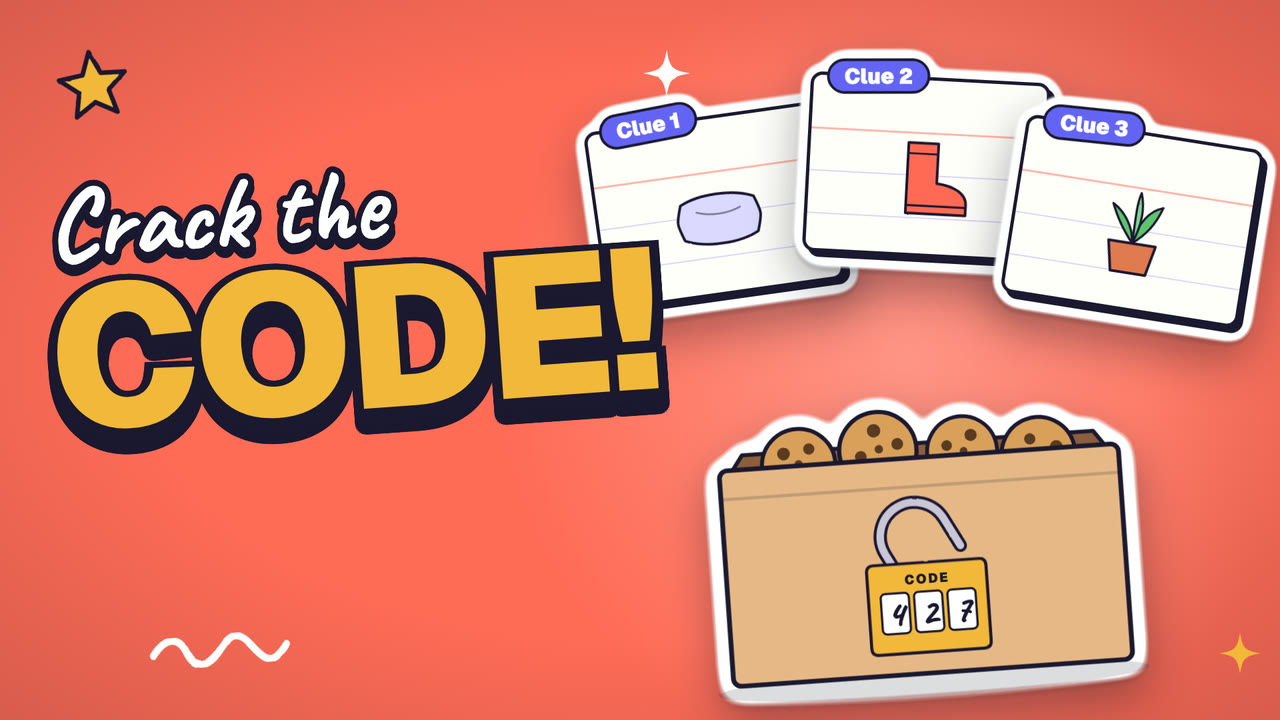
Lesson 1. A reason to escape
Every escape room needs a story, a locked box, and a code.
- Write your story in one line
- Put a prize in a shoebox, tape it shut, and draw a paper padlock
- Pick a three-number code and keep it hidden
Where: At home
Lesson 2. The clue chain
Each clue leads to the next hiding spot, and each spot holds one number of the code.
- Pick three hiding spots, like a pillow, a boot, and a plant
- Draw the chain as a map
- Write one clue and one number for each spot
Where: Paper
In the app
Lesson 3. Secret codes
A number code, a picture code, or mirror writing makes each clue a new surprise.
- Put a different code on each clue
- Try a number code where A is 1 and B is 2
- Make a decoder card from A to Z
Where: Paper
In the app
Lesson 4. Test it, then host it
One test player shows which clue is too hard, and a hint card helps on the day.
- Test it on one person and make any slow clue a little easier
- Make a hint card with one hint for each clue
- Set a 15-minute timer, read your story, and host it for your family
Where: At home
In the app
Lesson 1 transcript: A reason to escape
Hi, I'm Tek! Today, your home becomes an escape room, and your family has to crack it!
In an escape room, players find clues, crack a code, and open a lock before time runs out. Nobody gets locked in. The box does!
Every escape room needs a story. Here's mine. The cookies are locked in a box! Crack the code before snack time ends!
Now make the lock. Grab a shoebox. Put the prize inside, and tape the lid shut.
Draw a paper padlock with three empty boxes. That's where the code goes. Tape it to the front.
Pick a secret code. Three numbers. Mine is four, two, seven. Keep it hidden!
Your turn. Write your story in one line. Make your locked box. Pick a three-number code. Then press Next.
Free guides to practise with
Questions parents ask
Is anyone actually locked in?
No. The prize is locked in a shoebox, never a person, and the films say so in the first lesson. Players move around the home looking for clues, and the box opens when they crack the code.
What age is this for?
Kids 6 to 13. Younger kids tend to use picture codes and easy hiding spots. Older kids like number codes and mirror writing, and making the clues harder.
How long does it take?
The four films take about 4 minutes. Making the box, the clues, and the codes takes about 1–2 hours, and the escape itself runs on a 15-minute timer.