
How to animate a drawing your kid made, from paper to film
By Kubrio Editorial Team. Reviewed by Vlad Stan, founder of Kubrio.
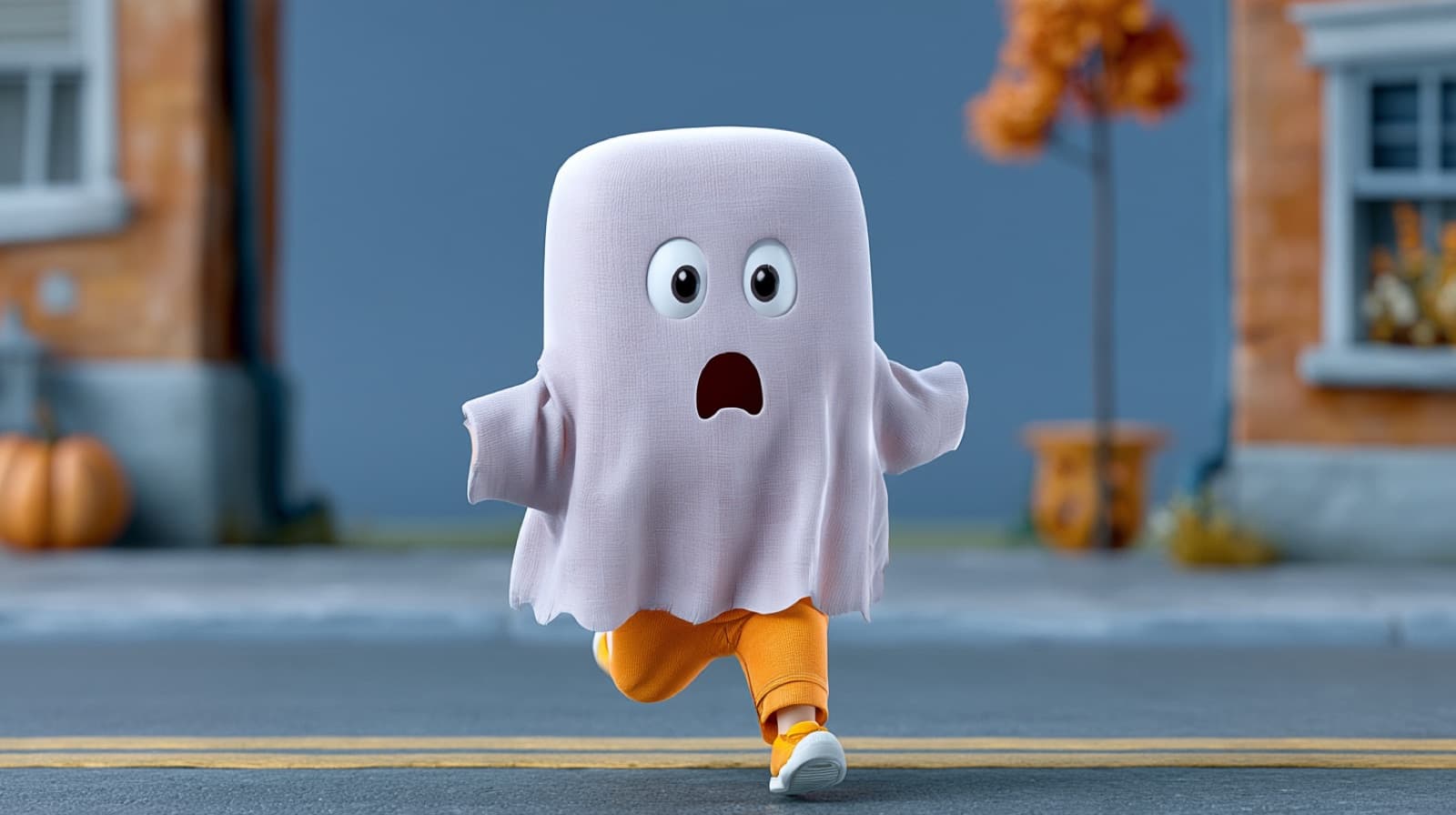
To animate your kid's drawing, your kid draws one character on paper, tells a three-scene story about it, says one line for each scene, and then makes the pictures move with a paper flipbook or a studio that shoots the scenes. The drawing and the story are the hard part, and this guide uses a ghost and a monster from this year's Spooky Season as examples. In Animation Studio, the whole thing takes one sitting of about an hour and ends with a 45-second film that stars your kid's drawing. For the full step-by-step that your kid watches, the free course How to make an animated movie has six short films, one for each room in the studio; this page is the parent's side: why each step matters and what to ask.
What does your kid need to animate a drawing?
Your kid needs paper, a pencil, one character, and a story with three scenes. Software comes last. Kubrio's studios ask for the same: paper, something to draw with, and a device with a camera. If you want to compare tools anyway, the best animation apps for kids page gives the honest picks.
Why start with a character on paper?
Start on paper because the character is what everyone watches, and how to animate a drawing matters less than whose drawing it is. Long, Fan, and colleagues (2024) collected 37,770 drawings from 8,084 children aged 2 to 10 at a children's museum and found that "children's drawings steadily increased in recognizability with age." A six-year-old's ghost reads less clearly than a ten-year-old's. That's development, not talent, so don't fix the drawing. In Animation Studio, your kid draws the star on paper, snaps the drawing in the app, and names it, and that drawing is what moves on screen.
If your kid wants a warm-up, the free how to draw a ghost guide takes six steps and about ten minutes. The drawing library holds 130 more, each with a printable practice sheet.
How do you plan a story that fits in three scenes?
Give each scene one job: who the character is and what starts the trouble, what the character tries, and what happens. Stein and Glenn (1975) read stories to 48 first and fifth graders, with mean ages of about 6 and 10, then asked them to retell each one. In every story, the major setting (who the character is) was remembered best, and the initiating event and the direct consequence came next. Three scenes map onto that pattern, though the study measured understanding, not building. The 45-second short in Animation Studio has exactly three scenes, and every kid starts there.
For a monster, that looks like this:
- A monster under the bed hears a kid say monsters aren't real.
- The monster tries to prove it, one noise at a time.
- The kid finally looks, and the monster is too shy to say hello.
Then ask what your character wants. First graders in the same study recalled a mean proportion of .08 to .42 of what the characters felt or wanted, against .35 to .54 for fifth graders. Young kids leave the want out, so ask for it. In Make a ghost story, your kid decides what the ghost wants across a 2-minute film in eight scenes, and the AI never decides the ending.
How do you turn the story into a storyboard?
A storyboard is one box per scene, sketched before anything moves: fold a sheet into three, draw each scene in a box, and write its line underneath. Borrow the suspense rule from Make a monster movie: show the shadow, then one part, then the whole monster. In that project, your kid draws the monster, tells the story, and fixes the storyboard, and Tek, the studio's AI producer, lays out the panels by that rule. The AI never picks the story, and every scene starts from something your kid drew or said.
Why should your kid say each line out loud?
Saying a line out loud is a different act from planning to say it. Hoogerheide, Loyens, and van Gog (2014) had 76 students aged 15 to 17 study logic problems. On new problems, students who explained on video scored 6.01, against 3.55 for students who studied for a test and 3.68 for students who only prepared to explain. Intending to explain did little; explaining did the work. That's teenagers, but it favors the spoken line.
In an Animation Studio short, your kid picks who talks and gives each scene one line, typed or said out loud, or lets the film play with music only. At 45 seconds, a scene runs about 15 seconds, and one short line fills it. When your kid talks instead of typing, Kubrio writes down what they say and doesn't keep the recording.
How do you finish, name, and premiere the film?
Finish in one sitting if you can, because people value finished work. Norton, Mochon, and Ariely (2012) had adults assemble storage boxes. In the working paper, people who finished their box bid $1.46 for it, while people who stopped halfway bid $0.59. That's why the 45-second short fits in one sitting in Animation Studio, and the 2-minute movie opens only after your kid finishes a short.
In Animation Studio, your kid keeps each take or shoots it again. Then they name the film and make a poster with the title and their name on it. When the film premieres, it goes public, with a page your kid can send to grandparents and friends, and you get an email with the link. You and your kid can make it private anytime.
Can you make an animation without a device?
Yes, a paper flipbook is an animation. Draw the character on one sticky note, then again on the next, moved a little. Ten notes flipped fast make your drawings move. In Animation Studio, your kid never picks a frame rate, and the hour goes to the story, the lines, and the takes.
There are two kinds of projects for kids. The first kind ends on the fridge door. The second kind ends as a real thing other kids can read, watch, or play. Kubrio makes the second kind. Kids make them by directing the same AI the pros use. A flipbook is the first kind, and a good one. Both kinds start from the same rule Kubrio calls the hand stays the hero: the drawing and the story come from your kid.
Why make a ghost or a monster film?
Because a ghost or a monster comes with a want built in. Animation Studio has a film for each. In Make a spooky comedy, your kid writes the jokes for a 45-second film where their monster fails to scare someone three times, and the AI never writes the jokes. In Make a Halloween mystery, every pumpkin in town is missing: your kid plants the clues and picks the culprit in a 2-minute whodunit, and the AI never picks the culprit.
Two more films have no Halloween in them at all. Make a big friendly monster movie is a 45-second film where everyone runs from your kid's giant monster until they find out what it came for: big, not scary. Make a ghost-in-the-attic story is a 2-minute ghost story in eight scenes with your kid's ghost and attic, where the AI never decides the ending.
What to do at home this week
- Warm up with the ghost drawing guide, about ten minutes.
- Ask your kid to draw their own ghost or monster on paper. Don't fix it.
- Ask three questions: "Who is this, and what starts the trouble?" "What do they try?" "What happens in the end?"
- Ask what the character wants.
- Fold a sheet into three boxes, sketch the storyboard, and write one line under each box.
- Have your kid say each line out loud.
- Make it move: a sticky-note flipbook today, or the monster movie in one sitting.
- Name the film, make a poster, and hold the premiere with the lights off.
Ingenious projects that inspire kids to make things — until they find the thing only they could make.
Make a monster movie: your kid draws a monster on paper and gets a 45-second animated film in three scenes with that monster as the star. Or see everything your kid can make in Animation Studio. When you're ready, start here.
FAQ
How long does it take to animate a kid's drawing? A paper flipbook takes about ten minutes. In Animation Studio, the 45-second short takes one sitting of about an hour, and the 2-minute movie takes a few sittings in one week.
Does my kid need to be good at drawing to make a cartoon? No. The film stars the drawing as your kid drew it, and drawings get clearer with age on their own. If your kid wants an easy start, the free ghost guide breaks one character into six steps.
What age can a kid animate their own drawing? Animation for kids works across ages 6–13. A six-year-old can carry one character and three scenes, with lines said out loud or music only. Older kids can move to the eight-scene movie after a first short.
Is it still my kid's film if the AI shoots it? Yes. Your kid draws the star, tells the story, fixes the storyboard, writes each line, and keeps or reshoots each take. The AI draws each scene in a cartoon look starring that drawing and shoots it, but it never picks the story.
Are the spooky films too scary for young kids? Every spooky project has a fear dial with three settings: Spooky, Creepy, and Scary. The default follows your kid's age. For no scares at all, pick the big friendly monster movie.